Tiddalik

Variations: Tiddalick, Karaknitt

Tiddalik

Tiddalik the frog was thirsty. He got up one day in the Australian bush and decided he needed more water. He began by drinking down all the water in his pond. After that, he crawled out of the hole left behind and drained the nearby waterholes. Then he swilled down the closest river, and followed its tributaries, drinking them down one by one. Billabongs and lakes were gobbled up, and Tiddalik grew bigger and bigger. Finally, once there was no water left in sight, Tiddalik stopped. He was now a bloated, mountainous creature filled with water and incapable of moving. He could only sit there and stare, content at last.

Soon, as the lack of water became painfully evident, the animals started to gather around Tiddalik. His size and thick skin made him impervious to anything they could do, and rain was nowhere in sight. It was Goorgourgahgah, the Kookaburra, who hit upon the solution. “We must make him laugh”, he said. “That way he’ll open his mouth and all the water will come out”.

As the champion laugher, Goorgourgahgah went first. He flew in front of Tiddalik’s face, laughing at the top of his lungs. He tumbled in the air, told jokes, and guffawed till he was hoarse. Tiddalik blinked impassively.

All the other animals tried their luck. Kangaroo turned somersaults. Koala made weird noises. Frilled Lizard ran around with his frill open. Wombat rolled around in the dirt. Brolga danced and squawked. But nothing they did seemed to get to Tiddalik, and the more they tried the thirstier they got. The monstrous frog merely continued to observe them with his globular eyes.

Then, as the other animals began to despair, Noyang the Eel stepped solemnly up. Everyone held their breath as Noyang straightened and balanced precariously on his tail. A ripple went through Tiddalik’s bloated body. Noyang began to twist and contort himself, forming hoops, spirals, springs, whirling around like a top… Tiddalik’s smile broadened, and he started to shake. Finally, Noyang tied himself in knots, and Tiddalik started to laugh hysterically – and all the water he held inside poured out, flooding the land before returning to its rightful place. Many died in the flood; Pelican took it upon himself to save as many as he could, but got aggressive when the human woman he wanted for a wife refused him. He painted his black feathers white to go to war, but was accidentally killed by another pelican who didn’t recognize him – pelicans today are both black and white in his honor.

When all had cleared, Tiddalik had shrunken back into a tiny frog once more. He had laughed so hard that he lost his voice, and could only croak hoarsely. Today, his descendants the water-holding frogs (Cyclorana platycephala) still practice every night in the hopes of regaining that voice, and still try to drink large quantities of water on a much smaller scale.

After losing all the water of the world, Tiddalik also came to resent anyone who tried to hoard water for themselves. When Echidna tried to keep a secret cache of water, it was Tiddalik who followed him and dove into the subterranean pond. “This water belongs to everyone!” he snapped. “You have no right to keep it to yourself!” The other animals punished Echidna by tossing him into a thornbush, and to this day he still has the thorns embedded in his back as a painful reminder of his greed.

References

Morton, J. (2006) Tiddalik’s Travels: The Making and Remaking of an Aboriginal Flood Myth. Advances in Ecological Research, vol. 39.

Ragache, C. C. and Laverdet, M. (1991) Les animaux fantastiques. Hachette.

Reed, A. W. (1965) Myths and Legends of Australia. A. H. and A. W. Reed, Sydney.

Reed, A. W. (1978) Aboriginal Legends: Animal Tales. A. H. and A. W. Reed, Sydney.

Binaye Ahani

Variations: Bina’ye Ayani, Nayie A’anyie, Bina’yeagha’ni, Eye Killers, Evil Eyes

Binaye Ahani

The Binaye Ahani, or “Eye Killers”, were among the many Anaye that were slain by Nayenezgani. As with the other original Anaye or “Alien Gods”, they were born from human women who had resorted to unnatural practices. Their “father” was a sour cactus.

The Binaye Ahani were twins born at Tse’ahalizi’ni, or “Rock With Black Hole”. They were round with a tapering end, no limbs, and depressions that looked like eyes. Their horrified mother abandoned them on the spot, but they survived to grow into monsters; as they were limbless, they remained where they were born. Instead of hunting prey actively, they could fire lightning from their eye sockets and fry anyone who approached them. In time eyes developed in the depressions on their head, and they could kill with their eyes as long as they kept them open. Magpie was their spy, and they had many children who took after them in the worst way.

Nayenezgani prepared for his fight with the Binaye Ahani by taking a bag of salt with him, and found the old twins in a hogan with their offspring. The monsters immediately stared at him, lightning shooting from their bulging eyes, but Nayenezgani’s armor deflected the beams. He responded by throwing salt into the fire, which spluttered and sparked into their eyes, blinding them. With the Binaye Ahani in disarray, Nayenezgani waded in and killed all but the two youngest. He took the eyes of the first Binaye Ahani as trophies.

“If you grew up here, you would only become things of evil”, he told the survivors, “but I shall make you useful to my people in years to come”. To the older one, he said “You will warn men of future events, and tell them of imminent danger”, and it became a screech owl. To the younger he said “You will make things beautiful, and the earth happy”, and it became a whippoorwill.

In other versions the surviving children become a screech owl and an elf owl, while the parents are turned into cacti.

References

Locke, R. F. (1990) Sweet Salt: Navajo folktales and mythology. Roundtable Publishing Company, Santa Monica.

Matthews, W. (1897) Navaho legends. Houghton Mifflin and Company, New York.

O’Bryan, A. (1956) The Diné: Origin Myths of the Navaho Indians. Bulletin 163 of the Smithsonian Institution, Washington, D. C.

Reichard, G. A. (1950) Navaho Religion: A Study of Symbolism. Bollingen Foundation Inc., New York.

Tapirê-iauara

Variations: Tapir Nymph, Onça d’Água (Water Jaguar), Onça Pé de Boi (Cow-legged Jaguar), Paraná Pura Iuraretê (Turtle/Jaguar that Dwells in River Side Channels), Tai-açu-iara (potentially)
Tapire-iauara

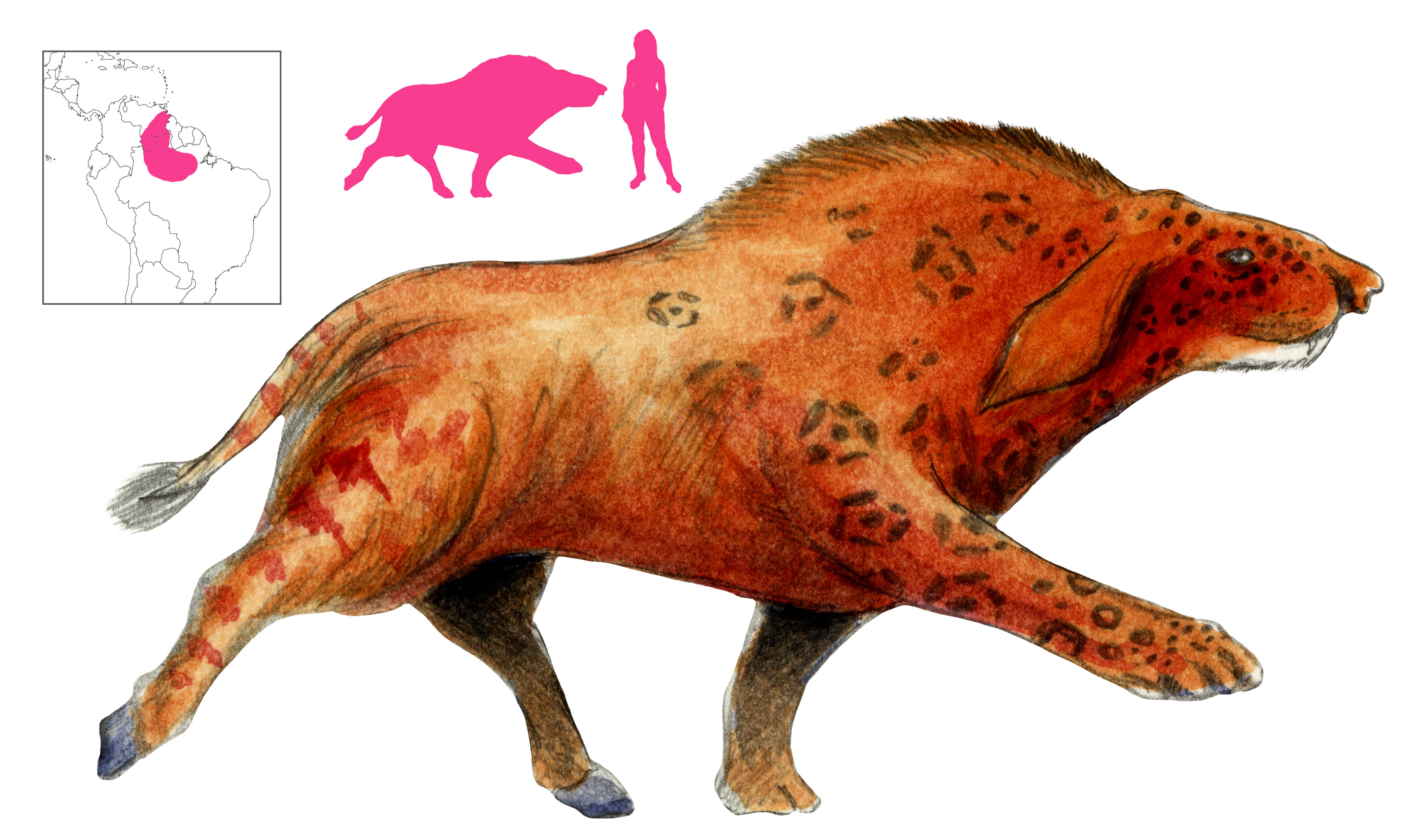
The Tapirê-iauara, or Tapir Nymph, enjoys a wide distribution in the Amazon, from the Orinoco in Venezuela to the Rio Negro, the Madeira, the Tapajós, and the Amazon down to Pará. Sightings have been reported from around Codajás, Fonte Boa, Itacoatiara, Nova Olinda, Oriximiná, Santarém, and Urucurituba. It lives in slower-moving waters, near groves of aninga or palm trees, and avoids human settlements.

The name tapirê-iauara is etymologically complex. Tapiré is Tupi for “tapir”, while y is “water” and ara is “lady” in língua geral; it also draws from the Tupi uara (“dweller”) or yguara (“dweller in water”). Hence, “tapir water-lady” or “tapir nymph” is a rough translation. This same derivation gives us the Amazonian nymphs Yara and Oyoára, the sea monster Hipupiara, and Paraná Pura Iuraretê, which was apparently a giant turtle creature that later was subsumed into the tapirê-iauara (iuraretê meaning either “turtle” or “jaguar”).

Reports of the tapirê-iauara appearance have varied somewhat. Most accounts agree that it resembles a cow-sized jaguar with a reddish waterproof coat, a thick mane, long droopy ears half a meter in length, and an overpowering stench (catinga). It may have jaguar legs, or the forelegs of a jaguar and hooved, donkey-like hindlegs. It may have horse legs with or without catlike paws, duck feet, or large otter paws. Variations in fur color include red, gold, and black with a cream patch in the chest. It notably does not look much like a tapir.

A tapirê-iauara is heard and smelled before it is seen. The large, finlike ears flap noisily against the water as it swims, while its putrid odor precedes it. From a safe distance, it’s merely nauseating; at close quarters the stench of a tapirê-iauara is enough to cause fainting and outright death. Tapirê-iauaras can also mesmerize prey into standing still before pouncing on them.

Tapirê-iauaras have a broad diet that includes large fish, capybaras, caimans, and humans. They are attracted to hauls of fish and the halitosis resulting from eating poorly-cooked fish. They often show up to inspect fishermens’ catches – or the fishermen themselves. When they do, they are fast, persistent, and resilient, relying on their odor to weaken prey before killing it with their sharp teeth and claws. One fisherman had to empty 12 slugs from a .22 rifle into a pursuing tapirê-iauara before the beast expired. Other fishermen have not been so lucky, having their catches stolen at best or being dragged into the river and devoured at worst.

Sometimes the stink of a tapirê-iauara is enough to cause a human’s shadow (and therefore soul) to depart. A person who has lost their shadow in this way is said to be assombrado. They can recover their soul by inhaling the fumes of a fire made with leaves, sticks, and the bones of undercooked piranhas.

Caraña resin (Protium heptaphyllum) is repulsive to tapirê-iauaras, and anyone concerned about tapirê-iauara attack should equip themselves with some before heading into the Amazon. Tapirê-iauaras also cannot climb, and so shelter should be sought in trees. As the tapirê-iauara’s odor will cause fainting and potentially falling out of the tree, secure branches must be found.

The Tai-açu-iara from around Parintins is similar and may be the same animal. It appears as a black piglike creature with jaguar paws.

References

Smith, N. J. H. (1981) Man, Fishes, and the Amazon. Columbia University Press, New York.

Smith, N. J. H. (1996) The Enchanted Amazon Rain Forest. University Press of Florida, Gainesville.

Hrökkáll

Variations: Hrökk-áll

Hrokkall

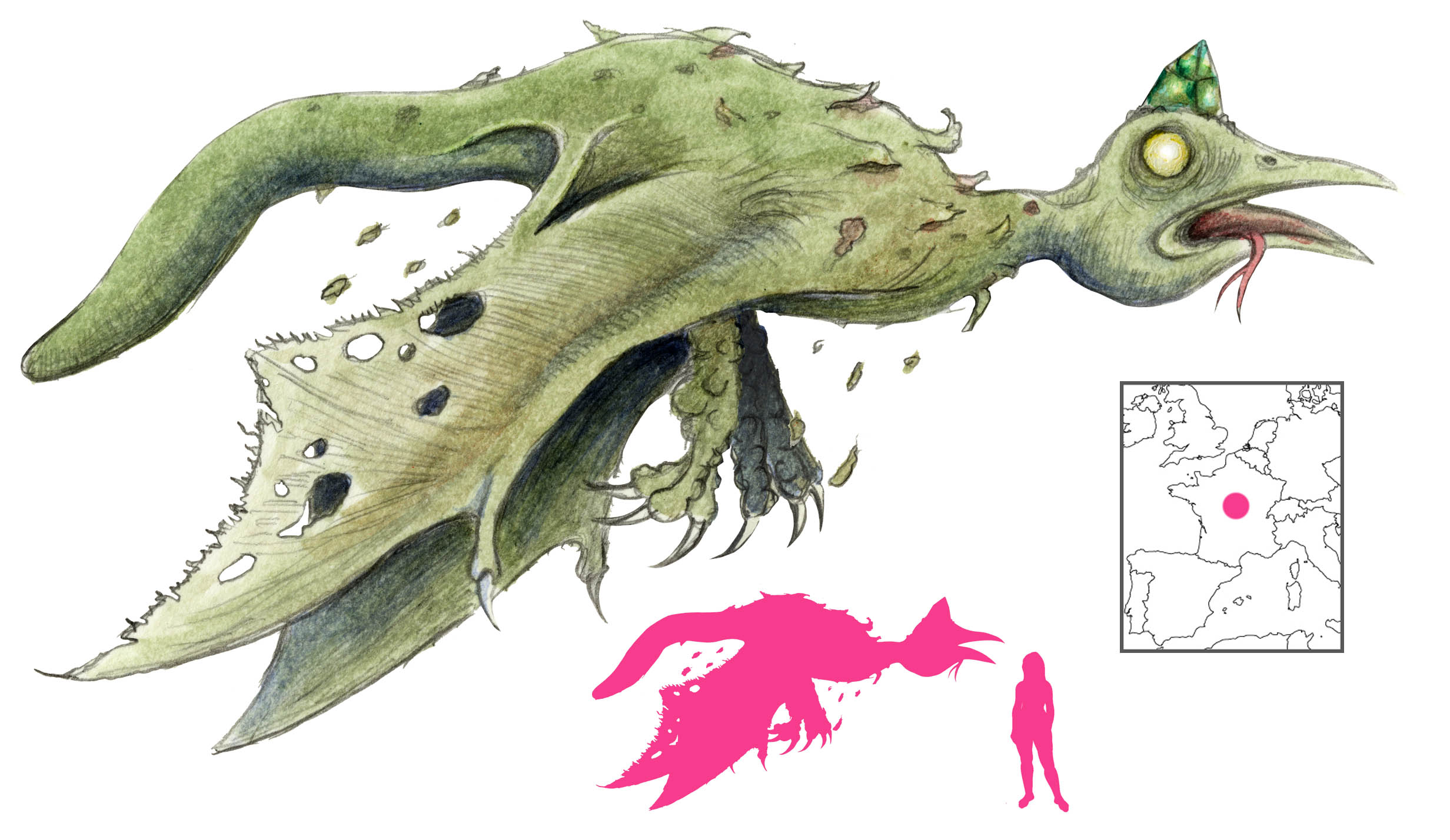
A malicious Icelandic wizard once revived a dead, half-rotted eel, giving rise to an evil and toxic creature. It was the first Hrökkáll, or “coil-eel”. The wizard may be long dead, but the eel’s descendants went on to infest polluted waters.

A hrökkáll is two feet long, and resembles an eel in appearance. It lives in still ponds and stagnant water, and occasionally in running rivers. It has flexible, iron-hard scales, and sharp saw-toothed fins. As with many Icelandic fishes, it secretes corrosive venom and its meat is poisonous. Captured hrökkálls have been known to melt their way through earth and rock to squirm back into the water.

Hrökkálls lie in wait until someone steps in the water. Then they coil around the person’s leg and constrict it, slicing into flesh and bone alike and amputating the limb. It is unknown whether hrökkálls use their acidic venom or their bladed fins (or both) to do this. They will dismember humans and horses in this way, but sheep are safe as their legs are too narrow for the hrökkáll to gain a hold.

Hrökkáll in common parlance has since evolved to mean electric eels.

References

Davidsson, O. (1900) The Folk-lore of Icelandic Fishes. The Scottish Review, October, pp. 312-332.

Zoëga, G. T. (1911) English-Icelandic Dictionary, Second Edition. Sigurdur Kristjansson, Reykjavik.

Raiju

Variations: Raijū, Thunder-animal, Thunder-beast

Raiju

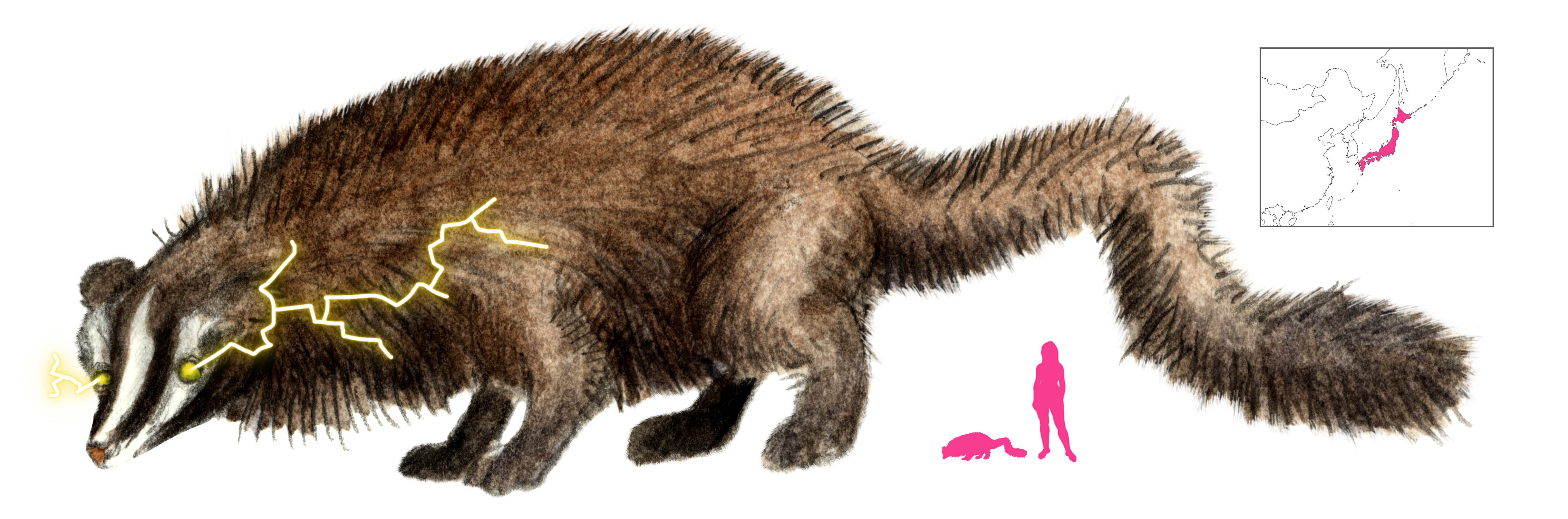
In Japan, it is said that lightning cannot pass through a mosquito-net – and neither can the Raiju. These creatures also hate the smell of incense.

A raiju, or thunder-beast, ranges from dog to squirrel in general appearance, but usually resembles a badger. It falls from the sky with the lightning, and jumps from tree to tree. After the storm has passed, evidence of the raiju’s presence can be seen in the torn, deeply gouged treetrunks and woodwork where a raiju dug its claws in. Such raiju-damaged trees can be harvested for bark that cures toothache.

Raijus will pounce on anyone taking shelter beneath a tree, and will enter any house unprotected by mosquito netting or incense. They also love to eat human navels, and so it is vital to keep one’s navel protected during a thunderstorm, sleeping face-down if necessary.

Despite their elusive nature, raijus have been captured on multiple occasions. The Edo period in particular has many such cases across Japan, and it is believed the Chinese Bencao gangmu text was the inspiration for the raiju craze. One raiju got tangled in the ropes of a well and was taken alive. Another raiju was exhibited (for a fee) in a brass cage in the Temple of Tenjin in Matsue. It looked like a badger, and was said to sleep during fair weather, but during storms it would become active, with its eyes flashing.

The masked palm civet or hakubishin (Paguma larvata) is the most likely contender for the originator of the raiju. This badger-like animal was brought over to Japan from mainland Asia perhaps as early as the Edo period, its unfamiliar nature leading to tales of lightning beasts.

References

Foster, M. D. (2015) The Book of Yokai. University of California Press, Berkeley.

Hearn, L. (1910) Glimpses of Unfamiliar Japan (Second Series). Bernhard Tauchnitz, Leipzig.

A-mi’-kuk

Variations: Ă-mi’-kuk, Ä-mi’-kuk

A-mi-kuk

Kayakers in the cold seas of the Arctic Circle are the A-mi’-kuk’s favorite prey. The last thing they see are the a-mi’-kuk’s prehensile tentacles exploding from under the surface and wrapping around them, dragging both kayaker and boat under.

The a-mi’-kuk is large, leathery-skinned, and slimy. Its four long tentacular arms are used for seizing prey and swimming rapidly through the water. There is no escaping it – it will follow prey taking refuge on ice by swimming below it and bursting out onto the surface. Making for land is equally futile, as the a-mi’-kuk can swim through the earth with as much ease as it does through water.

A-mi’-kuks around St. Michael, Alaska, are known to migrate underground to inland lakes. The presence of one is a good sign for the lake. When an a-mi’-kuk leaves its lake, the channel it digs drains it dry, but when it returns the sea returns with it.

Nelson proposed the octopus as the origin of the a-mi’-kuk. He also gives ä-mi’-kuk as the name of the sea otter; what bearing this has on the legendary creature is unknown.

References

Nelson, E. W. (1887) Report upon Natural History Collections Made in Alaska Between the Years 1877 and 1881. Arctic Series of Publications Issued in Connection with the Signal Service, Government Printing Office, Washington.

Nelson, E. W. (1900) The Eskimo about Bering Strait. Extract from the Eighteenth Annual Report of the Bureau of American Ethnology, Government Printing Office, Washington.

Shādawār

Variations: Shadhahvar, Shadhahwar, Shādhahvār, Shad-hawar, Shād-hawār, Shad-havar, Shadhawar, Shadahvar, Shadahwar, Shadawar, Sadahvar, Sadahwar, Sadhavvar, Sadhazar, Sadhazag, Sadhuzag, Aras, ‘rs, ‘rsh

Shad-hawar

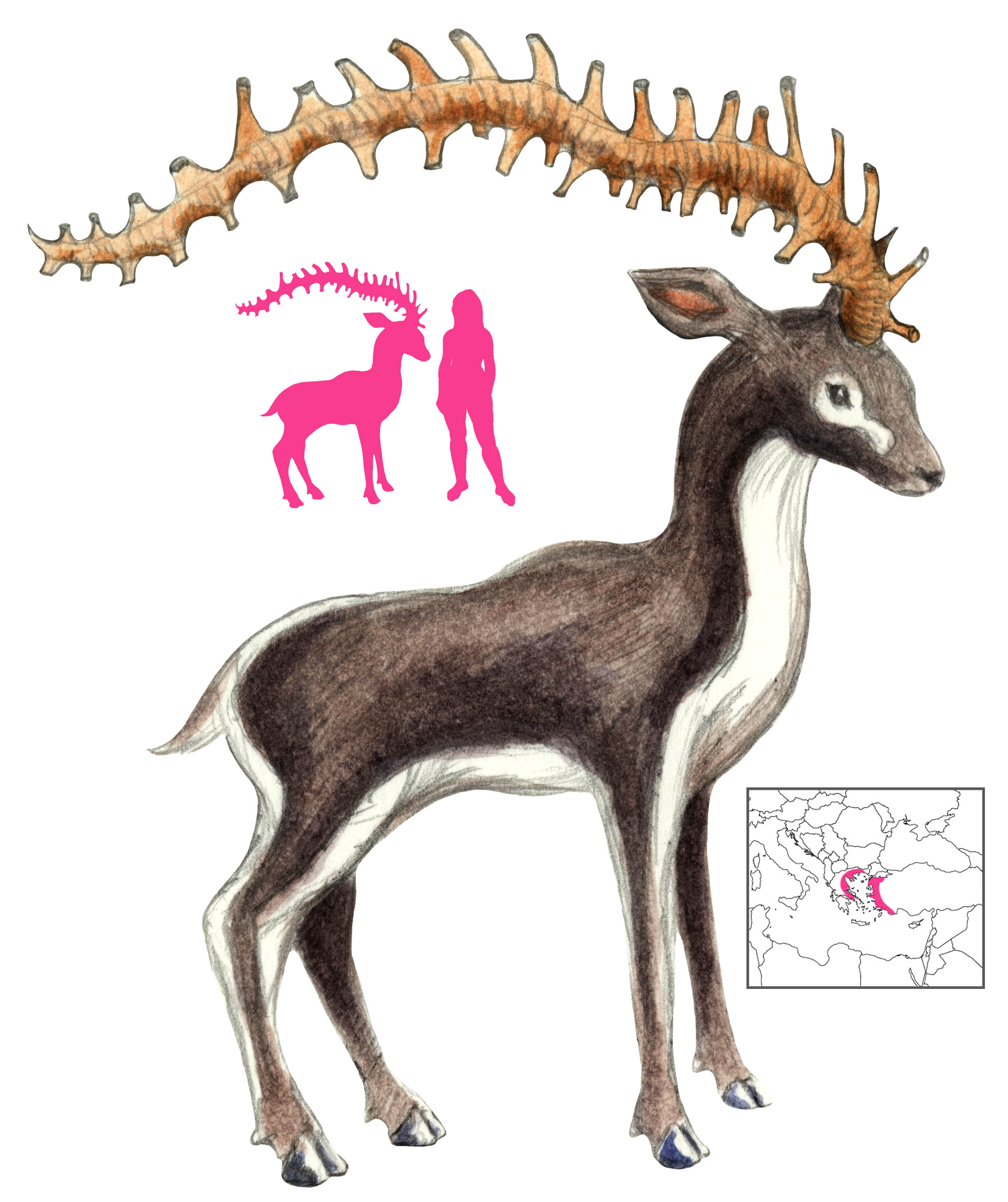
The earliest references to the musical-horned unicorn are given by Jabir Ibn Hayyan, around 900 A.D., where it is referred to as the Aras. It was given its most popular incarnation as the Shādawār by Al-Qazwini, which was subsequently copied with modifications by Al-Damiri and Al-Mustawfi. It was found in the farthest reaches of Bilad al-Rum, the Byzantine Empire, a vague location which to Al-Qazwini must have sounded remote.

Exactly how the shādawār’s name should be written and pronounced is unclear. Its writing has varied from author to author and manuscript to manuscript, sometimes starting with a Sā instead of a Shā, with the middle consonant being either a d or a dh (pronounced “the”), and ending in wār (Arabic) or vār (Persian). The spelling chosen here is ultimately arbitrary and based on Ettinghausen and Jayakar’s recommendations, and the most prevalent transliterations. The name is of unknown origin, but Hayyan’s aras is probably derived from “oryx”.

Unlike the more rhinocerine karkadann, the shādawār is an antelope-like ungulate with a single horn, but in this case it is long and hollow. There are forty-two hollow branches in the horn, and wind whistling through these flute-like holes results in beautiful, stirring melodies, so lovely that other animals will gather around to listen. Shādawār horns were offered to kings, who would hang them up as musical intruments. Depending on the angle they were held at, they would produce an enthralling tune or a sad dirge that moved all listeners to tears.

The shādawār has been incorrectly described as a flesh-eater, using its music to attract potential prey. In fact, Al-Qazwini makes no mention of any carnivorous tendencies. Al-Mustawfi, however, combines Al-Qazwini’s account of the shādawār with that of the carnivorous Sirānis immediately preceding it. It is the sirānis that lures prey to it with its music, and not the herbivorous shādawār.

Al-Damiri and Bochart give it seventy-two branches on its horn. Flaubert goes further and describes his “sadhuzag” as a black deer with the head of a bull, and a thicket of white horns on its head. It speaks to Anthony, describing its unique powers. “My seventy-four antlers are hollow as flutes. When I turn towards the South wind, sounds come out that attract enraptured beasts. Snakes coil around my legs, wasps cling to my nostrils, and parrots, doves, and ibises roost in my branches. – Listen! … But when I turn to the North wind, my antlers, thicker than a battalion of lances, exhale a howl; forests shudder, rivers retreat, fruit bulbs burst, and grasses stand on end like the hair of a coward. – Listen!”

References

Bochart, S. (1675) Hierozoicon. Johannis Davidis Zunneri, Frankfurt.

el-Cheikh, N. M. Byzantium through the Islamic Prism from the Twelfth to the Thirteenth Century. In Laiou, A. E. and Mottahedeh, R. P. (2001) The Crusades from the Perspective of Byzantium and the Muslim World. Dumbarton Oaks Research Library and Collection, Washington, D. C.

Contadini, A. Musical Beasts: The Swan-Phoenix in the Ibn Bakhtishu’ Bestiaries. In O, Kane, B. (2005) The Iconography of Islamic Art. Edinburgh University Press.

Contadini, A. (2012) A World of Beasts: A Thirteenth-Century Illustrated Arabic Book on Animals (the Kitab Na’t al-Hayawan) in the Ibn Bakhtishu’ Tradition. Brill, Leiden.

al-Damiri, K. (1891) Hayat al-hayawan al-kubra. Al-Matba’ah al-Khayriyah, Cairo.

Ettinghausen, R. (1950) The Unicorn. Studies in Muslim Iconography, Freer Gallery of Art Occasional Papers Vol. 1, No. 3, Washington.

Flaubert, G. (1885) La Tentation de Saint Antoine. Quantin, Paris.

Jayakar, A. S. G. (1908) ad-Damiri’s Hayat al-Hayawan (A Zoological Lexicon). Luzac and Co., London.

Kraus, P. (1986) Jabir Ibn Hayyan : Contribution à l’historie des idées scientifiques dans l’Islam. Société d’Édition Les Belles Lettres, Paris.

al-Qazwini, Z. (1849) Zakariya ben Muhammed ben Mahmud el-Cazwini’s Kosmographie. Erster Theil: Die Wunder der Schöpfung. Ed. F. Wüstenfeld. Dieterichsche Buchhandlung, Göttingen.

Catoblepas

Variations: Katoblepas, Catablepon, Katoblepon, Catobleponta, Gorgon (erroneously)

Catoblepas

The Catoblepas, “that which looks downwards”, is probably the most hideous and repulsive of living things, so horrid that its mere glance is lethal. Pliny locates it in Ethiopia, around the source of the Nile, Aelian puts it in Libya, and Topsell gives a range of Hesperia and Lybia.

According to Pliny, the body of a catoblepas is of small size, and its limbs are heavy, but its massive head is too heavy to be held up and always looks downwards. This is a good thing, as anyone who saw the eyes of a catoblepas died.

Aelian gives more detail, describing it as the size of a bull, but with a grim expression, shaggy eyebrows, and small bloodshot eyes. It looks downwards, and has a horselike mane that starts on its head and covers its face. The catoblepas feeds on poisonous plants; when threatened, it shudders and raises its mane in warning before opening its mouth and belching a foul, toxic gas. This gas poisons the air around it, and anything that breathes it loses its voice, collapses in convulsions, and dies. Other animals give it a wide berth because of this. There is no mention of a deadly gaze.

Topsell combines the catoblepas with the Gorgon, stating that the myth of Perseus originated from a war with African Amazons led by Medusa. The snake-hair of the gorgons was inspired by the catoblepas’ messy mane. His fanciful description borrows liberally from gorgons and adds thick eyelids, scales like a dragon, tusks like a boar, no hair on the head, wings, human hands, and a size between that of a bull and a calf. He also denies that a catoblepas can kill with its breath, which is unheard of in the animal world; it is far more likely to kill with its eyes like the well-known cockatrice. He gives as proof an anecdote of Marius’ soldiers encountering a catoblepas and thinking it a sheep, only to die immediately when it looked up at them. It was eventually killed in an ambush by spear-men, and its skin was sent to the temple of Hercules in Rome.

It is in Flaubert’s Temptation that we get the most nightmarish vision of the catoblepas. Here it is a sprawling, long-maned black buffalo with the head of a pig dragging on the ground. Its neck is long and thin like an emptied intestine. It is also granted the power of speech, addressing Anthony. “Fat, melancholy, wild, I perpetually feel the warmth of mud under my belly, hiding infinite rot under my armpit. My skull is so heavy that I cannot lift it. I roll it around me, slowly; – and, jaws opened, I tear with my tongue poisonous herbs watered with my breath. Once, I ate my paws by accident. No-one, Anthony, has ever seen my eyes, or those who have seen them are dead. If I lifted my eyelids – my pink and swollen eyelids, straight away, you would die”.

Cuvier suggested that this maned, hoofed, and downward-looking abomination of nature was inspired by the harmless gnu or wildebeest.

References

Aelian, trans. Scholfield, A. F. (1959) On the Characteristics of Animals, vol. II. Harvard University Press, Cambridge, Massachusetts.

Borges, J. L.; trans. Hurley, A. (2005) The Book of Imaginary Beings. Viking.

Flaubert, G. (1885) La Tentation de Saint Antoine. Quantin, Paris.

Pliny; Holland, P. trans. (1847) Pliny’s Natural History. George Barclay, Castle Street, Leicester Square.

Topsell, E. (1658) The History of Four-footed Beasts. E. Cotes, London.

Raudkembingur

Variations: Rauðkembingur, Raudkembingr, Rauðkembingr, Raudkempingur, Red-comb, Red-crest; Raudkembir (Red-crester); Raudkinni (Red-cheek); Raudkinnung, Raudkinnungur (Red-cheeker); Raudgrani (Red-snout); Raudhofdi (Redhead); Kembingur (Crest); Kembir (Crester); Faxi (Maned)

Raudkembingur

Of all the illhveli, or evil whales that ply Icelandic waters, the Raudkembingur (“red comb” or “red crest”) is the most savage and bloodthirsty. It may not have the size or raw power of some of the other whales, but it is unmatched in ferocity and determination to harm boats. As with all illhveli, the raudkembingur is an abomination, and eating its inedible flesh is forbidden. Boiling its meat causes it to disappear from the pot.

The nature of the red comb or crest that gives the raudkembingur its name is unclear. Accounts refer to a crest of bristly hair, a mane like a horse, or even a row of finlets; its extent varies from depiction to depiction, but Jon Gudmundsson restricts it to the neck. The crest is a bright red on a coffee-brown body with a pink belly; other accounts say it is reddish all over, or has red cheeks or a red head. Sometimes there are red streaks from the mouth to the trunk, as if drawn in blood. The head itself, as depicted by Gudmundsson, is almost saurian in appearance, with sharp teeth in both jaws. It either has a small dorsal fin or none at all.

Raudkembingurs grow to twenty to forty cubits (10-20 m) in length. They are elongate, streamlined, and very fast swimmers. Their movement is accompanied by massive amounts of foam and the whale’s ominous neighing. This, along with the red mane, makes the raudkembingur confusable with the hrosshvalur, and the two have become interchangeable over time. Hrosshvalurs, however, can be easily distinguished by their dappled coloration, horse’s tail, and enormous eyes.

There is no limit to the malice and evil of the raudkembingur. Its mere presence is enough to dissuade fishermen from an area. It will play dead for half a month, floating innocuously on the surface of the water until someone is foolish enough to approach it. Once a boat is within range, the whale puts its bulk and teeth to use, leaping onto the vessel, destroying it, and drowning all aboard. Much like a shark is followed by pilotfish, the raudkembingur regularly has a beluga whales or narwhals (nahvalur – “corpse whale”) following in its wake. These smaller, harmless whales clean up after the raudkembingur and eat its plentiful leftovers.

If anything, the whale’s single-minded love of destruction represents the best hope of foiling it. If a boat escapes it, and it does not destroy another within the same day, it will die of frustration. One raudkembingur destroyed eighteen boats in the course of one day, but a nineteenth boat managed to escape by dressing a piece of wood in clothes and tossing it overboard. The raudkembingur, believing it to be a human, kept trying fruitlessly to drown it while the boat made its escape.

Raudkembingurs will also overexert themselves to death when pursuing prey. A boat captained by Eyvindur Jónsson off Fljót ran into a raudkembingur, and the crewmen reacted by rowing for land as fast as possible until they reached safety at the inlet of Saudanesvik. The sea then turned red as the raudkembingur breathed its last. The boat itself earned the nickname of Hafrenningur (Ocean Runner) after this feat.

Like the hrosshvalur, the demonic raudkembingur is also associated with sorcery and metamorphoses. One tale tells of a callous young man at Hvalsnes who was cursed by the elfs into becoming a monstrous red-headed whale. He wreaked havoc in Faxafjord and Hvalfjordur, until he tried to chase a priest up-river. The red-head died of exhaustion in Hvalvatn Lake, and its bones can still be seen there.

It is generally believed that the raudkembingur and hrosshvalur are monstrous aggrandizements of the walrus (itself derived from hvalhross – “whale-horse”). If the walrus is indeed the origin, however, it has become fully dissociated from its descendants. Gudmundsson realistically depicts both the walrus and the two illhveli, making it very clear that the latter are indeed whales. Otto Fabricius believed the raudkembingur to be inspired by the maned Steller’s sea lion, all the way from Kamchatka.

References

Arnason, J.; Powell, G. E. J. and Magnusson, E. trans. (1864) Icelandic Legends. Richard Bentley, London.

Davidsson, O. (1900) The Folk-lore of Icelandic Fishes. The Scottish Review, October, pp. 312-332.

Fraser, F. C. An Early 17th Century Record of the Californian Grey Whale in Icelandic Waters. In Pilleri, G. (1970) Investigations on Cetacea, vol. II. Benteli AG, Bern.

Hermansson, H. (1924) Jon Gudmundsson and his Natural History of Iceland. Islandica, Cornell University Library, Ithaca.

Hlidberg, J. B. and Aegisson, S.; McQueen, F. J. M. and Kjartansson, R., trans. (2011) Meeting with Monsters. JPV utgafa, Reykjavik.

Kapel, F. O. (2005) Otto Fabricius and the Seals of Greenland. Meddelelser om Grønland Bioscience, Copenhagen.

Larson, L. M. (1917) The King’s Mirror. Twayne Publishers Inc., New York.

Mi-ni-wa-tu

Mi-ni-wa-tu

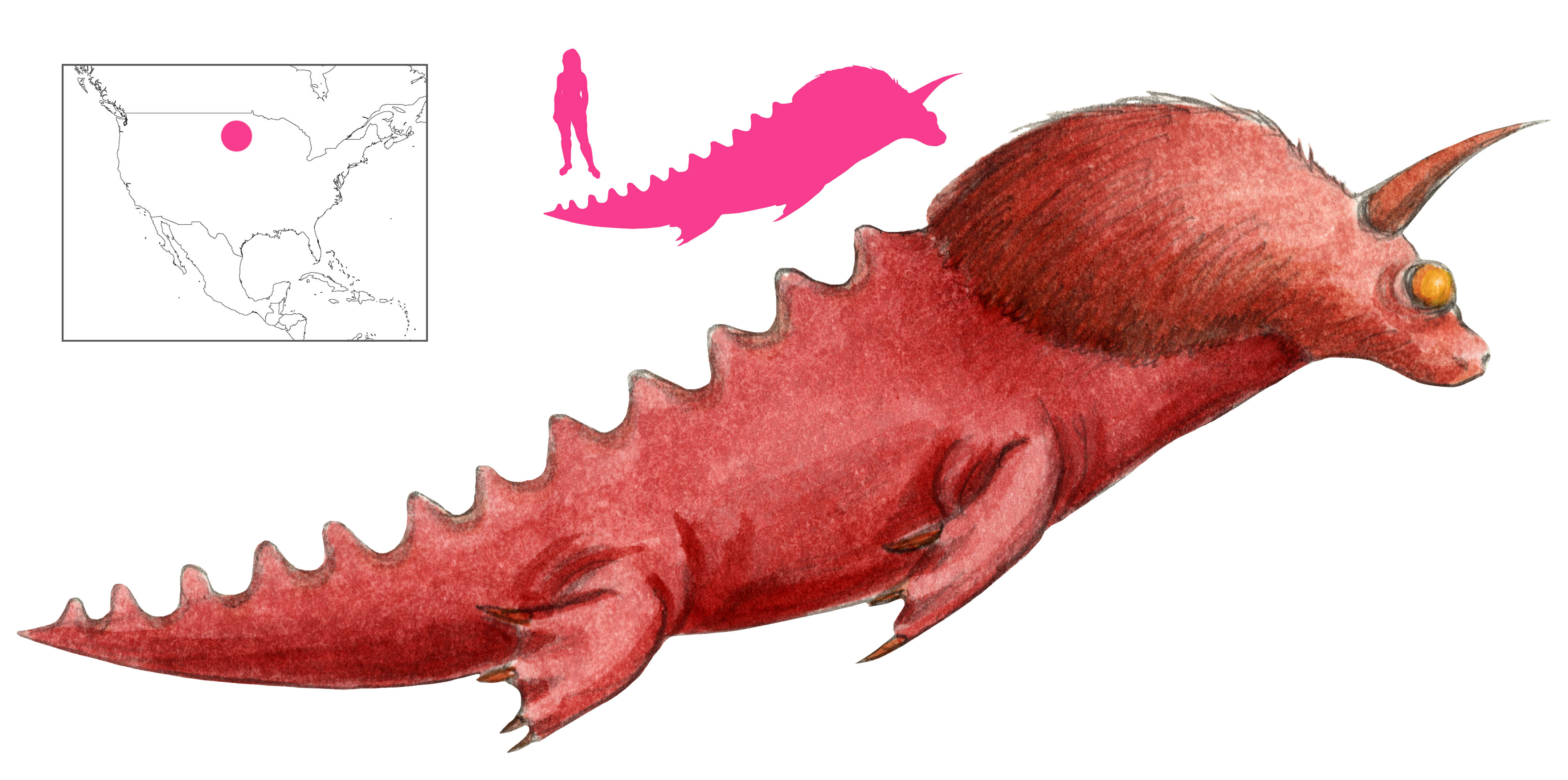
The Mi-ni-wa-tu, or “sea monster”, is known from the folklore of the Tetons, and may be found in the Missouri River.

A mi-ni-wa-tu is an amphibious creature with a body like that of a buffalo, and covered with red hair. It has a single horn in its forehead, and a single eye. Its back is notched like a saw or gear.

The mi-ni-wa-tu may be safely seen at night when it swims powerfully up the river, churning the water and glowing like fire; in the spring, it breaks up river ice. Seeing a mi-ni-wa-tu during the day causes confusion and loss of sight. Madness sets in; after a day of convulsions, the unfortunate victim dies.

References

Dorsey, J. O. (1889) Teton Folklore Notes. Journal of American Folklore, Vol. II, No. IV, pp. 133-139.