Wakmangganchi Aragondi

Variations: Wakmabitchi Warak Wakkimbi (“Primordial Head of the Strong-Teethed Swine Family”)

Wakmangganchi Aragondi was the greatest and most terrifying monster in the folklore of the Garo people of India. This primordial demon once lay waste to the Garo Hills before it was slain by the god Goera.

Long before Goera’s birth, his maternal uncles descended into the subterranean region along with the fisherman Gonga Tritpa Rakshanpa and his dog. From there they took the progenitor of all the world’s birds back to the surface. The three uncles also brought with them a little pig, which they named Wakmabitchi Warak Wakkimbi.

The tiny piglet was kept in sty made of rocks, and there it grew and grew, until the sty had to be torn down to set it free. By then the pig was so big it could no longer be controlled; it wandered at will, feeding wherever and whenever it liked. People continued to feed it from a safe distance, until the day when it knocked the three uncles into its feeding trough and ate them alive. From then on, nobody dared approach it, and it continued to grow and increased in power. From then on it became known as Wakmangganchi Aragondi.

The mere mention of Wakmangganchi Aragondi was enough to strike fear into the bravest warrior – and with good reason. The colossal boar was the biggest and mightiest creature in the world, as tall as a mountain. When standing up, Wakmangganchi Aragondi’s snout touched the Dura Hill, while its tail lay in the Songdu River. It had seven heads emerging from its neck, each head with seven tusks like double-edged scimitars, and each head with a single piercing eye in its forehead glowing like the full moon. On Wakmangganchi Aragondi’s back grew seven clumps of bamboo, seven plots of thatch grass, and seven stalks of bulrushes. Seven perennial streams flowed down its back. The microcosm on Wakmangganchi Aragondi’s back was home to a pair of langurs and their offspring, and seven pairs of moles.

Wakmangganchi Aragondi roamed where it pleased, ate anyone it encountered, and destroyed crops at will. It had a particular fondness for gourds, melons, pumpkins, and yams. Nobody could stop it.

Such was the monster that Goera faced. When the hero-god was born, two more of his uncles went to the market to buy a goat, but they were intercepted and devoured by Wakmangganchi Aragondi. Thus Goera, upon coming of age, decided to destroy this plague that terrified his people.

To fight Wakmangganchi Aragondi, Goera sought the aid of the giant crab Songduni Angkorong Sagalni Damohong. He used it to threaten his grandmother into telling him all she knew about Wakmangganchi Aragondi. He then befriended various supernatural beings, including the progenitors of Steel and Dolomite. From Dygkyl Khongshyl, the smith-god, he obtained a magical two-edged milam sword and a magical bow and arrows that could shatter trees and cure disease. He allied with Tengte Kacha, king of the Elfs, and Maal the dwarf god – both barely two cubits tall, but possessed of great magical powers.

Now fully armed, Goera set out to find Wakmangganchi Aragondi. He found the gigantic boar wallowing in mud, asleep, at Ahnima Gruram Chinima Rangsitram. Goera sent his servant Toajeng Abiljeng to strike the boar from behind and awaken it.

Wakmangganchi Aragondi awoke in fury, and charged Goera. But the hero-god stood his ground and fired a hail of burning darts at it. That was too much for the monster, and Wakmangganchi Aragondi ran for the first time. It galloped east, with Goera in pursuit firing volleys of arrows that lacerated its body. Then Wakmangganchi Aragondi turned north, then back, making wild sallies across the region, making the whole world rumble and quake.

Maddened beyond reason by pain and rage, Wakmangganchi Aragondi tried at last to turn on its tormentor, but Goera avoided its charges by creating piles of rock to climb and hide on. Finally, one of Goera’s maternal uncles in the subterranean region shot an arrow through Wakmangganchi Aragondi’s armpit. The monster staggered and finally collapsed at Ahguara Rongpakmare Shohlyng Janthihol. There Goera decapitated it with a triumphant cry.

The battle had taken seven summers and seven winters. When Wakmangganchi Aragondi was cut open, Goera’s two uncles were found inside, alive but blinded. They recovered their eyesight with time. The meat of Wakmangganchi Aragondi was divided among the people of the area, with the rest left to decompose.

The rock piles created during the battle can still be seen. They are known as Goerani Ronggat, the “Stone Piles of Goera”. Wakmangganchi Aragondi’s droppings are rocks in which seeds can still be seen, and red areas of land are where the monster-boar’s blood was spilled.

References

Bhairav, J. F. and Khanna, R. (2020) Ghosts, Monsters, and Demons of India. Blaft Publications, Chennai.

Rongmuthu, D. S. (1960) The Folk-tales of the Garos. University of Gauhati Department of Publication, Guwahati.
Pontarof

Variations: Tebuch, Thébuch, Tebuch Pontarof

Thevet tells of a West Indian fish called the Tebuch, Thébuch, or Pontarof, which means “robber fish” or “evil fish”.

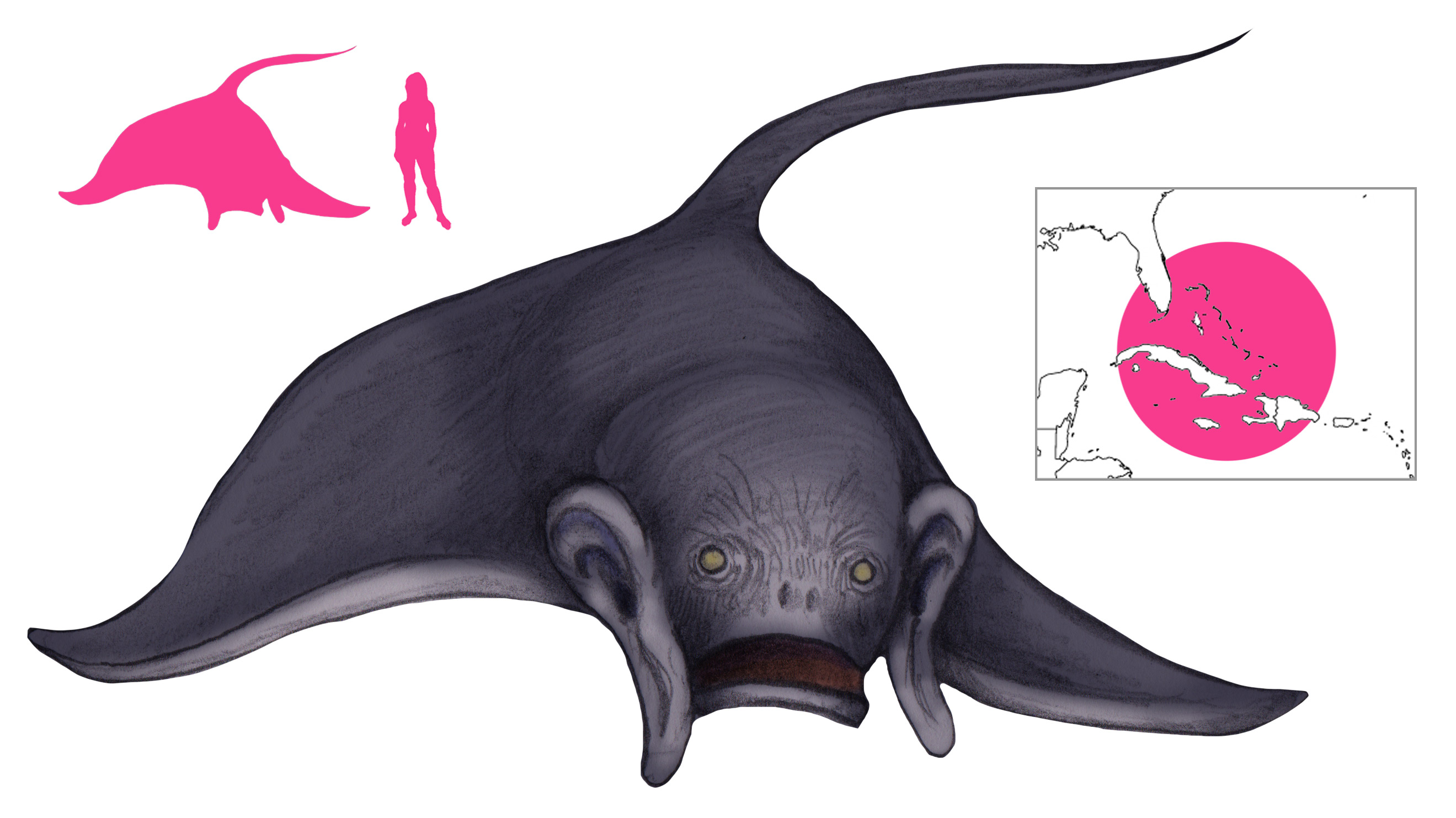
A pontarof is the size of a porpoise or bigger, but not as long. Its round head is human in appearance except for the ears, which are four fingers longer than human ears. They are permanently extended from the head. The fins of the pontarof are the largest fins Thevet had seen.

The pontarof earned its name from its cruel behavior. A pontarof will wait in the water until a child enters the river to bathe, whereupon the fish immediately seizes them. It doesn’t eat the child, but toys with them like a cat with a mouse, wrapping its fins around them, tossing them into the air, holding them with its tail… Eventually this grisly game drowns the child, and the pontarof bores and releases it. For this reason, the natives of the land despise pontarofs and will hunt and kill them wherever they are seen. Pontarof meat is not eaten.

De Montfort believed the pontarof to be some kind of octopus. It seems more likely that it was a manta ray. The human-like face, “ears”, and huge fins are all reminiscent of mantas, which have long had a bad reputation.

References

de Montfort, P. D. (1801) Histoire Naturelle, Générale et Particuliere des Mollusques, Tome Second. F. Dufart, Paris.

Thevet, A. (1575) La Cosmographie Universelle. Guillaume Chaudiere, Paris.

Qique

Variations: Qi-magpie, Qidui

“Where does the Qi-magpie dwell?” asks the Questions of Heaven. According to the Shan Hai Jing it makes its home on North Shouting Mountain. It looks like a chicken with a white head, the feet of a rat, and the claws of a tiger. It is a man-eater.

Mathieu identifies the que as the tree sparrow (Passer montanus). In the Questions of Heaven, the name Qi refers to the stars of Ursa Major, and the qidui is a quadrupedal fantastic beast. Mathieu concludes that the qique may have been a large bird of prey.

References

Mathieu, R. (1983) Étude sur la mythologie et l’ethnologie de la Chine ancienne. Collège de France, Paris.

Strassberg, R. E. (2002) A Chinese Bestiary: Strange Creatures from the Guideways Through Mountains and Seas. University of California Press.

Nykur

Variations: Nykur Hestur (Nykur Horse), Nickur; Nennir, Ninnir (Ninny); Flóðhestur (Hippopotamus); Kumbur (Clump); Skolli (Devil); Vatnaskratti (Water Fiend)

The Nykur or Nennir is the water-horse of Iceland. It is found across the island in association with pools, lakes, ponds, rivers, and the sea, and accounts of its misdeeds date as far back as the Book of Settlements. Its name follows the naming tradition of water-creatures across northern Europe, including the Baltic Nixa, the Germanic Nixy, and the Netherlandish Nikker. Suggested etymologies for this naming group include Nick (as in Old Nick, the devil), an Indo-Germanic root meaning “black” or “dark” (compare Latin niger, for instance), or nihhus, an Old High German word for crocodile.

A nykur is a horse, usually grey in color, with reversed hooves. Coat variations include dapple grey and black, but pink, white, yellow, and grey with a dark streak on the back have been reported. Red cheeks are possible, as is a blaze that gives the impression of a single eye. The mane may be of a different color. The neck is short. The hooves are uncloven, and the tufts on the pasterns also point backwards. It will not allow anyone to inspect its hooves. A nykur can change shape at will, although shapeshifting is not a major part of its myth. It has been said to also appear as a wild, unmilkable cow with reversed hooves, or as a giant salmon or other fish. In the Elenarljóð ballad, the nykur takes on the form of a handsome young man to woo the heroine in hopes of drowning her. More monstrous appearances include twelve-legged forms, or massive, stout beasts with dragging bellies, protruding heads, and skin hanging in heavy folds.

Nykurs are malicious and cruel creatures. They present themselves as tame, friendly horses, but anyone who mounts them will find themselves sticking to the nykur’s back, as if held fast by glue. The nykur then gallops wildly off into the sea, plunging its rider into the water and drowning them. Nykurs will also break the ice on lakes to drown people ice-fishing. The booming sound of breaking ice is said to be the neighing of the nykur.

Nykurs beget foals with normal mares, but only if they are in the water. Horses descended from nykurs will lie down and roll over whenever ridden or led through water as high as their bellies.

As long as there is no water within sight, it is safe to ride a nykur. If a nykur is detected in the vicinity of a body of water, it should be scared off to prevent potential disaster. Nykurs hate fire, and keeping a fire burning nearby for a whole day will make it move elsewhere. They also avoid holy water.

With the right approach, a nykur can be caught, tamed, and forced to work. There is a swelling under a nykur’s left shoulder. If the swelling is punctured, the nykur becomes safe to ride, and loses its harmful nature, but the lump may return with time.

Nykurs hate to hear their name. If they hear the word nykur or nennir – or indeed, any word similar to it – they buck and shy and gallop away into the water. They also dread hearing the names of God and the Devil, and the sound of church bells; making the sign of the cross also repels them. A shepherd girl who prepared to mount a nykur exclaimed “Eg nenni ekki á bak!” (“I don’t feel like getting on its back!” Hearing the word nenni, the nennir galloped away and vanished into a lake. In another tale, a group of children mounted a nykur, but the oldest and wisest child held back, saying “I don’t feel like getting on its back”. The nykur ran off with its riders and drowned them, leaving the eldest to tell the sad tale. The heroine of the Elenarljóð ballad has a similar stroke of homophonic luck.

Butter-lake Heath, in the east of Iceland, got its name from a nykur-related incident. A servant girl left a farm to sell butter in the village of Vopnafjörthur. Along the way she grew tired, and was grateful to find a tame grey horse standing unattended. She mounted the horse and continued along her way, but the moment the horse saw the nearest lake, it dashed into it, drowning the girl. Thus the lake earned the name of Butter Lake, and the surrounding heath became Butter-lake Heath.

The nykur of Svarfathardale, near to the northern town of Akureyri, was known to live in deep pools by the river. The inhabitants of the village chased it off by building fires around the pools and throwing burning coals into the river all day. The nykur was scared off, and there have been no drownings since.

In Grimsey it was said that a nykur lived in the sea and neighed every time the islanders returned to the mainland for a cow. The neigh of the nykur drove the cows mad, causing them to jump into the sea and drown. It wasn’t until the mid-19th century that the people of Grimsey dared keep cows on the island.

There are places all over Iceland named for the nykur, from Nykurborg to Nykurvatn.

References

Árnason, J.; Powell, G. E. J. and Magnússon, E. trans. (1864) Icelandic Legends. Richard Bentley, London.

Benwell, G. and Waugh, A. (1961) Sea Enchantress: The Tale of the Mermaid and her Kin. Hutchinson, London.

van Hageland, A. (1973) La Mer Magique. Marabout, Paris.

Hlidberg, J. B. and Aegisson, S.; McQueen, F. J. M. and Kjartansson, R., trans. (2011) Meeting with Monsters. JPV utgafa, Reykjavik.

Rose, C. (2000) Giants, Monsters, and Dragons. W. W. Norton and Co., New York.

Simpson, J. (1972) Icelandic Folktales and Legends. University of California Press, Berkeley and Los Angeles.

Stefánsson, V. (1906) Icelandic Beast and Bird Lore. The Journal of American Folklore, vol. 19, no. 75, pp. 300-308.

Sazae-oni

Variations: Horned Turban Shell Demon

The Sazae-oni was first formally described by Toriyama Sekien in his first volume on “The Illustrated Horde of Haunted Housewares”. He gives it a philosophical origin, stating that if sparrows become shells and moles become quails, surely it was possible for a sazae – a horned turban shell – to become an oni. So he dreamed.

Reference is made to the 72 Seasons, namely a mid-October season where “sparrows become clams” and a mid-April season where “moles emerge as quails”. The former is based on an old wives’ tale that sparrows become clams to hibernate in winter, while the latter is a poetic description of animals coming out of hibernation.

Sekien’s illustration shows a sinuous sluglike creature with humanoid arms emerging from a large horned turban shell. The head is a spiky shell with protruding eyeballs, and seaweed is draped around the neck.

References

Sekien, T.; Alt, M. and Yoda, H. eds. (2017) Japandemonium Illustrated: The Yokai Encyclopedias of Toriyama Sekien. Dover Publications, New York.

Wolpertinger

Variations: Oibadrischl (Germany), Rasselbock (Thuringia), Dilldapp

The Wolpertinger is a taxidermist’s chimera native to Bavaria, known since the 16th century. It has fangs, wings, and deer’s antlers on the body of a hare. Variants across Germany include the oibadrischl, the Thuringian rasselbock, and the dilldapp, all of which may have different combinations of antlers and/or fangs.

The wolpertinger and its many variations may have some biological truth to them. Rabbits and hares infected with papillomavirus develop strange tumors on their bodies. When they grow on the head and face, interpreting those tumors as horns or fangs is not difficult.

References

Panafieu, J. and Renversade, C. (2014) Créatures fantastiques Deyrolle. Plume De Carotte, Toulouse.

Zimmer, C. (2011) A Planet of Viruses. University of Chicago Press.

Lili

Variations: Li-wildcat, Powercat

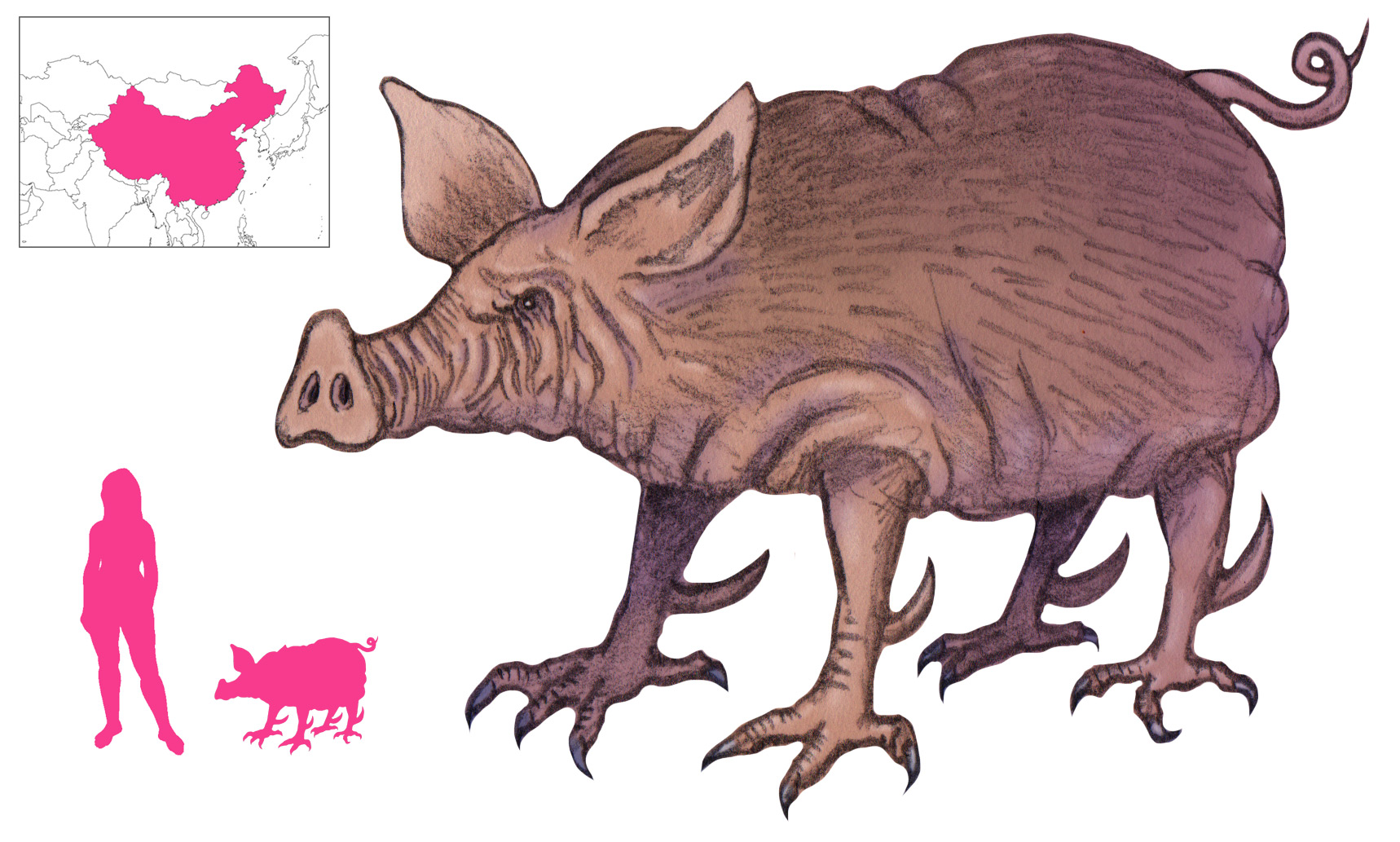
The Lili or Powercat can be found around Willow Mountain in China. It barks like a dog and looks like a pig with spurs on its feet. Its appearance foretells considerable earthwork construction in the district.

References

Mathieu, R. (1983) Étude sur la mythologie et l’ethnologie de la Chine ancienne. Collège de France, Paris.

Strassberg, R. E. (2002) A Chinese Bestiary: Strange Creatures from the Guideways Through Mountains and Seas. University of California Press.

Grootslang

Variations: Groot Slang, Big Snake, Great Snake, Great Snake of the Orange River, Ki-man

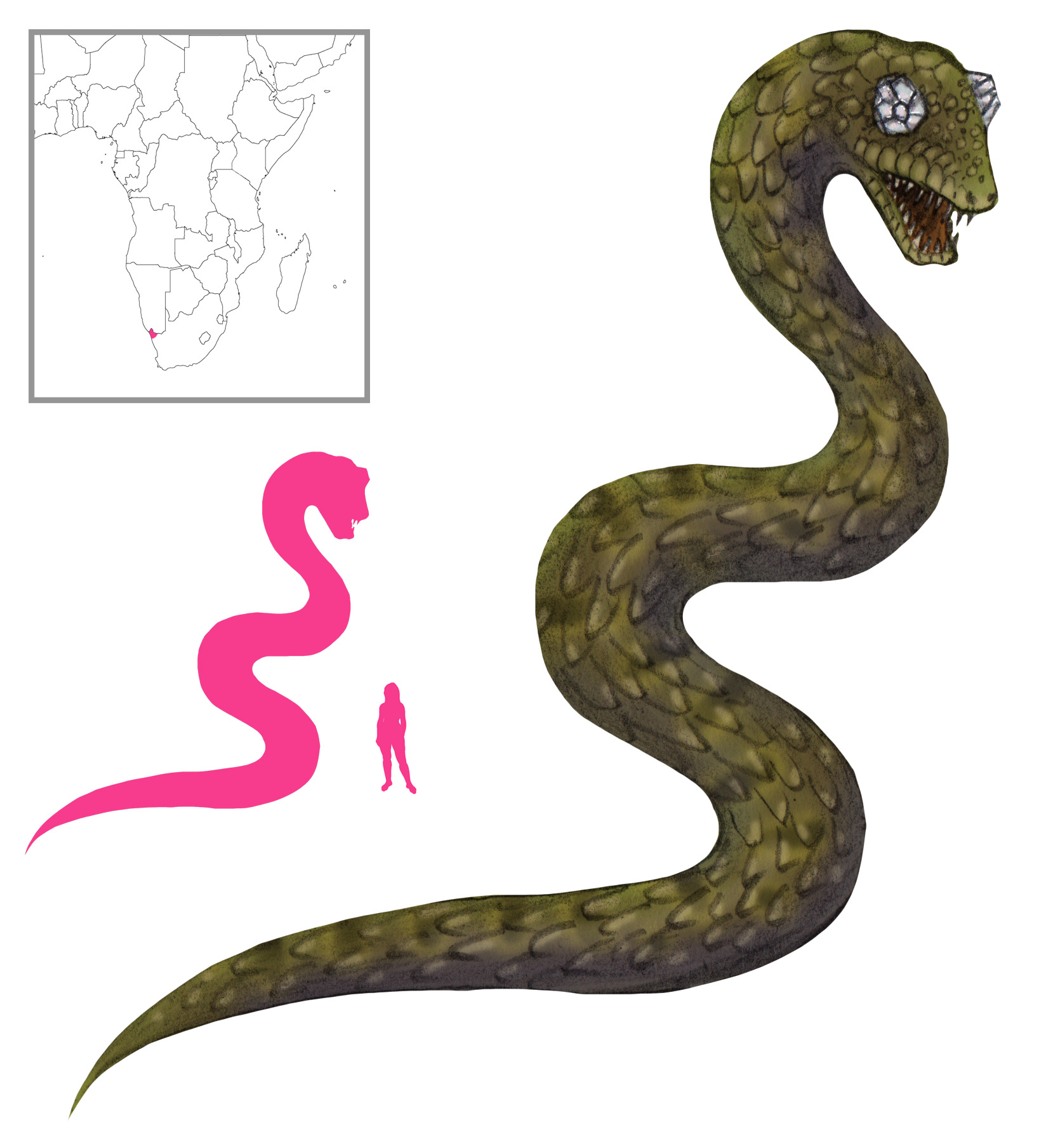
The Grootslang, literally “big snake” or “great snake”, dwells in or around the Orange River in the Richtersveld, South Africa, in association with fabulous diamond deposits. Its home may be in the Orange River itself, a pool underneath the King George Cataract, a big rock, or a semi-mythical cave known as the “Wonder Hole” or the “Bottomless Pit”. The cave is said to be the source of the diamonds of South Africa; from there they move down a pipe to the river, which carries them to the sea.

As its name implies, the grootslang is an enormous snake, big enough to take cattle at the water’s edge. It has huge diamonds in its eye-sockets, and its presence exerts an evil influence on all who see it. It is some forty feet long, and leaves a serpentine spoor on muddy river banks that is 1.5 to 3 feet wide. There are never traces of feet associated with the grootslang’s spoor.

Over time the grootslang has accumulated elephantine features. This stems partly from the cryptozoological desire to connect it to the mokele-mbembe and other such surviving dinosaurs, and partly from Rose’s description of it as “huge, like an elephant, with the tail of a serpent”.

References

Cornell, F. C. (1920) The Glamour of Prospecting. T. Fisher Unwin Ltd., London.

Green, L. G. (1948) Where Men Still Dream. Standard Press Ltd., Cape Town.

Rose, C. (2000) Giants, Monsters, and Dragons. W. W. Norton and Co., New York.

Treesqueak

Variations: Arborexusta stridens (Tryon), Tree-squeak

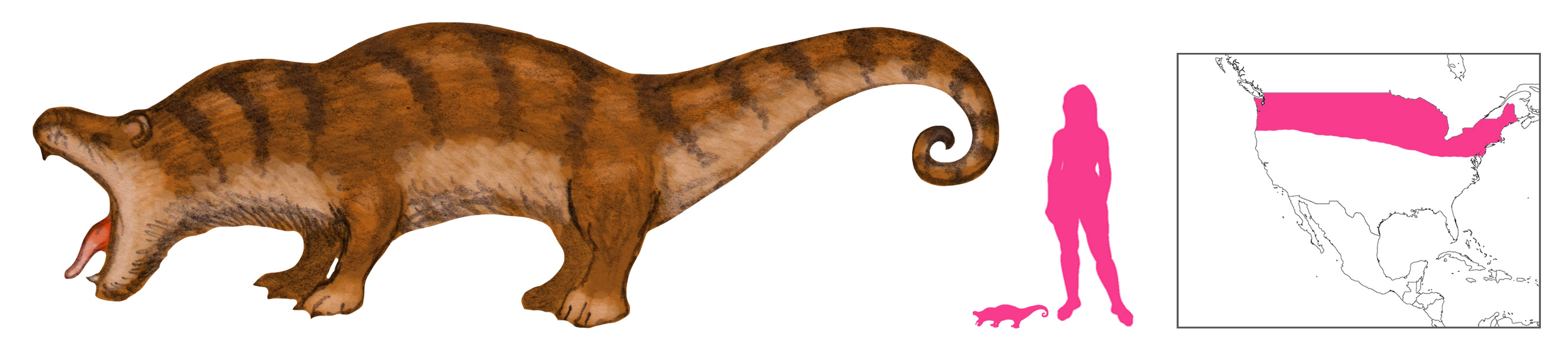
Treesqueaks make a whole variety of sounds, including vocalizations that evoke the wind in the trees, a cougar’s whine, a piglet’s squeal, and firecrackers at a wedding. These critters of the northern woods are small, prehensile-bodied, and can change color to match the tree they’re on. They look like weasels and are about as friendly as weasels.

Unexplained noises are always the work of a treesqueak.

References

Tryon, H. H. (1939) Fearsome Critters. The Idlewild Press, Cornwall, NY.

Variations: Ro, Bete-Rô, Bete-Ro, Bete Rô, Bete Ro (Rô Beast)

The Rô Beast lived in a cavern at the Pointe de Roux, off Aytré near La Rochelle. A hideous dragon with a winged body and a long scaly tail, Rô was also armed with a malign, near-human intelligence. It used its cunning to lay traps for humans and devour them. It was feared across the coastline, and none could stand against it.

But the reign of Rô was ended by seven pagan heroes that arrived on a boat by high tide. They had come to judge Rô. Panicking, the dragon retreated to the Pont de la Pierre, keeping its eyes on its tormentors. There, the heroes loosed seven arrows: two closed its eyes, two pierced its ears, two sealed its nostrils, and one pinned its horrid mouth shut. Roaring and thrashing in agony, Rô was cast into a deep pit, where it will remain until the end of time. The seven pagan heroes took their places as guardians around the pit where Rô thrashed impotently.

Rô still lives, screaming its rage from its prison. When it howls to the north, the gulf of Chevarache in the Breton Pertuis is agitated with waves; when it howls to the south, it’s Maumusson that stirs. The old folk say that it’s a good thing it doesn’t turn to the west, for the islands would turn to dust.

The legend of the Rô beast seems to have grown around the local landscape. The Pont de la Pierre was a ruined cromlech. Seven granite stones (now gone) around a deep pit were said to have been the heroes’ seats of justice. The image of Rô was recognized in the arch of the principal portal of the Church of Talmont, although it may just as well be the lion of Ezekiel.

Who were the pagan heroes? The image of warriors from the sea evokes Vikings, but it may be a relic of an older Gaulish legend of gods arriving from the sea. As for the name Rô, Dontenville saw in it a corruption of an older pagan deity.

References

Dontenville, H. (1966) La France Mythologique. Tchou, Paris.

Lamontellerie, A. (1995) Mythologie de Charente-Maritime. Le Croit Vif, Collection Documentaires.

Sébillot, P. (1905) Le Folk-lore de France, Tome Deuxième: La Mer et les Eaux Douces. Librairie Orientale et Américaine, Paris.