Beathach Mòr Loch Odha

Variations: Big Beast of Loch Awe, Big Beast of Lochawe

big-beast

Like so many other lake monsters, the true nature and appearance of the Beathach Mòr Loch Odha, the “Big Beast of Loch Awe”, is shrouded in mystery. Some say it resembles a giant horse, while others describe a colossal eel. What is known for certain is that the Big Beast is a large and powerful creature with twelve legs. It can be heard in the dead of winter, breaking the ice on the frozen loch.

It has been a long time since the Big Beast was last seen. Its existence is all but forgotten on the shores of Loch Awe, and a resident of Ford interviewed by Fleming in 2001 had nothing to say on its subject.

References

Campbell, J. G. (1900) Superstitions of the Highlands and Islands of Scotland. James MacLehose and Sons, Glasgow.

Fleming, M. (2002) Not of this World: Creatures of the Supernatural in Scotland. Mercat Press, Edinburgh.

Biasd Na Srogaig

Variations: Biasd Na Sgrogag, Biasd Na Grogaig (typo), Béist Na Sgrogaig, The Beast of the Lowering Horn

biasd-na-srogaig

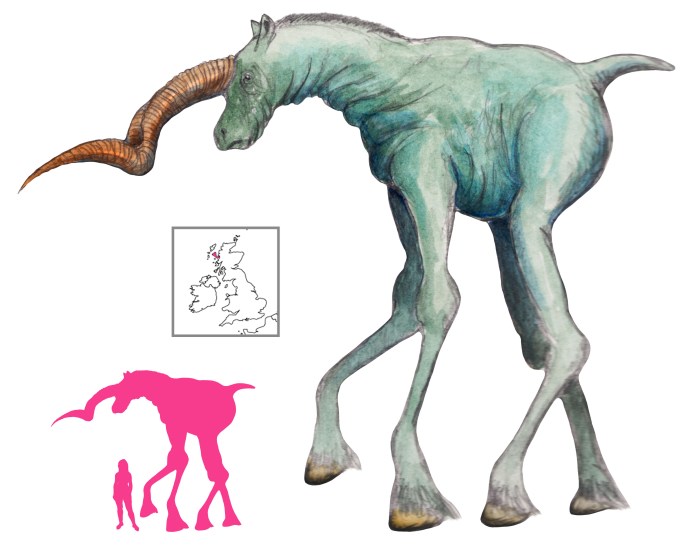
The Biasd Na Srogaig, the “Beast of the Lowering Horn”, is a unicorn or lake monster native to the lochs in the Scottish Isle of Skye. Other than a single large horn on its forehead, it had little in common with the true unicorn, being tall and clumsy, with long gangly legs and an awkward gait. Originally a nursery bogey, the biasd na srogaig eventually developed a life of its own as children brought their fears into adulthood.

Campbell derives the biasd na srogaig’s name from scrogag, a term applied to snuff horns. It is more correctly written as sgrogag, “crumpled horn”. To further muddle the etymological mixture, béist na sgrogaig has been used as synonymous with the heraldic unicorn.

References

Campbell, J. G. (1900) Superstitions of the Highlands and Islands of Scotland. James MacLehose and Sons, Glasgow.

Campbell, J. G.; Black, R. (ed.) (2005) The Gaelic Otherworld. Antony Rowe Ltd, Chippenham.

Fleming, M. (2002) Not of this World: Creatures of the Supernatural in Scotland. Mercat Press, Edinburgh.

Chipfalamfula

chipfalamfula

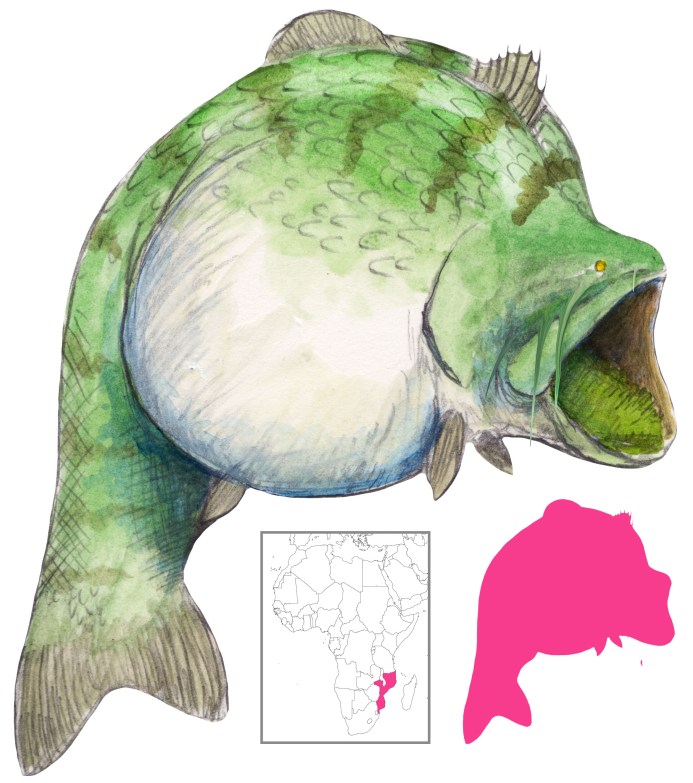
Chipfalamfula, “River-Shutter”, is an enormous aquatic creature found in Ronga Bantu tales and waterways of Mozambique, notably in the bay of Delagoa. It is of indeterminate gender and species, being either a whale or rather a colossal catfish. Chipfalamfula has control over all water, and can provide or withhold it as it pleases, causing droughts and floods alike. It is so large that its belly is a world on its own, with fertile fields, livestock, and communities of people living there happily and wanting for nothing. Tales of young girls living inside Chipfalamfula before returning to the surface may be regarded as coming-of-age stories.

Chichinguane, the youngest daughter of Chief Makenyi, was beloved by her father, but envied and hated by her older sisters. When the young women went to the riverbank to fetch clay for plastering walls, the eldest sister ordered Chichinguane to stay at the bottom of the clay pit and hand her the clay. She did as she was told, only to be left behind by her older sister to face a rising tide.

She had just about given up hope when Chipfalamfula surfaced next to her and opened its cavernous mouth. “Come inside, my daughter”, it told her reassuringly. “Come inside me where you will live in peace and comfort”. So Chichinguane did as she was told, and lived inside Chipfalamfula, sharing the river-shutter’s bounties with its other children.

Years passed, and the outside world caught up with Chichinguane as it was bound to do. Makenyi’s daughters came down to the river again, balancing pitchers of water on their heads and singing “We are the group who puts pitchers on their heads… She who killed her sister killed her in the swamp, where the reeds are tall…” The youngest of the group lagged behind. She was the new youngest member of the family, and now received the same hate the presumed-dead Chichinguane did. She wasn’t good at balancing a pitcher either. She sat down and wept, when lo and behold Chichinguane appeared, attracted by the singing. Her stay in Chipfalamfula had metamorphosed her, and she was now covered in glistening silvery scales. She also wasn’t particularly pleased with the lyrics of the song. “You tried to kill your sister?” she shouted, striking her younger sister. But the girl didn’t even recognize her, whereupon Chichinguane relented, and helped her little sister carry her pitcher. However, she did not follow her into the village, instead diving back into the river.

Soon Chichinguane and her youngest sister were meeting every day, and eventually Chichinguane told her sibling the truth about her and why she lived in the river. The sister returned and told her mother, who followed her to the river and tried to embrace her long-lost daughter. But Chichinguane warned her “Do not try to hold me, mother, I am now a fish and I must live in the water”. She slipped out of her mother’s arms like a greased eel and disappeared underwater again.

She still longed to return to her family, and finally Chipfalamfula allowed her to leave, blessing her with a magic wand to use in time of need. Chichinguane returned to her mother’s hut, where her silver scales fell off her body and become silver coins. Then she told them her story, of her older sister’s treachery, and of the land of milk and honey inside the river-shutter.

Chichinguane interceded to prevent the oldest sister’s execution by the furious Makenyi. This was a mistake, as she returned to her schemes. Talking Chichinguane and the youngest sister into climbing up a tree and sawing off branches, she then collected the branches and left, leaving them out on a limb. To make matters worse, a family of one-legged, one-armed, one-eyed, and one-eared ogres saw the two girls in the tree and started cutting it down. Fortunately, Chichinguane used the river-shutter’s wand to heal the tree every time it started to fall. The ogres grew tired and decided to rest, giving Chichinguane and her sister a window to escape. They climbed down the tree and ran with the ogres in hot pursuit, and when they reached the river, Chichinguane touched it with the wand and sang “Chipfalamfula, shut off the water”. The water parted before her and the two girls ran through to safety. The ogres were halfway through when Chipfalamfula opened the water again and drowned them. On their way back, Chichinguane and her sister found the ogres’ cave, full of untold riches, and returned home in regal finery.

The eldest sister was decapitated despite Chichinguane’s entreaties.

The name Chichinguane has confusingly been given to both the youngest and the eldest daughter. The latter is the case in Junod’s older source; Knappert’s usage of the name for the heroine has been preserved here.

References

Junod, H. A. (1897) Les Chants et les Contes des Ba-Ronga. Georges Bridel et Cie, Lausanne.

Knappert, J. (1977) Bantu myths and other tales. E. J. Brill, Leiden.

Tlilcoatl

Variations: Acoatl

acoatl

The Tlilcoatl (“black snake”) or Acoatl (“water snake”) is a long, powerful snake found in the swamps and waterlogged caves of Mexico. This glossy black snake is thick enough that a man’s arms can just barely wrap around it. The scales are a glossy black in color. The head is large, with blazing eyes and beardlike appendages at the back similar to those of the barbel. The tail is bifurcated.

The powerful mouth of a tlilcoatl can generate a suction strong enough to draw in prey from a distance. Tlilcoatls feed mostly on fish, but they are not above drowning and eating people. They can spit venom as passers-by, incapacitating them enough to suck them in, pull them underwater, and devour them.

Sometimes a more elaborate stratagem is required. A tlilcoatl will dig out a small pool and stock it with fish to serve as bait. It pauses after depositing a new catch of fish, looking around, then going back to get more. It is tempting to profit from the snake’s absence to steal fish. But the tlilcoatl, standing erect, easily detects thieves, and chases them so fast that it seems to fly over the grass. Once in the snake’s coils there is no escape; the tlilcoatl pushes both ends of its tail into the unfortunate victim’s nostrils (or any other opening) before squeezing the life out of them.

There is, however, a means of stealing a tlilcoatl’s fish cache and escaping alive. All that is required is a hollow tree. When chased by the serpent, would-be fish thieves should hide within the tree. The tlilcoatl will coil around the unyielding trunk and squeeze so hard that it dies.

References

Nuttall, Z. (1895) A Note on Ancient Mexican Folk-lore. The Journal of American Folklore, v. 8, no. 29, pp. 117-129.

Sahagun, B. (1830) Historia General de las Cosas de Nueva España, v. III. Alejandro Valdés, Calle de Santo Domingo, Esquina de Tacuba, Mexico.

Dungavenhooter

Variations: Crocodilus hauriens

dungavenhooter

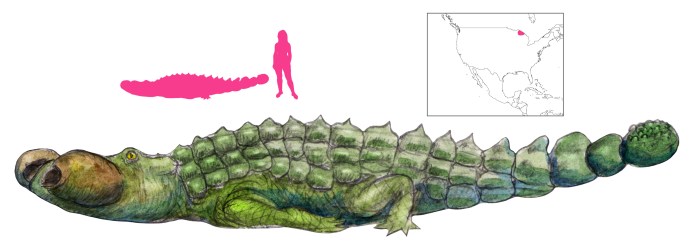
The Dungavenhooter is a Fearsome Critter found lurking in Michigan’s Upper Peninsula, although it once ranged as far as Maine. This cunning and dangerous swamp-dweller resembles an alligator with short legs and a thick, powerful tail. Notably, a dungavenhooter lacks a mouth, instead sporting enormous nostrils. The call is a loud snort.

Dungavenhooters ambush prey by hiding in whiffle bushes. They are especially attracted to inebriated loggers, presumably avoiding competition with the teetotal hidebehinds. Anyone passing within range is clubbed with the creature’s tail, then pounded into a gas which the dungavenhooter inhales.

References

Tryon, H. H. (1939) Fearsome Critters. The Idlewild Press, Cornwall, NY.

Lupeux

lupeux

“Ah, ah! Ah, ah!” The sound echoes through the still, moonlit ponds of Brenne. “Ah, ah, ah!” It’s a pleasant, gently teasing sort of laugh, in a soft human voice. You look around you, but the sound is hard to place. “Who’s there?” you might think of asking. “What’s going on?” Inhabitants of the Berry region in France know better than to respond. Your traveling companion chides you. “For the love of God, don’t answer a third time!”

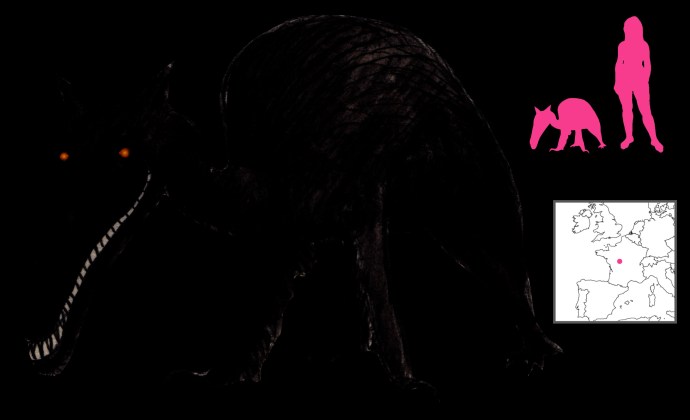
The laughter comes from the Lupeux, a mysterious, perverse creature with a cruel sense of humor. The lupeux is heard but not seen. Its appearance is uncertain and varies from area to area, but it usually has the head of a wolf, as hinted by its name.

“Ah, ah!” You don’t heed your friend’s warning and call out once more. “What’s funny?” That’s when the floodgates open. The lupeux’s laughter ceases, and it begins to talk to you. In its friendly, genial, engaging voice, it relates juicy rumors, scandalous gossip, inside secrets. If you’re single, it tantalizes you with its matchmaking, sets you up with the hottest dates; if you’re romantically involved, it taunts you with your partner’s infidelity and reveals all their secret lovers. There is seemingly nothing the lupeux doesn’t know – or pretend to know.

Once in the lupeux’s spell, you do not tire of listening to it. You follow its congenial voice as it travels through the skeletal branches of blasted willows, desperate for more. Then the voice stops moving, and you stop in front of a pool, crystal clear, reflecting you and all your hopes and fears, all the tales the lupeux has planted in your head. You come closer for a better look – and the lupeux pushes you in. As you sink into the bottomless pool, as the cold water pours into your lungs and you take your last breath, you see the lupeux perched on a nearby branch, watching you drown and laughing in its charming, friendly voice. “Ah, ah! Now that’s funny”.

References

Jaubert, H. (1864) Glossaire du Centre de la France. Imprimerie et Librairie Centrales de Napoleon Chaix et Cie, Paris.

Sand, G. (1858) Légendes Rustiques. Amorel et Cie Libraires-Editeurs, Paris.

Xicalcoatl

Variations: Jicara Snake, Chocolate Cup Snake, Malinche

xicalcoatl

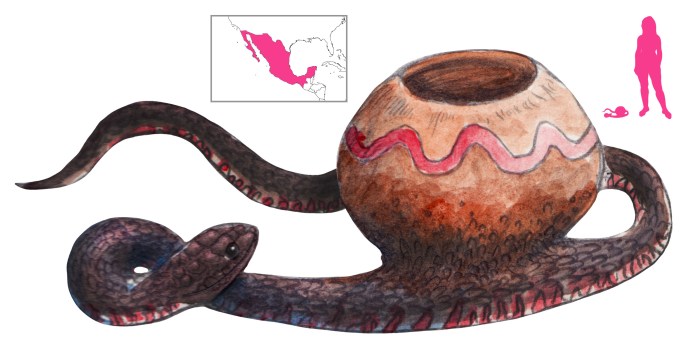
Both large and small varieties of the Xicalcoatl, the Aztec “Chocolate Cup Snake”, exist, and may be found in the waterways of Mexico. They are black in color with variegated bellies. When they reach maturity, xicalcoatls develop an excrescence on their backs. This natural growth looks like a jicara (a gourd chocolate cup) down to the last detail, with colorful designs and patterns on its smooth surface.

Xicalcoatls lure humans to their doom by submerging themselves in water and allowing the painted jicara to show above the surface. A passer-by, seeing the chocolate cup seemingly floating on the water, will try to seize it, but their attentions only cause the cup to drift further and further away. When the victim reaches a sufficient depth, the xicalcoatl causes the water to churn and drown the unfortunate chocolate-seeker.

A watered-down version of this tale persists in Mexico in the form of the evil fairy Malinche, who leaves painted chocolate cups in the water to tempt children.

References

Nuttall, Z. (1895) A Note on Ancient Mexican Folk-lore. The Journal of American Folklore, v. 8, no. 29, pp. 117-129.

Sahagun, B. (1830) Historia General de las Cosas de Nueva España, v. III. Alejandro Valdés, Calle de Santo Domingo, Esquina de Tacuba, Mexico.

Shoo Fly

shoo-fly

Noted journalist, humorist, and spinner of tall tales Dan De Quille introduced the Shoo Fly to the world in the October 14, 1870 issue of the Territorial Enterprise. Since then, attempts to find a representative type specimen of this remarkable insect have failed.

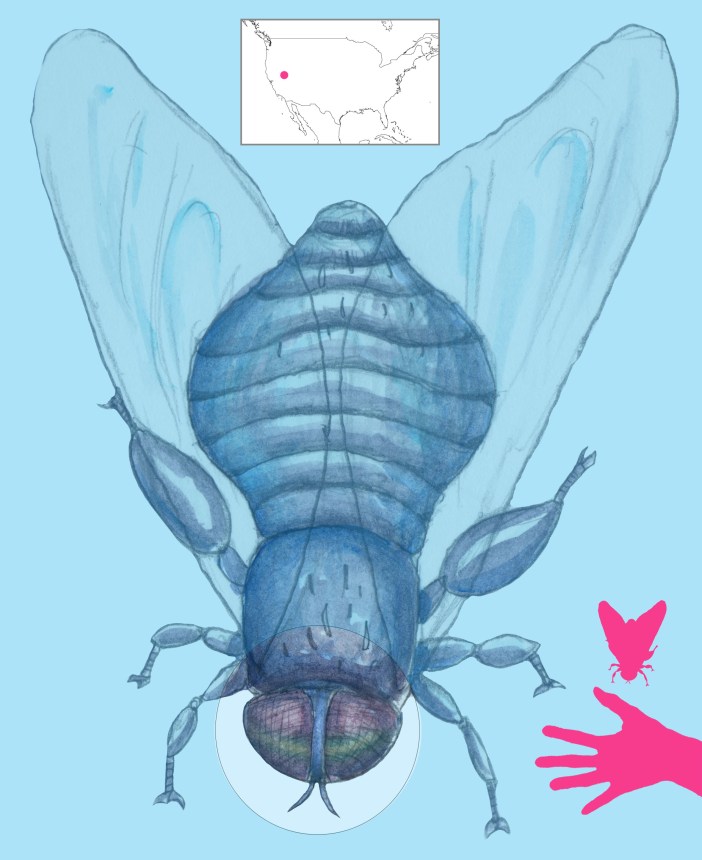
Shoo flies are large aquatic flies native to a shallow warm lake fourteen miles northeast of Mud Lake in Washoe County, Nevada. They were discovered and appropriately named by prospectors. A shoo fly is black in color, four inches long and with an abdomen three inches in circumference. The transparent wings resemble those of a horsefly and produce a ten-inch wingspan. Shoo fly larvae are deep green in color, six inches long and four inches wide, and feed on rushes; after roasting they look like sweet potatoes and have a vegetable taste, making them prized food commodities.

Swarms of shoo flies buzz over the waters of the lake and under it. The flies can go underwater and produce an air bubble that forms around their heads. With this organic scuba gear, the flies can stay underwater indefinitely.

One dead fly was brought back to civilization by the prospectors, where it was displayed dangling from a string in Piper’s Saloon at the corner of B and Union streets. But when a San Francisco entomologist volunteered to identify the insect, suggesting that it may be a hymenopteran (bee or wasp) rather than a dipteran fly, De Quille pointed out that the snow storm blew all the flies into their lake, and the proprietors of the saloon refuse to part with their attraction. Furthermore, he added – tongue firmly in cheek – that based on the shoo fly’s “cuspidated tentacles” and the “scarabaeus formation of the thoracic pellicle”, he believed it to be “a genuine bug of the genus “hum””.

References

Lewicki, J. and the editors of LIFE (1960) Folklore of America, part V. LIFE Magazine, Aug. 22, 1960.

Loomis, C. G. (1946) The Tall Tales of Dan De Quille. California Folklore Quarterly, Volume V, No. 1, January 1946.

Rahara

Variations: The Beast

rahara

Deep, permanent lagoons in Brazil and Venezuela are home to the Rahara. According to the Yanomami, this aquatic monster once lived in a large lagoon called Akrawa. Since then the rahara has moved upstream in the Orinoco, finding suitable lagoons to inhabit, or enlarging small lagoons to better fit inside. A rahara lagoon never dries out and can be recognized by observing the shore – there are tracks leading in, but none leading out.

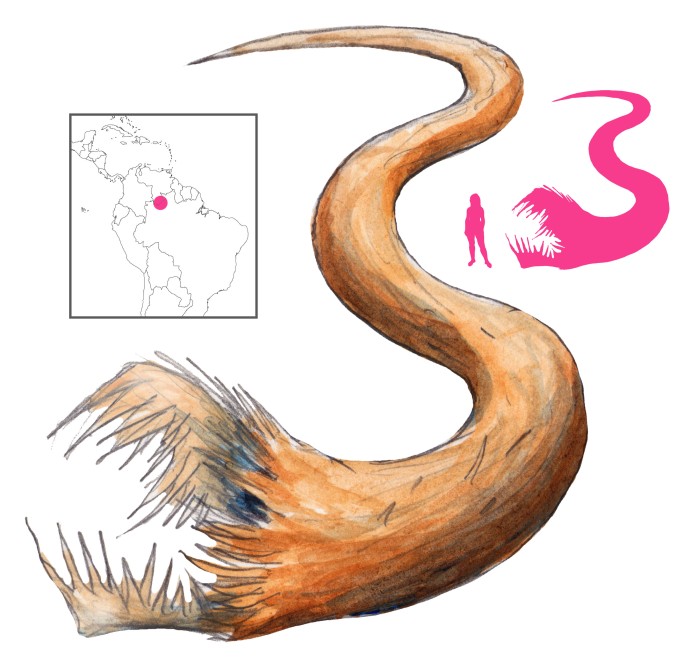
The rahara is the uncle of the anaconda, and grows to greater sizes. It may or may not have feet. Its serpentine body is like a rotten pawpaw tree or a manioc strainer. It is capable of drawing people towards it and swallowing them whole. A rahara will be attracted to fire as it is sure to find a meal there; it will also rush out of its submarine hole to swallow anyone foolish enough to say its name out loud, so it is usually referred to as “the beast”. When in a good mood, raharas make a snapping sound and alert others to their presence. Silence is dangerous.

Raharas have pets in the form of hoatzins and curassows, which roost above the waterholes to entice hunters.  Snakes are also associated with the raharas. One talking boa constrictor turned into a live baby rahara after being shot dead by a hunter. It was kept as a pet in a water-filled palm spathe until it grew big enough to devour its entire adopted village. Finally, the raharas are responsible for floods, tsunamis, and other water-based disasters.

It is advisable to avoid known rahara haunts, and refrain from drinking, bathing, or fishing in those waters. A messenger once ignored those warnings and bathed in such a pond, and was immediately swallowed by a rahara. He called out “Help! Over here!” from inside the creature’s belly, and men arrived from the village with bamboo lances. They began running the rahara – and its prey – through. “Stop! You’re hurting me!” he screamed from inside, but they ignored him until both he and the rahara were dead.

Presumably the man was not well-liked.

References

Albert, B.; Becher, H.; Borgman, D. M.; Cocco, L.; Colchester, M. E. M.; Finkers, J.; Knobloch, F.; Lizot, J.; and Wilbert, J.; Wilbert, J. and Simoneau, K. eds. (1990) Folk Literature of the Yanomami Indians. UCLA Latin American Center Publications, University of California, Los Angeles.

Lizot, J.; Simon, E. trans. (1985) Tales of the Yanomami. Cambridge University Press, Cambridge.

Indombe

indombe

Indombe is fire, Indombe is life, Indombe is motherhood, Indombe is a slave to the power of death. She is an enormous copper snake over three feet wide, and several miles in length, and she makes her home in the trees of the Congo. Her cupreous body glows red with internal heat; she is immeasurably old, associated with the sun and the sunset in particular. Her tale is mysterious and metaphorical, and her ancestry is probably Semitic.

Itonde, hero and creator figure of the Congo, had been sent on a bizarre errand. His sister-in-law was pregnant, and she had developed a craving for snakes, so Itonde and his brother Lofale went into the forest to find them. There they saw Indombe coiled in a tree, shining bright as the sun. “Great Indombe”, said Itonde, “come down and let us talk together”. As Indombe refused to leave her perch, Itonde started chanting: “Indombe of the Bakongo, come down so I may carry you!” The giant snake was furious. “How dare you try to bewitch me?” she roared, causing her flames to flare and illuminate the entire forest. She then put her red-hot head on Itonde’s shoulder, severely burning him and leaving him for dead.

Fortunately for Itonde he was the owner of a magic bell, and he rang it, immediately recovering from his injuries. He did not want Indombe to gain the advantage of nightfall, so he captured the sun itself. Indombe next tried to constrict him, but Itonde kept ringing his bell, causing him to grow taller and stronger while the snake weakened.

It was in this state that Itonde triumphantly carried Indombe back to his village. He set her down outside the entrance of the village, and Indombe immediately coiled around the village and swallowed every last man, woman, and child. “You monster!” cried Itonde. “I’ll kill you, cut you up, and eat you!” Itonde produced his enchanted machete, and Indombe, seeing her death approaching, warned the hero. “If you kill me, eat me all today; you will not survive if you leave a single piece”. She was then promptly decapitated, cut into slices, and fried in oil. Itonde ate every piece, but left the inedible head, putting it under his bed.

Next morning, he awake to the horrifying discovery that Indombe was still there – but was now a ghost! “I told you eat all of me” she explained, “so now I return as a spirit, to aid you and show you a good place to live”. The spectral copper snake led Itonde to her village, a beautiful, disease-free location for future generations. Itonde then found out that Lofale was dead, killed by Indombe; but he could not avenge himself on a ghost, so he sought out a man in the forest. His quarry tried to hide by transforming into the first sugar-cane, but Itonde found and killed him as an expiatory sacrifice, discovering sugar-cane in the process.

“This village shall be yours because you are a strong fighter”, said Indombe. “Your name shall now be Ilelangonda. Farewell to you all”. With that the ghostly snake coiled up, jumped into the river, and disappeared.

References

Knappert, J. (1971) Myths and Legends of the Congo. Heinemann Educational Books, London.