Onniont

Onniont

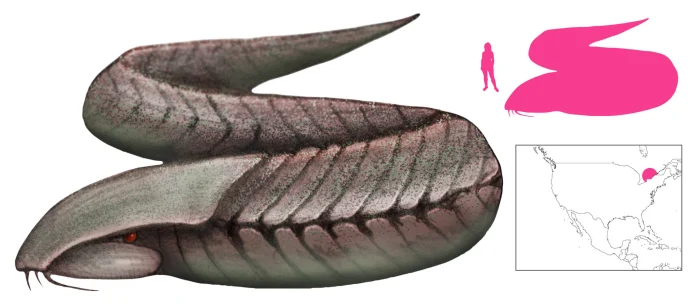
The Onniont is a huge serpent of Huron folklore that looks like an armored fish. When it travels, it breaks through everything in its path. Rocks, trees, and bears are all grist to its mill. An onniont is unstoppable. Any small part of it would make a potent talisman.

Nobody ever saw an onniont. According to Jesuit missionaries, however, neighboring Algonquin merchants claimed to sell pieces of onniont, and publicized the legend themselves.

References

Vimont, B. (1858) Relations des Jésuites, v. II. Augustin Coté, Quebec.

Opimachus

Variations: Chargol, Ophiomachis, Ophiomachus, Opimacus, Opymachus, Ibis, Snake-eater; Attachus (probably); Opinicus, Epimacus (probably)

Opimachus

There is only one Biblical mention of the insect called chargol, in Leviticus 11:22, as one of the four insects that are safe for consumption. It has been assumed to mean “beetle” in some translations. Other identifications include a katydid or bush cricket, a species of Gryllus cricket, or the wart-eating cricket.

The Septuagint’s translators borrowed heavily from Aristotle in an effort to give names to all the animals in the Bible. An Aristotelian account of locusts fighting and killing snakes (perhaps based on stories of insects feeding on dead snakes?) gave the chargol the name of ophiomachus, “snake fighter”. This in turn became the opimachus or opimacus, described by Thomas de Cantimpré and subsequently Albertus Magnus as a worm that attaches itself just below a snake’s head. It cannot be removed and kills the snake.

By the time the opimachus or opymachus was described in the Ortus Sanitatis (citing Thomas), it had become confused beyond recognition. While Thomas and Albertus list it among the insects, it is now placed with the birds as a small fowl. It is depicted as a quadrupedal griffin with a long pointed beak and large rabbit’s ears. It has longer hind legs to permit it to jump. It may or may not be the same as the bird known as attachus.

Dapper says that the ophiomachi or ibides (ibises) are birds that live in Ethiopia and are so named because they eat snakes.

Finally, the long journey of the snake-fighter comes to an end with the opinicus or epimacus, a variety of generic heraldic griffin whose name is almost certainly derived from a Levitical insect.

References

de Cantimpré, T. (1280) Liber de natura rerum. Bibliothèque municipale de Valenciennes.

Coogan, M. D.; Brettler, M. Z.; Newsom, C.; Perkins, P. (eds.) (2010) The New Oxford Annotated Bible. Oxford University Press, Oxford.

Cuba, J. (1539) Le iardin de santé. Philippe le Noir, Paris.

Dapper, O. (1686) Description de l’Afrique. Wolfgang, Waesberge, Boom, & van Someren, Amsterdam.

Harris, T. M. (1833) A Dictionary of the Natural History of the Bible. T. T. and J. Tegg, London.

Magnus, A. (1920) De Animalibus Libri XXVI. Aschendorffschen Verlagbuchhandlung, Münster.

Unknown. (1538) Ortus Sanitatis. Joannes de Cereto de Tridino.

Vinycomb, J. (1906) Fictitious and Symbolic Creatures in Art, with Special Reference to their Use in British Heraldry. Chapman and Hall, London.

Nadubi

Nadubi

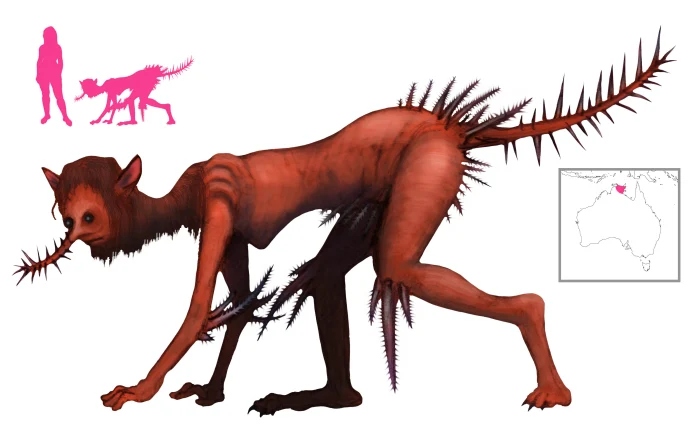
The Nadubi is one of a variety of evil nocturnal spirits that haunt Australia. Nadubi may be found on the rocky plateau of Arnhem Land. They serve as a warning against traveling alone in the bush during the chilly hours of night.

Nadubi are a spirit people similar to humans in appearance but with barbed spines sprouting from their elbows and knees. Cave paintings at Oenpelli show a nadubi woman with spines on several areas of her body, including her elbows and vulva. Another cave painting at Sleisbeck shows a kangaroo-like creature with a spiny tail and spiny projections on its mouth and rear; this may also be a depiction of a nadubi.

A nadubi will creep up on a lone traveler and project a spine into his or her body. The victim can only be saved by the timely removal of the spine by a medicine man; usually this aid is administered too late, and the unfortunate sufferer sickens and dies. As only medicine men can see nadubi, it falls onto them to drive those malignant spirits away from encampments.

Despite their best efforts, every now and then the vigilance of the medicine men slips, and a scream in the night testifies to the fate of another solitary wanderer.

References

Johnson, D. (2014) Night Skies of Aboriginal Australia. Sydney University Press, Sydney.

Mountford, C. P. (1957) Aboriginal Bark Paintings from Field Island, Northern Territory. Records of the South Australian Museum, v. XIII, no. 1, pp. 87-89.

Mountford, C. P. (1958) Aboriginal Cave Paintings at Sleisbeck, Northern Australia. Records of the South Australian Museum, v. XIII, no. 2, pp. 147-155.

Roberts, A. R. and Mountford, C. P. (1975) The Dawn of Time. Rigby Limited, Adelaide.

Velachif

Velachif

The Velachif is a giant and hideous snake found above the lake of Tenochtitlan. It is amphibious like a crocodile, and extremely venomous; death is virtually certain if bitten by one. A velachif has a rounded head, a parrot-like beak, and a colorful, predominantly red body.

The inhabitants of Mexico frequently hunt it. Its flesh is of excellent quality.

References

Thevet, A. (1575) La Cosmographie Universelle. Guillaume Chaudiere, Paris.

Ahuna

Variations: Ahune, Ahunum, Hahanc, Hahane, Hahune, Hahanie, Channa, Cestreus, Fastaroz, Mullet, Swam-fisk, Swamfisck, Swamfysck, Svvamfysck

Swamfisk final - Copy

The long journey of the Ahuna begins in Aristotle, where the cestreus (mullet) is described as the most greedy of all fish, with a frequently distended abdomen. It is edible only when its belly is empty. When threatened it hides its head, convinced that its whole body is hidden that way. In the same sentence Aristotle then mentions the sinodon (dentex) that is carnivorous and eats squid, and the following sentence deals with the channa (grouper) that lacks an oesophagus and whose mouth opens directly into its stomach.

Michael Scot’s translation from the Arabic gives fastaroz for the mullet, theaidoz for dentex, and hahanie for grouper. He also mistranslates the phrase “the dentex is carnivorous and eats squid”, instead assuming that the adjective “carnivorous” applies to the previously-mentioned mullet – not only that, but it becomes self-carnivorous. Now the mullet hides its head when frightened, and consumes itself. Another lapse creates the hahune or ahuna, which exists only as a comparison to the mullet (“the mullet is more voracious than the other fishes and especially that which is known as ahuna”).

By the time Cantimpré compiled his bestiary, mullet, dentex, and grouper were all combined into one creature, the ahuna or hahuna. This sea monster is highly voracious and will feed until its belly swells beyond the size of its own body. Its mouth connects directly to its stomach; in fact, it has no neck or stomach to speak of. When attacked it tucks its head and limbs away in its body like a hedgehog, folding its skin and tissues over itself. It will remain like this until the danger goes away. If hunger strikes while the ahuna is curled up, it will be forced to eat part of itself to assuage its insatiable gluttony.

We are not given any physical description of the ahuna besides its chubbiness. One of Cantimpré’s depictions gives it an avian beak and horizontal wavy stripes; the Ortus Sanitatis, on the other hand, makes the ahuna a literal sea-hedgehog, complete with a curly tail.

The swamfisk described by Olaus Magnus appears off the coast of Norway and otherwise follows the exact description given by Cantimpré. It is much less common than cetaceans and is frequently hunted for its fat and oil, used primarily for treating leather and providing light during the long winter months. If Olaus Magnus was plagiarizing wholesale, the name he uses is unique.

De Montfort, unaware of its origins, believed the swamfisk to be a giant octopus.

References

Aristotle, Cresswell, R. trans. (1862) Aristotle’s History of Animals. Henry G. Bohn, London.

de Cantimpré, T. (1280) Liber de natura rerum. Bibliothèque municipale de Valenciennes.

Cuba, J. (1539) Le iardin de santé. Philippe le Noir, Paris.

Gauvin, B.; Jacquemard, C.; and Lucas-Avenel, M. (2013) L’auctoritas de Thomas de Cantimpré en matière ichtyologique (Vincent de Beauvais, Albert le Grand, l’Hortus sanitatis). Kentron, 29, pp. 69-108.

Magnus, A. (1920) De Animalibus Libri XXVI. Aschendorffschen Verlagbuchhandlung, Münster.

Magnus, O. (1555) Historia de gentibus septentrionalibus. Giovanni M. Viotto, Rome.

Magnus, O. (1561) Histoire des pays septentrionaus. Christophle Plantin, Antwerp.

de Montfort, P. D. (1801) Histoire Naturelle, Générale et Particuliere des Mollusques, Tome Second. F. Dufart, Paris.

Swan, J. (1643) Speculum Mundi. Roger Daniel, Cambridge.

Unknown. (1538) Ortus Sanitatis. Joannes de Cereto de Tridino.
Xiao

Variations: Raucous-Bird

Xiao

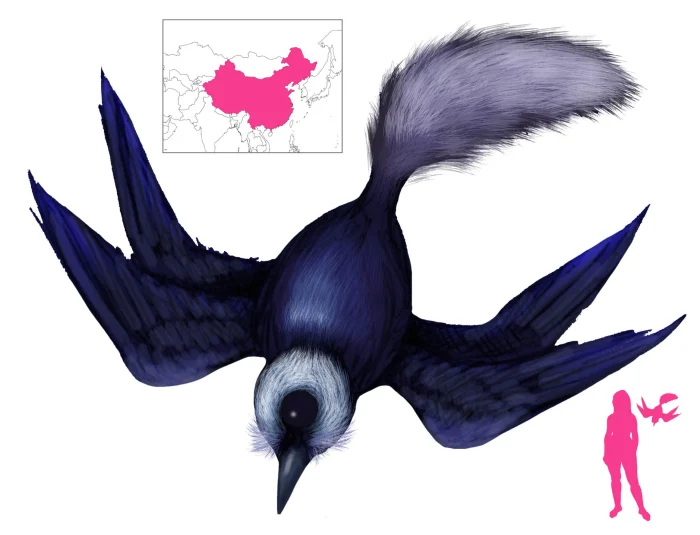
The Xiao or Raucous-Bird dwells on China’s Bridge-Channel Mountain. It is a bird with four wings, one eye, and a dog’s tail. It makes sounds like a magpie. Eating it cures abdominal pain and diarrhea. The Shan Hai Jing assures us that it resembles Kuafu the Boaster, which it does not.

It shares its name with an unrelated simian creature that resembles a Yu-Ape with longer arms.

References

Strassberg, R. E. (2002) A Chinese Bestiary: Strange Creatures from the Guideways Through Mountains and Seas. University of California Press.

Ichisonga

Ichisonga

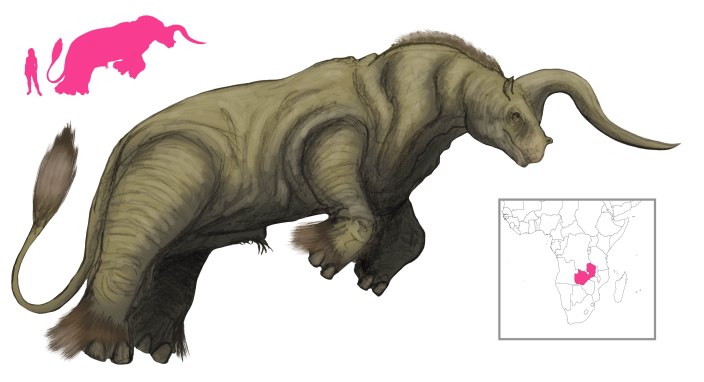
The Ichisonga is a pachyderm-slayer from the folklore of the Lambas of Zambia, usually found in the Kafue River. It is a herbivorous water beast that resembles a rhinoceros and has a horn on its forehead.

Although a grass-eater, the ichisonga has a special hatred for the hippopotamus. If an ichisonga hears a hippo, it leaves the Kafue River, traveling along the bank so the hippo does not scent it. Then it re-enters the water, goes for the largest bull hippo, and stabs it to death with its horn.

If an elephant is killed nearby, the ichisonga will roar and drive the hunters away from the carcass. It then stays near the elephant’s remains for days until the carcass rots. The ichisonga is motivated by uŵulwishya – jealousy.

References

Doke, C. M. (1931) The Lambas of Northern Rhodesia. George G. Harrap and Company Ltd., London.

Rumptifusel

Variations: Villosus sumptuosus (Tryon), Rumtifusel (Tryon)

Rumtifusel

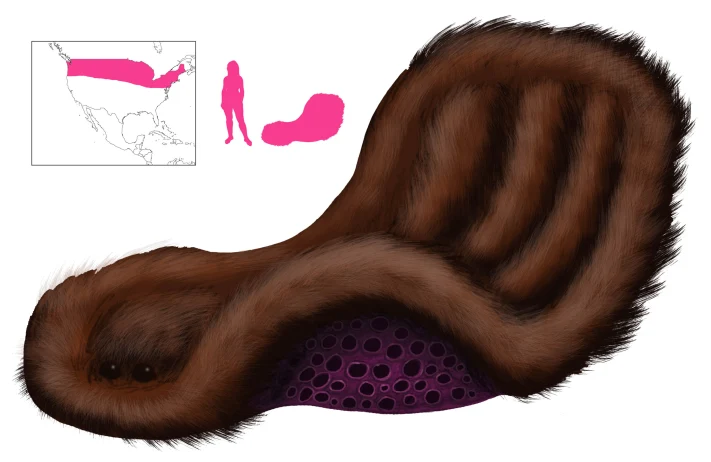
There is a common misconception that “owl pellets” are left behind by owls. This belief, spread by highfalutin scientists, is a load of hooey. Any lumberjack can tell you that those pellets are wadded-up clumps of clothing, the only remains of unfortunate greenhorns who approached a Rumptifusel.

Rumptifusels are big, vicious animals covered in a fine pelt not unlike mink. They are flat and very flexible and not too fast. Much like the anglerfish and the alligator snapping turtle, the rumptifusel lures prey within reach by appealing to greed. A rumptifusel catches its prey by draping its thin body over a stump or log in plain sight, looking for all the world like an abandoned expensive fur coat. When a greedy tenderfoot approaches for a better look, the rumptifusel – moving with deceptive speed – engulfs its victim. The underside of the critter is lined with tiny sucking pores, and its prey is thoroughly drained off its bones.

References

Brown, C. E. (1935) Paul Bunyan Natural History. Madison, Wisconsin.

Tryon, H. H. (1939) Fearsome Critters. The Idlewild Press, Cornwall, NY.

Skeljaskrímsli

Variations: Fjörulalli (Beach Walker), Fjörulabbi (Beach Roamer), Fjörudýr (Shore Animal), Rauðkálfur (Red Calf), Saeúlfur (Sea Wolf), Skeljalabbi (Shell Roamer), Skeljalalli (Shell Walker)

Skeljaskrimsli

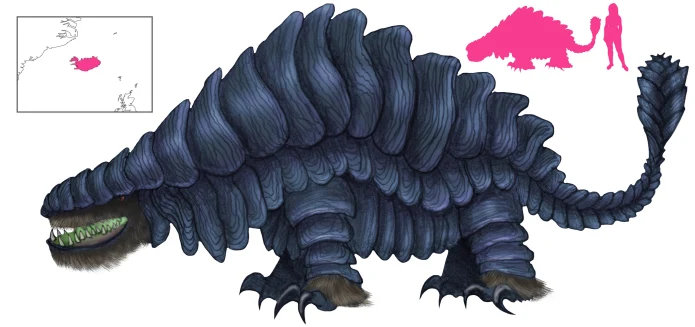
The name Skeljaskrímsli, “shell monster”, refers to a number of Icelandic shore animals known by a variety of names. Consistent among the accounts are the association with the beach, a hump on the back, and a coat of shells that rattle as the creature walks. Shell monsters have been sighted on the coasts of all the main regions of Iceland, and at least one report (the Glúmsstaðir farm’s in Fljótavík, Hornstrandir) describes a freshwater specimen.

As specified by Hlidberg and Aegisson, the skeljaskrímsli proper is a quadrupedal marine creature, bulky and powerfully built. It is the size of a winter’s old bull calf or a huge horse. The neck is broad, the jaws and teeth impressive, and the eyes reddish. There may be a phosphorescent glow coming from the mouth. The skeljaskrímsli’s tail is long and armed with a lump at the end. The short, strong legs end in circular feet armed with large claws.

The skeljaskrímsli earns its name from the thick reflective coat of shells (or flaky scales) that covers its body. These rattle and scrape against each other as the creature moves, giving warning of its arrival. As the shell monster approaches, its powerful stench also becomes apparent. There is little good to say about the shell monster – even its blood is toxic.

Skeljaskrímslis live in the sea and haul themselves onto shore in the dark moonless nights of the northern winter. Often they can be seen before or after spells of bad weather and storms. They are attracted to light and will leave deep gouges in farmhouse doors. Suffice to say that anyone who encounters one of these surly brutes will be in for a bad time.

Most weapons are useless against a skeljaskrímsli’s formidable defenses. One farmer who battled a skeljaskrímsli managed to keep it at bay until the monster tired and returned to the sea; the farmer was stricken with leprosy for his trouble. Another farmer managed to wound a skeljaskrímsli, but some of its poisonous blood spattered onto him, and he died in agony soon after.

To harm a skeljaskrímsli one must resort to alternative ammunition. Shooting silver buttons, grey willow catkins, or lamb droppings from a gun are the only ways to injure and kill this beast.

The Fjörulalli is the best-known variant of the skeljaskrímsli. It is also the size of a winter’s old bull calf, and has been reported as being smaller, about as big as a dog. A tail may or may not be present, and the head is a small, rounded outgrowth. It is covered with shells or lava fragments that scrape together as it moves. Unlike the larger shell-monsters, these smaller ones are usually harmless. They will, however, tear the udders off sheep, and pregnant women should avoid them lest they negatively affect their unborn babies.

References

Hlidberg, J. B. and Aegisson, S.; McQueen, F. J. M. and Kjartansson, R., trans. (2011) Meeting with Monsters. JPV utgafa, Reykjavik.