anotuw

A Natural History of the Unnatural World

by Joel Levy and the Cryptozoological Society of London


The world of teratological books can be a minefield at times. It’s hard to extricate serious research from complete fabrication, and sometimes supposedly serious books (Borges and Dubois’ works notably) have bogus myths that then get parroted by other works as true. Then there are cryptozoological books which generally are separate from myth and folklore… except in this case.

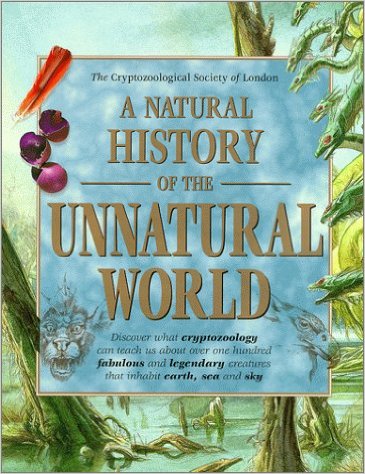
A Natural History of the Unnatural World (ANOTUW from now on) has a special place in my heart for being one of the first books that really got me into mythical entities. Presented as a cryptozoological book written by the ersatz “Cryptozoological Society of London”, it is actually more of a tongue-in-cheek book that treats legendary beasts as cryptids. Oh, and there’s some actual cryptids in there like apemen and the Loch Ness monster, but otherwise ANOTUW is neither fish nor fowl nor alectrocampus. In fact, even the publishers seem to have realized that and reprinted it under the name Fabulous Creatures and other Magical Beings. A much more sensible name, if you ask me, but as I have the original version I will be reviewing that. If you don’t trust my judgement and want to buy it for yourself, you can get it here and here.

Scope

Going by the title you’d think this was a book about cryptozoology, but no self-respecting cryptid manual that I know of has sections on chimeras, simurghs, fairies, basilisks, and griffins. Instead this book covers the wide range of legendary creatures you’d expect from a mythology book. The only actual cryptids are giant invertebrates, lake monsters, the chupacabras, and apemen. Also included are various spotlights on mythical characters who encountered those creatures: Atalanta, Jack the Giant-Killer, Sindbad, and so on. Definitely very broad in scope, which may not be what you’d want as an advanced teratologist. On the other hand, a cryptozoologist would find little in the way of useful knowledge, as the cryptids covered are merely the best-known ones. Besides, lumping them with mythical creatures might be a bit insulting.

Organization

ANOTUW is laid out somewhat haphazardly. The creatures are divided by morphology: Invertebrates, Reptiles, Birds, Mammals, Hybrids, Manimals (that’s human/animal hybrids), and Hominids. The entries themselves are in several different styles: CSL Reviews (magazine entries, the most “serious”-looking ones), Field Reports (field-note style papers and sketches), Letters (correspondence sent to the CSL), assorted document clippings, and large double-page spreads of mythical hero art.

Text

The text makes it clear that the book is not meant to be serious, with plenty of jokes, puns, and stereotypes. The Thunderbird entry is a newspaper clipping from the “Hangman’s Gulch Herald”, complete with an ad for “Dr. Boardman’s Patent Tonic Remedy” and “Pastor’s Dog Has Fleas” in local news. The Phoenix entry is titled “C’mon Baby, Light My Pyre”. The Gremlin entry is especially memorable – I don’t know who started the trend of making gremlin entries seem like they’re falling apart, but I fully condone (and have added to) it. The Black Dog entry is adorable. Other entries offer rational explanations for irrational things – retrovirus origins for lycanthropy, for instance.

It’s all great if the book was a lighter look at mythology, but it’s not billed as such. It would be fine if the book pretended to be mythical creatures explained in a believable way, but it doesn’t claim to be. It’s certainly not a cryptozoological book – at least, I don’t think so. It’s all over the place, and it depends on whether you find it funny or not.

The glossary at the end is a two-page infodump of  loads of mythical creatures, many not covered in the book, which makes a good springboard for further reading.

Images

Images are mostly stock photos and archival images, with relatively little original illustration. I do like the sketches sprinkled throughout. The main goal was to try and depict mythical creatures as plausible animals, and ANOTUW largely succeeds. The catoblepas stands out as an image The manticore, chimera, harpy, basilisk, kelpie, chupacabras… all look believable, as though they were field sketches of actual animals. There is all too little of those sketches, which is a shame really.

Various photos of actual animal anatomy are labeled as belonging to mythical creatures. A turtle skull is an amphisbaena’s, shark jaws are a manticore’s… it kind of falls flat if you know your anatomy, but it’s cute none the less.

Research

Pretty good. Almost all the creatures are “actual” mythical creatures, taken and then embellished upon. The book is not meant to be taken seriously and so hasn’t been copied by others repeating the same mistakes. So, for instance, with the kelpie described as a giant salamander, it’s not so much of a problem because it’s easy to tell that that’s interpretation. At least, I think so…

One problem is that the actual information can be hidden under all the extra stuff. Field notes, for instance, could have just one paragraph with legendary information in it, with the rest being accounts of the expedition across two pages.

The other major problem is the reference section. Namely, there is none. Nada. Nil. Zip. Zilch. Not a sausage.

Summary

ANOTUW is a fun, silly book that I have fond memories of, but teratologists will find themselves wanting actual information, while cryptozoologists may well be offended at the treatment of cryptids. I give it 3/5 gigelorums for creativity, design, illustration, and general quantity of creatures, most of which I hadn’t heard of when I first read it. The rating can be raised or dropped one gigelorum, depending on your tolerance for the jokey style.

3

Shoo Fly

shoo-fly

Noted journalist, humorist, and spinner of tall tales Dan De Quille introduced the Shoo Fly to the world in the October 14, 1870 issue of the Territorial Enterprise. Since then, attempts to find a representative type specimen of this remarkable insect have failed.

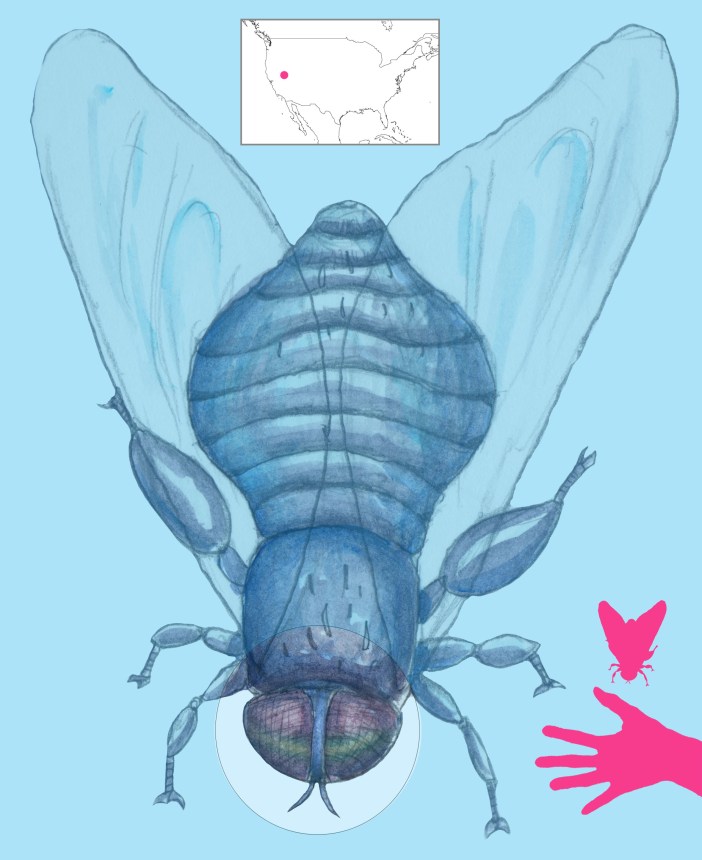
Shoo flies are large aquatic flies native to a shallow warm lake fourteen miles northeast of Mud Lake in Washoe County, Nevada. They were discovered and appropriately named by prospectors. A shoo fly is black in color, four inches long and with an abdomen three inches in circumference. The transparent wings resemble those of a horsefly and produce a ten-inch wingspan. Shoo fly larvae are deep green in color, six inches long and four inches wide, and feed on rushes; after roasting they look like sweet potatoes and have a vegetable taste, making them prized food commodities.

Swarms of shoo flies buzz over the waters of the lake and under it. The flies can go underwater and produce an air bubble that forms around their heads. With this organic scuba gear, the flies can stay underwater indefinitely.

One dead fly was brought back to civilization by the prospectors, where it was displayed dangling from a string in Piper’s Saloon at the corner of B and Union streets. But when a San Francisco entomologist volunteered to identify the insect, suggesting that it may be a hymenopteran (bee or wasp) rather than a dipteran fly, De Quille pointed out that the snow storm blew all the flies into their lake, and the proprietors of the saloon refuse to part with their attraction. Furthermore, he added – tongue firmly in cheek – that based on the shoo fly’s “cuspidated tentacles” and the “scarabaeus formation of the thoracic pellicle”, he believed it to be “a genuine bug of the genus “hum””.

References

Lewicki, J. and the editors of LIFE (1960) Folklore of America, part V. LIFE Magazine, Aug. 22, 1960.

Loomis, C. G. (1946) The Tall Tales of Dan De Quille. California Folklore Quarterly, Volume V, No. 1, January 1946.

Atui Koro Ekashi

Variations: Old Man of the Sea

atui-koro-ekashi

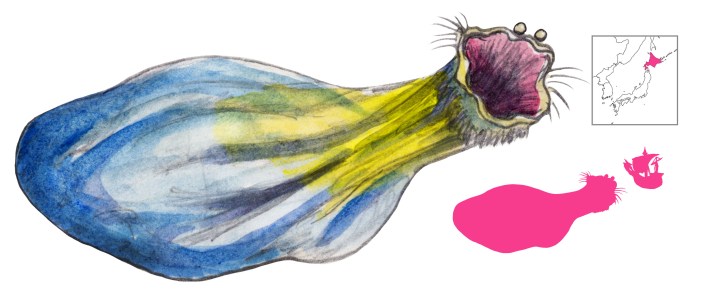
Atui Koro Ekashi, the “Old Man of the Sea”, is briefly mentioned in tales from the Ainu of Hokkaido, Japan. It looks like an enormous bag, and it can generate a powerful suction from its mouth to engulf whales and ships into its bloated bulk.

A boat managed to scare off the atui koro ekashi when one sailor threw his loincloth into the creature’s mouth. Even giant bag-monsters find loincloths disgusting, and the boat was released.

References

Chamberlain, B. H. (1888) Aino Folk-Tales. The Folk-Lore Society XXII, C. G. Röder, Leipzig.

“But ABC!” I hear you say. “Dinosaurs aren’t monsters, they’re fascinating animals that are still with us today in the form of vicious brain-eating backyard predators!” Rubbish, I say. The dinosaurs I’m about to show you are true monsters that crawled from the fevered minds of 50s children’s book illustrators.

photo-12-14-16-7-20-35-am

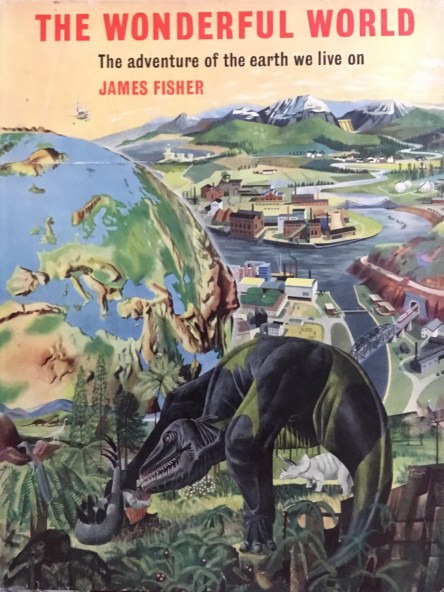
Specifically, they came from this book The Wonderful World, written by James Fisher in 1954. I suppose it’s okay for a book from the 50s, the information in it is as dated as you’d expect, but the main draw here is the two-page dinosaur spread. The cover gives you a glimpse – okay, a major spoiler of the horror to come.

photo-12-14-16-7-20-48-am

This is the bit where the book talks about dinosaurs. The entire prehistory bit was obviously cribbed from the vastly superior The World We Live In (still the best science series/book ever made, 50s or not), with some images directly copied from it. But the dinosaurs look like they started with Zallinger’s mural before getting seriously mangled in translation.

photo-12-14-16-7-21-03-am

The sauropods in the background aren’t so bad, even if they do have microscopic heads vanishing into the distance. The true horrors are the two foreground figures.

photo-12-14-16-7-21-28-am

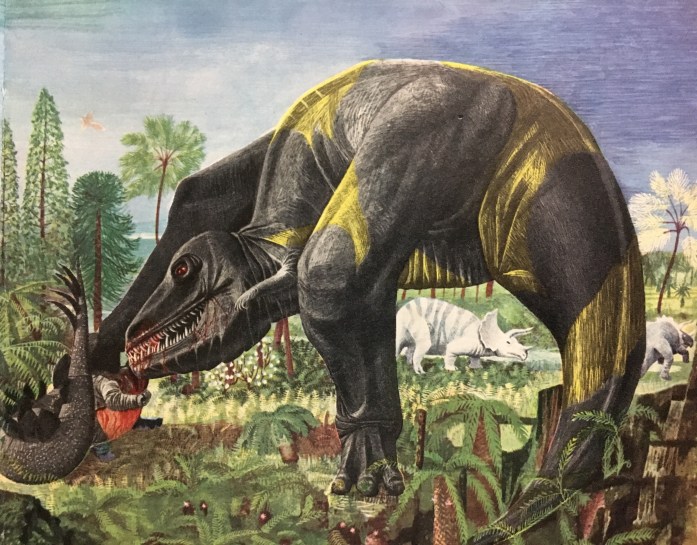
By now you know this Tyrannosaurus from the cover. Someone please explain to me the anatomy of this thing, because I’m quite sure it’s impossible on this planet (and several others). The artist must have been playing Starsiege or Mechwarrior prior to painting. I don’t know where its right leg went eithe – oh , nevermind, there it is pinning its food down. It’s munching on Stegosaurus for extra irony (the two never lived together, much as Fantasia would have you believe otherwise. In fact, there’s more time between Stegosaurus and Tyrannosaurus than there is between Tyrannosaurus and us).

photo-12-14-16-7-21-15-am

It’s hard to top the Tyrannosaurus, but in my opinion the hadrosaur is at least as horrifying, if not even worse. Look at it. Look. Its eyes stare into your very soul. Its hand is distressingly human. And it appears to be phasing into the mud (the dreaded Shadowduck of the X-Men). That or it has no hind legs to speak of.

No wonder some people complain about feathered dinosaurs. They must have grown up on these abominations.

Kranokolaptes

Variations: Kephalokroustes, Sklerokephalon

kranokolaptes

Nicander classified the Kranokolaptes, the “Head Striker”, as a phalangion or spider. This is all the more puzzling because the description has nothing arachnoid about it. No doubt its deadly bites were seen as reason enough to list it after wolf spiders and malmignattes.

The kranokolaptes is an insect found in Egypt, and which develops in the persea tree (perhaps Mimusops). It has the appearance of a moth, with four downy felt-textured wings that leave an ashy dust behind. Philoumenos described it as green in color, but that is apparently a misreading of Nicander. The head of the kranokolaptes is hard, heavy, and nodding; its abdomen is thick and fat. It has a deadly stinger located below its head.

A kranokolaptes will use its stinger to attack the heads and necks of humans and cause instant death. Kranokolaptes stings are deadly unless victims are treated with its antidote – a kranokolaptes drowned in oil.

It has been suggested that hawkmoths (Sphingidae), with their impressive sizes, thick abdomens, and prominent probosces, are at the root of the kranokolaptes tale. The vampire moth Calyptra thalictri is even more compelling. Having evolved from fruit-piercing moths, vampire moths use the same methods to puncture skin and drink blood – and they rock their heads back and forth as they penetrate, explaining the “nodding” aspect. The similarities end here, however, as a bite from Calyptra merely causes swelling and irritation.

References

Beavis, I. C. (1988) Insects and other Invertebrates in Classical Antiquity. Alden Press, Osney Mead, Oxford.

Kitchell, K. F. (2014) Animals in the Ancient World from A to Z. Routledge, Milton Park, Abingdon, Oxon.

Lakúma

Variations: Lucooma

lakuma

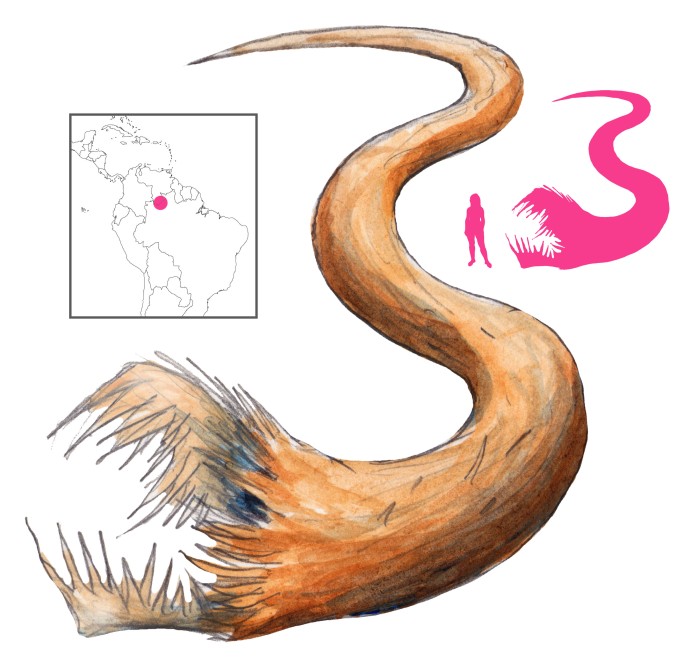
According to the Yamana, the Lakúma are the most dangerous sea creatures of Tierra del Fuego. These water spirits have been known to tip canoes over, pull their occupants out, and drag them under to consume, leaving their entrails to float to the surface. They can also create huge waves, summon whirlpools, and whip up storms to damage larger vessels.

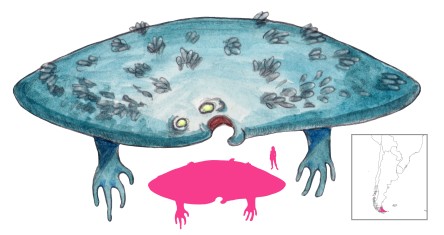
Lakúma have been compared to whales, squids, and giant worms, making their exact appearance hard to pin down. What is known is that they like to flatten themselves out on the water’s surface, letting their back protrude like a small island. Their broad and flat backs are covered with encrustations of unusually large mussels.

Sometimes there are so many lakúma in one spot that they can be used as stepping-stones. A group of Yamana on a desert island saw countless wide, flat lakúma rise to the surface, forming a living bridge to a bountiful island. “If we run quickly, we’ll get to the other side!” said one man, running over the backs of the lakúma and reaching the other shore. But the others were too slow, and the lakúma dove, taking them to a watery grave. The one survivor recruited enough men to slay many lakúma in retaliation, and their bodies can still be seen today in the form of large, flat stones at the bottom of the sea.

Lakúma will also attack people breaking taboos. It is known that a menstruating girl or túrikipa should not eat berries, but one girl thought she could circumvent the rule by sucking out the juices and spitting the solid outer part. Alas, her canoe was attacked by a lakúma, and it refused the offerings tossed at it until it took the girl and devoured her. It then flattened itself out on the surface and rested. The túrikipa’s people went onto the lakúma’s back, took some of the mussels, and used their sharp shells to dismember the lakúma. But that was small comfort for the túrikipa, whose entrails served as a grisly reminder of her fate.

For all their malevolence, lakúma can be tamed by a powerful yékamuš or shaman, and can become obedient servants. One yékamuš was with his wife in their canoe while she scolded him. “I thought you were a powerful yékamuš, but you can’t even strand a whale, or fetch birds to eat!” In response the yékamuš slept and summoned two lakúma, who raised the canoe’s bow up in the air. “Wake up! Help me!” cried his wife, and the yékamuš stirred and spoke nonchalantly. “I thought you said I was powerless”, he taunted, before telling her to paint the lakúma with white paint. She did as she was told, and the lakúma did not resist. Then they dove and created a good breeze to send the canoe effortlessly to its destination. “I had always made fun of you”, admitted the wife, “but now I know you are truly a capable yékamuš!”

References

Gusinde, M.; Schütze, F. trans. (1961) The Yamana; the life and thought of the water nomads of Cape Horn. Human Relations Area Files, New Haven.

Gusinde, M.; Wilbert, J. ed. (1977) Folk Literature of the Yamana Indians. University of California Press, University of California, Los Angeles.

Rahara

Variations: The Beast

rahara

Deep, permanent lagoons in Brazil and Venezuela are home to the Rahara. According to the Yanomami, this aquatic monster once lived in a large lagoon called Akrawa. Since then the rahara has moved upstream in the Orinoco, finding suitable lagoons to inhabit, or enlarging small lagoons to better fit inside. A rahara lagoon never dries out and can be recognized by observing the shore – there are tracks leading in, but none leading out.

The rahara is the uncle of the anaconda, and grows to greater sizes. It may or may not have feet. Its serpentine body is like a rotten pawpaw tree or a manioc strainer. It is capable of drawing people towards it and swallowing them whole. A rahara will be attracted to fire as it is sure to find a meal there; it will also rush out of its submarine hole to swallow anyone foolish enough to say its name out loud, so it is usually referred to as “the beast”. When in a good mood, raharas make a snapping sound and alert others to their presence. Silence is dangerous.

Raharas have pets in the form of hoatzins and curassows, which roost above the waterholes to entice hunters.  Snakes are also associated with the raharas. One talking boa constrictor turned into a live baby rahara after being shot dead by a hunter. It was kept as a pet in a water-filled palm spathe until it grew big enough to devour its entire adopted village. Finally, the raharas are responsible for floods, tsunamis, and other water-based disasters.

It is advisable to avoid known rahara haunts, and refrain from drinking, bathing, or fishing in those waters. A messenger once ignored those warnings and bathed in such a pond, and was immediately swallowed by a rahara. He called out “Help! Over here!” from inside the creature’s belly, and men arrived from the village with bamboo lances. They began running the rahara – and its prey – through. “Stop! You’re hurting me!” he screamed from inside, but they ignored him until both he and the rahara were dead.

Presumably the man was not well-liked.

References

Albert, B.; Becher, H.; Borgman, D. M.; Cocco, L.; Colchester, M. E. M.; Finkers, J.; Knobloch, F.; Lizot, J.; and Wilbert, J.; Wilbert, J. and Simoneau, K. eds. (1990) Folk Literature of the Yanomami Indians. UCLA Latin American Center Publications, University of California, Los Angeles.

Lizot, J.; Simon, E. trans. (1985) Tales of the Yanomami. Cambridge University Press, Cambridge.

Dulhath

Variations: Dulhama (al-Damiri); Duhlak, Dulhak, Dulchaph (Bochart)

dulhath

The Dulhath has had a muddled history, with authors disagreeing with each other on the exact name, let alone the appearance. It is first mentioned by al-Qazwini, who refers to the dulhath, but al-Damiri describes it under the name of dulhama, and Bochart reports on the duhlak. Here al-Qazwini’s name has been given priority.

While the original description appears to be al-Qazwini’s, the dulhath’s pedigree probably goes back to jinn who appear as animals – in this case, an ostrich jinni. This in turn led to al-Qazwini’s dulhath as a demon found on certain desert islands, and which resembles a man riding an ostrich. It eats the flesh of humans who have been cast alive or dead into its territory. A dulhath will also invade ships to seek its prey, and when attacked by sailors it speaks loudly in a boastful voice, causing them to prostrate themselves before it. Bochart believed the “boastful voice” to have been some translation error derived from tales of sirens.

The best description of a dulhath is found in the tale of Aboulfaouaris the sailor. Sadly it is all but certifiable, as the creature in question remained unnamed, but its behavior is compellingly close to al-Qazwini’s broad outline. The dulhath that plagued Aboulfaouaris looked like a man of about 40. He had a monstrous shape, a big head, short bristly hair, and an excessively large mouth filled with sharp teeth. Eyes like those of a tiger glared above a flat nose with large nostrils. His arms were nervous, his hands large, and his fingers equipped with viciously hooked claws.

Aboulfaouaris and his crew encountered a dulhath near the island of Java. They saw a naked man clinging to a plank of wood in the sea, calling for help; accordingly the sailors rescued him and brought him aboard ship, where his appearance caused much consternation. When told that he had been narrowly rescued from drowning, the odd man smiled and said “I could have stayed for years in the sea without being bothered; what torments me most is hunger. I have not eaten in twelve hours. Please bring me something to eat, anything, I’m not particular”. An attempt was made to bring him clothing, but the dulhath explained that he always went naked. “Don’t worry, you’ll have lots of time to get used to it”, he added ominously, stamping his foot impatiently. Enough food was presented to him to feed six starving men. The dulhath polished it off and asked for more; the same amount was brought to him and disappeared in short order, and a third helping was called for. One of the slaves, shocked by the creature’s insolence, made to strike him, but the dulhath grabbed him both both shoulders and tore him in half.

All hell broke loose. Aboulfaouaris, sailors, slaves, all descended on the dulhath with sabers drawn, determined to kill the monster. But the dulhath’s skin was harder than diamond. Swords broke and arrows bounced uselessly off his hide. Then they tried to drag him off the ship, but the dulhath sank his claws into the deck, anchoring himself immovably. The sailors were utterly incapable of harming the dulhath. The dulhath, on the other hand, had no such problems as he took one of the sailors and ripped him to pieces with his claws. “My friends, you had better obey me. I’ve tamed worse people than you, and I will have no qualms about having you share the fate of your two shipmates”.

With that the reign of terror began. The dulhath was in full control of the ship, and ate his fourth course while the crew stared in terrified silence. Aboulfaouaris hoped that food and conversation might cause the monster to doze off, but the dulhath smugly reminded him that he had no need for sleep, and none of the soporific tales they told him would have any effect.

All hope seemed lost until deliverance came from the sky. The sailors looked up to see a rukh soaring overhead, and they scattered in fear. The dulhath, however, was unaware of the huge bird, and was standing confidently in the middle of the deck. An easy target! The rukh dove and carried the dulhath off before he could cling to the ship. But the intended prey wasn’t giving up without a fight, and he began tearing and biting into the rukh’s belly. The rukh responded by gouging out the dulhath’s eyes with its talons, and the demon retaliated by eating his way to the rukh’s heart. As it expired, the rukh caught the dulhath’s head in its beak and crushed it like an eggshell. Both monsters plummeted into the waves and vanished.

References

Bochart, S. (1675) Hierozoicon. Johannis Davidis Zunneri, Frankfurt.

al-Damiri, K. (1891) Hayat al-hayawan al-kubra. Al-Matba’ah al-Khayriyah, Cairo.

de Lacroix, P. (1840) Les Mille et Un Jours: Contes Persans. Auguste Desrez, Paris.

al-Qazwini, Z. (1849) Zakariya ben Muhammed ben Mahmud el-Cazwini’s Kosmographie. Erster Theil: Die Wunder der Schöpfung. Ed. F. Wüstenfeld. Dieterichsche Buchhandlung, Göttingen.

Smith, W. R. (1956) The Religion of the Semites: the Fundamental Institutions. Meridian Books, New York.

Tuyango

Variations: Tagänogók

tuyango

The Tuyango is a carnivorous swamp bird from Argentinian folklore. The Mocoví know it as Tagänogók, while “tuyango” is of Guaraní origin. These birds are currently believed to have been hunted to extinction.

A tuyango looks a lot like a rhea, but it has a distinctive yellow neck. It preys on humans, which it kills and drags back to its lair to devour.

The hawk had a particular vendetta against the tuyangos, and sought to avenge their cannibalism of humans. One tuyango returned to his home with two dead men only to find his four children clubbed to death. The tuyango cried, ejeeejee, before heading out with his mate to find the hawk. But the hawk asked for fire, and he flew in and out of the smoke until the tuyangos were exhausted and thoroughly confused; only then did he club and kill them. He returned to widespread joy; when his daughter told him “Daddy, a cannibal bird is coming”, he reassured her that he had already killed the tuyango, and all were happy.

References

Cipolletti, M. S.; Guevara, J.; Lehmann-Nitsche, R.; Terán, B. R. D.; and Tomasini, J. A.; Wilbert, J. and Simoneau, K. eds. (1988) Folk Literature of the Mocoví Indians. UCLA Latin American Center Publications, University of California, Los Angeles.

Camacrusa

Variations: Came-crude, Came cruse, Came-cruse, Jambe Crue, L’Òs-de-la-Mala-Cama; Sopatard, Sopa-tot-sèr, Soupe-toute-sé (potentially); Ramponneau (potentially)

camacrusa

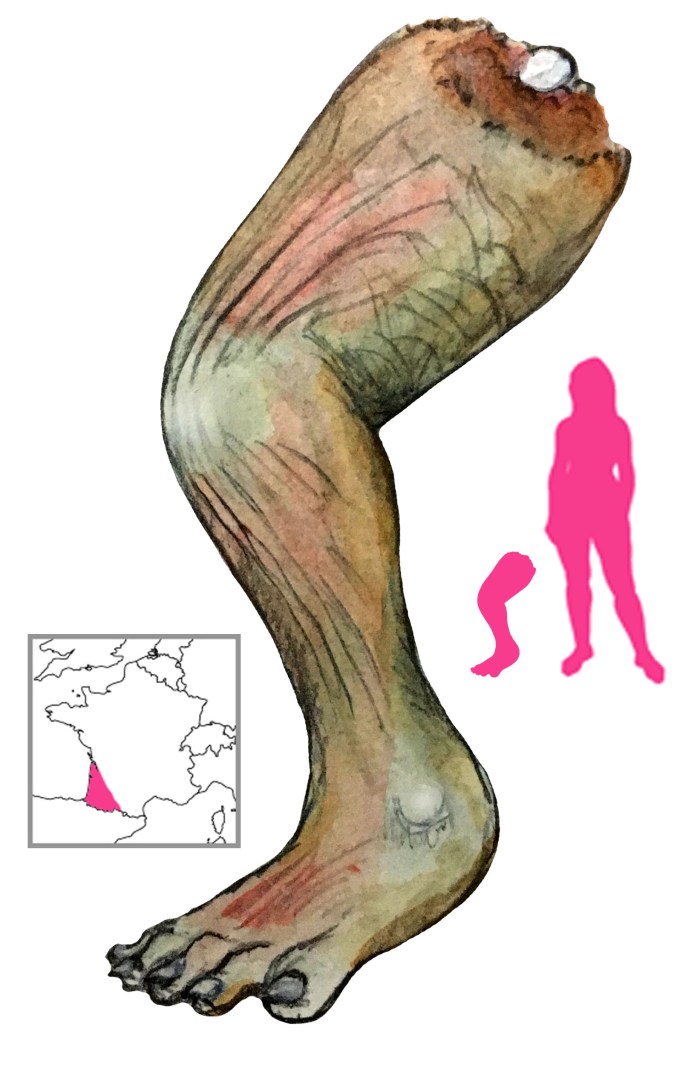
The Camacrusa, Came Cruse, Came Crude (“Raw Leg” in Gascon) or Òs-de-la-Mala-Cama (“Bone of the Bad Leg”) is a French nocturnal bogey that can be found in Gascony, notable around Aire-sur-L’Adour in the Landes. Its horrifying appearance is generally left to the imagination, but as its name implies it is usually a disembodied leg, possibly somewhat flayed.

Despite its appearance, a camacrusa is very rapid in movement, capable of hiding behind haybales, jumping over ditches and hedges, and easily running down its prey – children who remain outside after dark. How it eats them is unspecified.

Its role has largely been usurped by more traditional bogeys such as Ramponneau and the Sopatard (“Sups-late”) or Sopa-tot-sèr (“Sups-every-evening”). The latter in particular is closely associated with the camacrusa, for as the nursery rhyme goes: “La cama-cruda e lo sopa-tot-sèr, que hèn la nueit plenha de danger” (“The raw-leg and the sups-every-evening, make the night full of danger”).

References

Foix, V. (1904) Glossaire de la Sorcellerie Landaise. Revue de Gascogne, III, pp. 257-262.

Heiniger, P. Les Formes du Noir. In Loddo, D. and Pelen, J. (eds.) (2001) Êtres fantastiques des régions de France. L’Harmattan, Paris.

Nippgen, J. (1930) Les Traditions Populaires Landaises. Revue de Folklore Francais, IV, pp. 149-172.