Not Appearing in ABC: The Ozaena

The Ozaena is one of those creatures that has gained some traction due to the excellent Bestiary by Jonathan Hunt. I won’t reproduce the image in question, but it can probably be found easily enough. Be careful though as “ozaena” is also a medical condition, and the images are unpleasant.

In it, the entry for O describes the Ozaena or “stink-polyp” as a hideous, be-tentacled blue creature with a foul smell. Hunt makes it look more alien, or something like a sea anemone – a polyp, presumably.. It varies in size from tiny to enormous, with one Spanish terror growing to the size of a ninety-gallon cask.

Quite a memorable creature, eh? Shame it doesn’t exist.

To understand what we’re talking about, we need to specify what polyp means. It’s not polyp as we understand it today, but short for polypus or “many-legs”. It is no more or less than the ancient term for the octopus.

Aristotle distinguishes several kinds of octopus. Amongst those are the eledone, the bolitaena, and the ozolis – what would eventually become the Roman ozaena. Those are small in size and variegated, and have only one set of suckers along their tentacles. In other words, our ozaena is none other than the musky octopus Eledone moschata, which smells of musk. One of its synonyms is Ozoena moschata. It is neither huge nor terrifying.
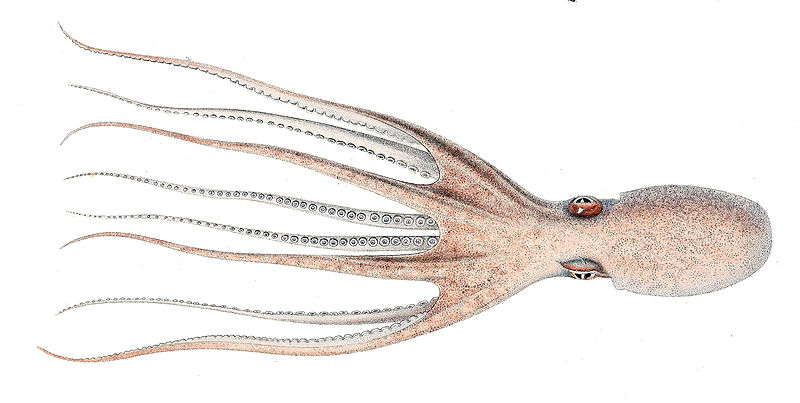
(Image from Wikipedia)

The giant octopus story is in fact a separate account, unrelated to the ozolis, ozaena, or whatever. An enormous octopus came ashore at Dicaerchia in Italy, where it ravaged the cargo of Iberian merchants. The merchants would leave pickled fish in large jars on the shore, and the octopus would haul itself out of the water, break the jars, and eat the fish. This happened multiple times, and the merchants could not understand who the thief could be. A servant was left on guard one moonlit night, and he reported the incredible occurrence to his masters. The next time the octopus appeared it was assaulted with axes and slain.

So there you have it, a Frankensteined account creating an alien creature from our modern unfamiliarity with archaic terms and our tendency to lump accounts together for convenience.

It’s alright. Shake off the heartbreak, there’s plenty more creatures to make up for it. With that I leave you with Thomas de Cantimpré’s imagery of the octopus or polypus, apparently in the process of drowning someone.
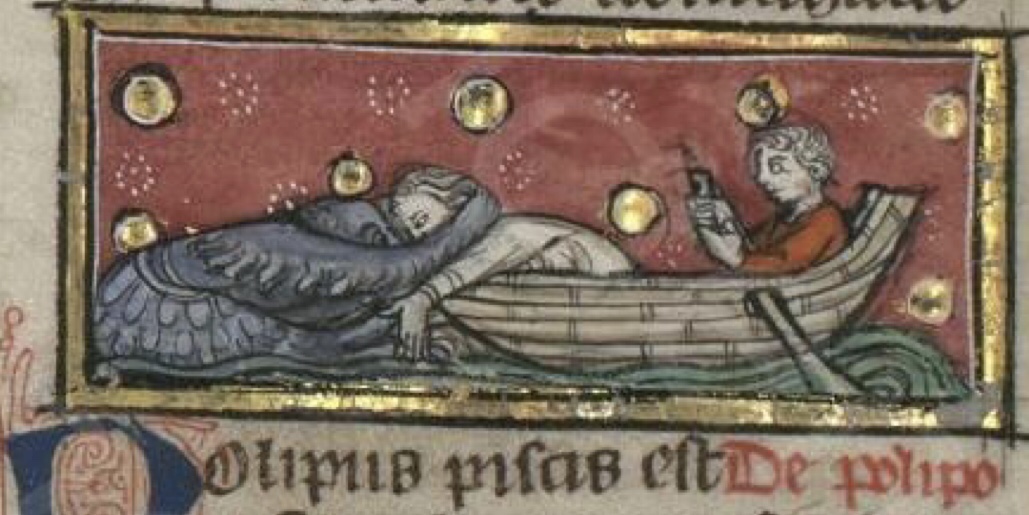
Voldemort’s warm embrace.

Wapaloosie

Variations: Geometrigradus cilioretractus (Cox)

Wapaloosie

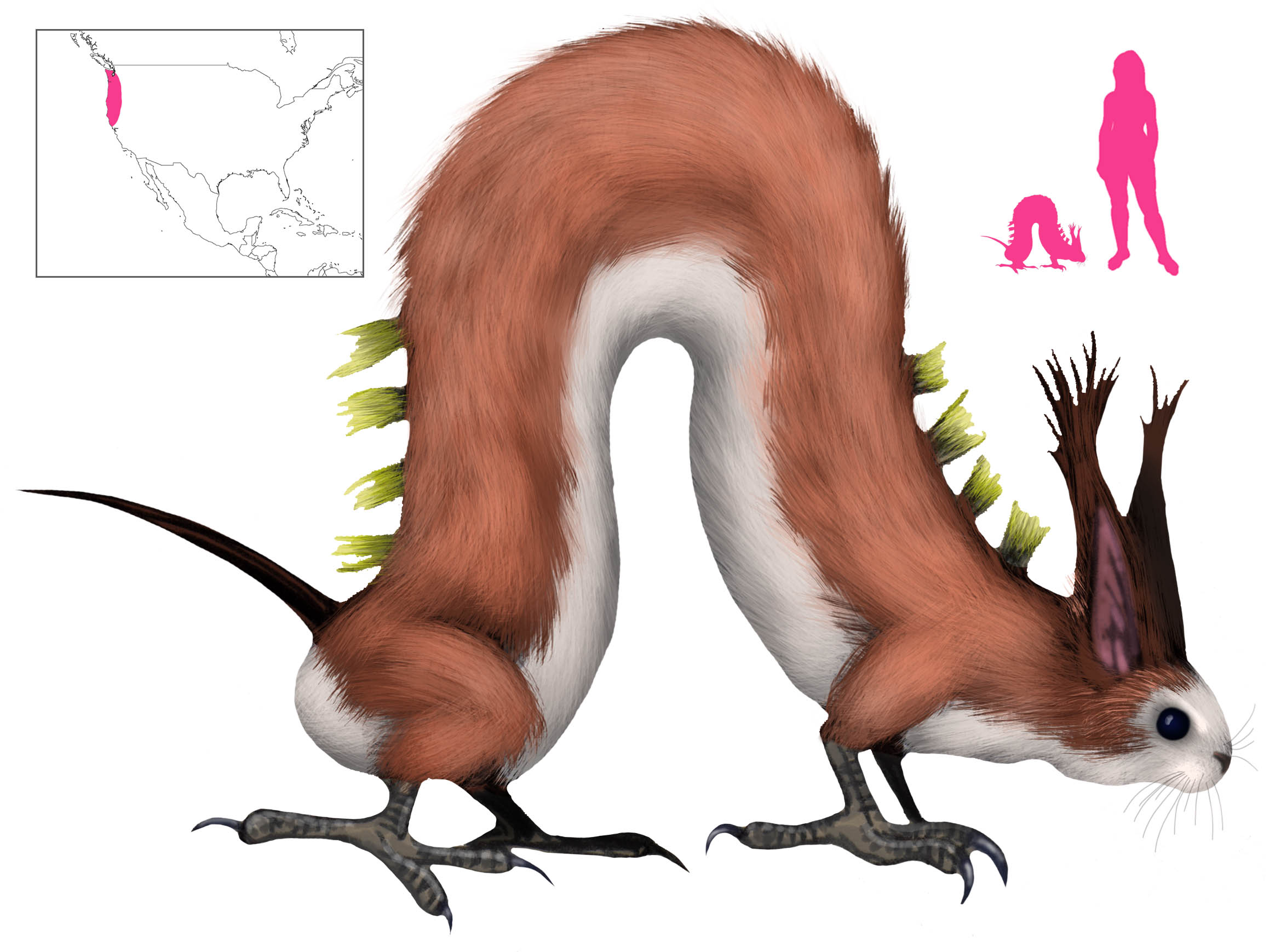
Wapaloosies are found in Pacific Coast forests, and appear to be the mammalian answer to the inchworm. A wapaloosie is as big as a dachshund, with velvety fur, woodpecker-like feet, and a spike-tipped tail that aids in its caterpillarish climbing. And climb a wapaloosie does, moving effortlessly up the tallest of trees to feed on bracket fungus.

The wapaloosie drive to climb continues long after death. One lumberjack in Washington shot a wapaloosie and made a pair of fur mittens out of it. When he grabbed an axe, the mittens immediately shimmied up the handle to the top. They proceeded to do so with everything the lumberjack tried to hold, so he was forced to discard them. The mittens were last seen clambering over lumber slash.

References

Cox, W. T. (1910) Fearsome Creatures of the Lumberwoods with a Few Desert and Mountain Beasts. Judd and Detweiler, Washington D. C.

Bøjg

Variations: Boyg, Bøjgen, Bojgen, Bøygen, Boygen, The Great Bøjg of Etnedal

Bojg

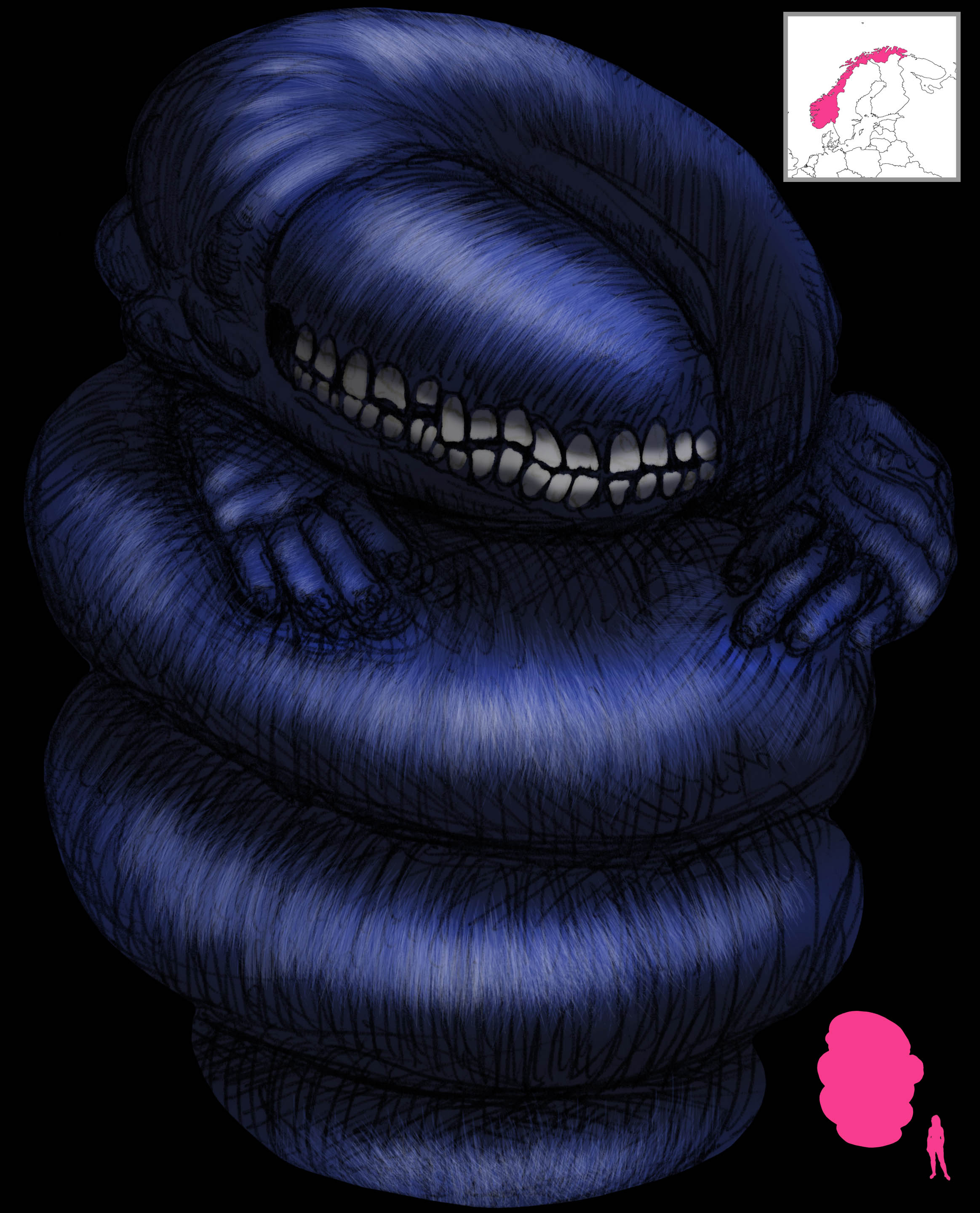
The Great Bøjg of Etnedal is a troll encountered by Peer Gynt in his Gutsbrandal adventures. It was memorable enough that Ibsen included it in his version of Peer Gynt, making it an even more otherworldly creature.

The Bøjg is vast, slimy, slippery, persistent, and shapeless. In the original fairytale, it has a head, which lessens its shapelessness somewhat. Ibsen describes it as a misty, slimy being, neither dead nor alive. Running into it is like running into a nest of sleepy growling bears. Its name comes from bøje, to bend, implying something twisting but also something that forces you to turn elsewhere, conquering without attacking. It coils around houses in the dark, or encircles its victims and bewilders them. Attacking the Bøjg directly is futile.

Wherever Gynt turns, he finds himself running into the clammy unpleasant mass. The Bøjg blocks his path to a mountain hut and nothing Gynt does can defeat it. In the fairytale Gynt fires three shots into the Bøjg’s head but to no avail; he eventually defeats the Bøjg through trickery. In Ibsen’s play the Bøjg is overcome by women, psalms, and church bells.

Within Ibsen’s symbolism it is seen as an insurmountable obstacle, a being of compromise and lethargy.

References

Hopp, Z.; Ramholt, T. trans. (1961) Norwegian Folklore Simplified. Iohn Griegs Boktrykkeri, Bergen.

Ibsen, H., Watts, P. trans. (1970) Peer Gynt. Penguin Books, Harmondsworth.

Kongamato

Kongamato

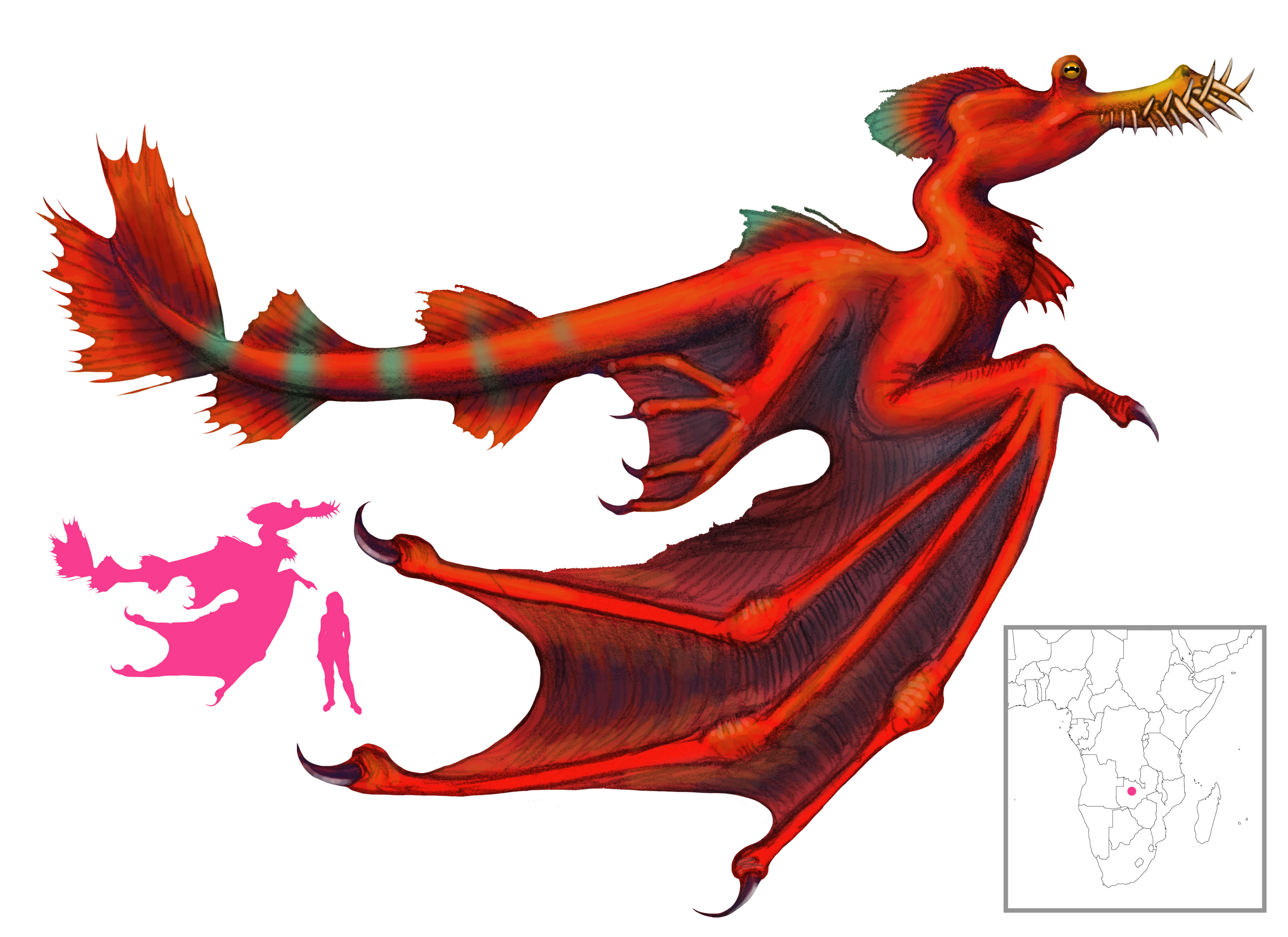
The Kongamato, “overwhelmer of boats”, is a river-shutter of Kasempa District in northern Zambia. It is known from Kaonde folklore, and the Jiundu Swamp is one of its favorite haunts. The fact that the Jiundu has historically been a haven for thieves, murderers, and assorted lowlifes is probably relevant.

A kongamato is a kind of bird, or rather a lizard with the membranous wings of a bat. It has a wingspan of 4 to 7 feet across and lacks feathers, its body covered in skin. It is mostly red in color. The beak is armed with sharp teeth. Claims that the kongamato is a surviving pterosaur are best forgotten.

Kongamatos live downstream of river fords. There they cause the river to stop flowing and the water level to rise, overwhelming and tipping over canoes. Sometimes a canoe will slow down and come to a dead stop despite the paddler’s best efforts; this is because a kongamato has seized the boat from underneath the water.

Few people see a kongamato and live, and the kongamato itself is invulnerable and immortal, eating any projectile thrown at it and leaving no physical trace of itself behind. When it kills people it devours only the two little fingers, the two little toes, the earlobes, and the nostrils. That said, four deaths attributed to the kongamato in 1911 did not record any such mutilation; more likely, then, that a kongamato caused their deaths by the flooding of the Mutanda River near Lufumatunga.

To ward off kongamato attack, the charm known as muchi wa kongamato is used. This consists of mulendi tree root ground and mixed with water. The resulting paste is placed in a bark cup. When crossing a dangerous ford, the mixture is sprinkled onto the water using a bundle of mulendi bark strips. This wards off the kongamato and its floods.

References

Melland, F. H. (1923) In Witch-bound Africa. J. B. Lippincott Company, Philadelphia.

Cahab

Variations: Caab; Sahab (typo)

Cahab

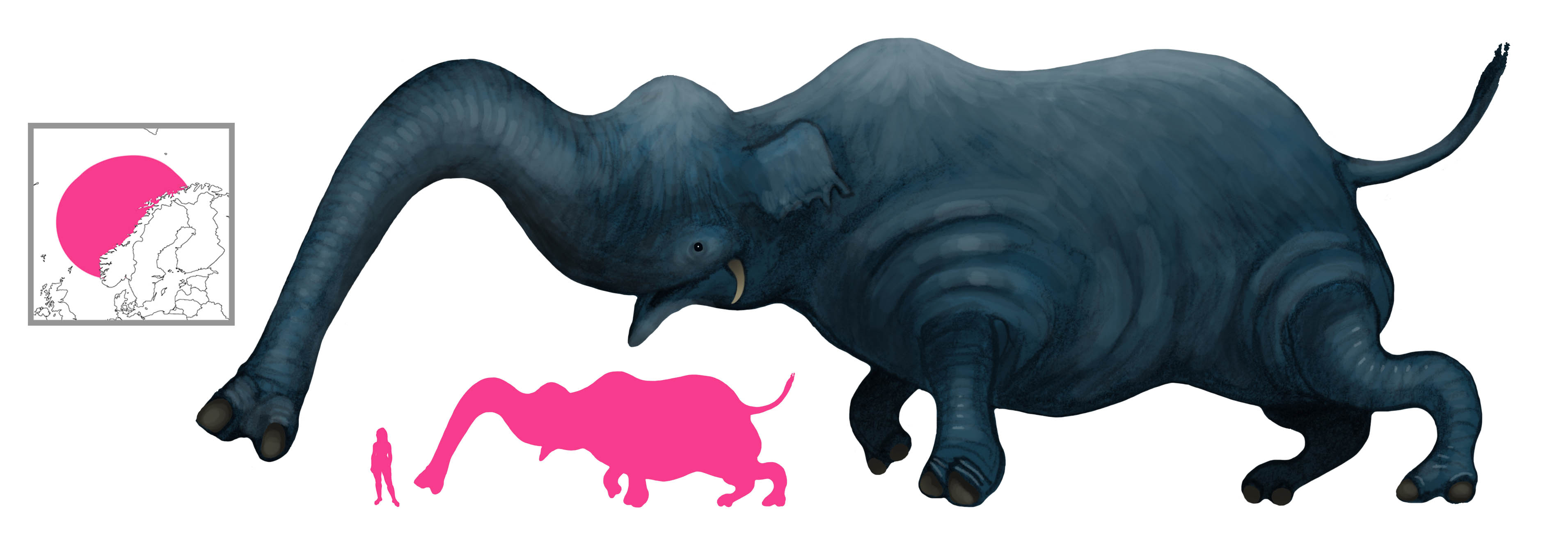
Among Aristotle’s many references to the elephant, we are told that its five toes are not perfectly jointed, its forelegs are larger than its hind ones, and its hind legs have short ankles. It has a trunk that it can use as a hand, drinking and eating with it, pulling up trees with it, and using it to breathe when walking through water. This remarkable appendage is cartilaginous and jointless.

The 1220 Latin translation of Aristotle by Michael Scot was based off an Arabic translation from the Greek. Scot retained various Arabic words in his text, and hence Aristotle’s passage on the elephant’s appendicular anatomy became et habet duo cahab parva respect magnitudinis corporis sui – here, cahab is Arabic for “ankle”, and the phrase reads “and [the elephant] has two ankles that are short relative to the size of its body”. Scot used cahab consistently to refer to the ankle or the talus bone.

Thomas de Cantimpré did not recognize the word cahab and assumed it to be the subject of the verb habet. From that the sentence became Caab animal marinum est, ut dicit Aristotiles, parvos habens pedes respectu corporis sui, quod utique magnum est, “Caab is a sea animal, as says Aristotle, whose legs are small in proportion to its body, which is huge”. Based on that and the remainder of the Aristotelian description, Thomas says that the caab has one leg that is long and which it uses as a hand to bring vegetation to its mouth; this leg is made of cartilage. Thomas also misreads the behavior of the elephant in water and makes his caab a fully aquatic marine animal, one that breathes underwater and then, upon reaching the surface, spouts the water it swallowed while breathing. Finally, he spontaneously gives his animal the feet of a cow.

In turn, Albertus Magnus “borrows” Thomas’ account, dropping the reference to Aristotle. This time it is called cahab, and now all of its legs are cartilaginous and resemble those of a calf. Albertus also makes a logical association with the cetacean act of spouting; his cahab holds its breath underwater and spouts at the surface sicut delfinus et cetus.

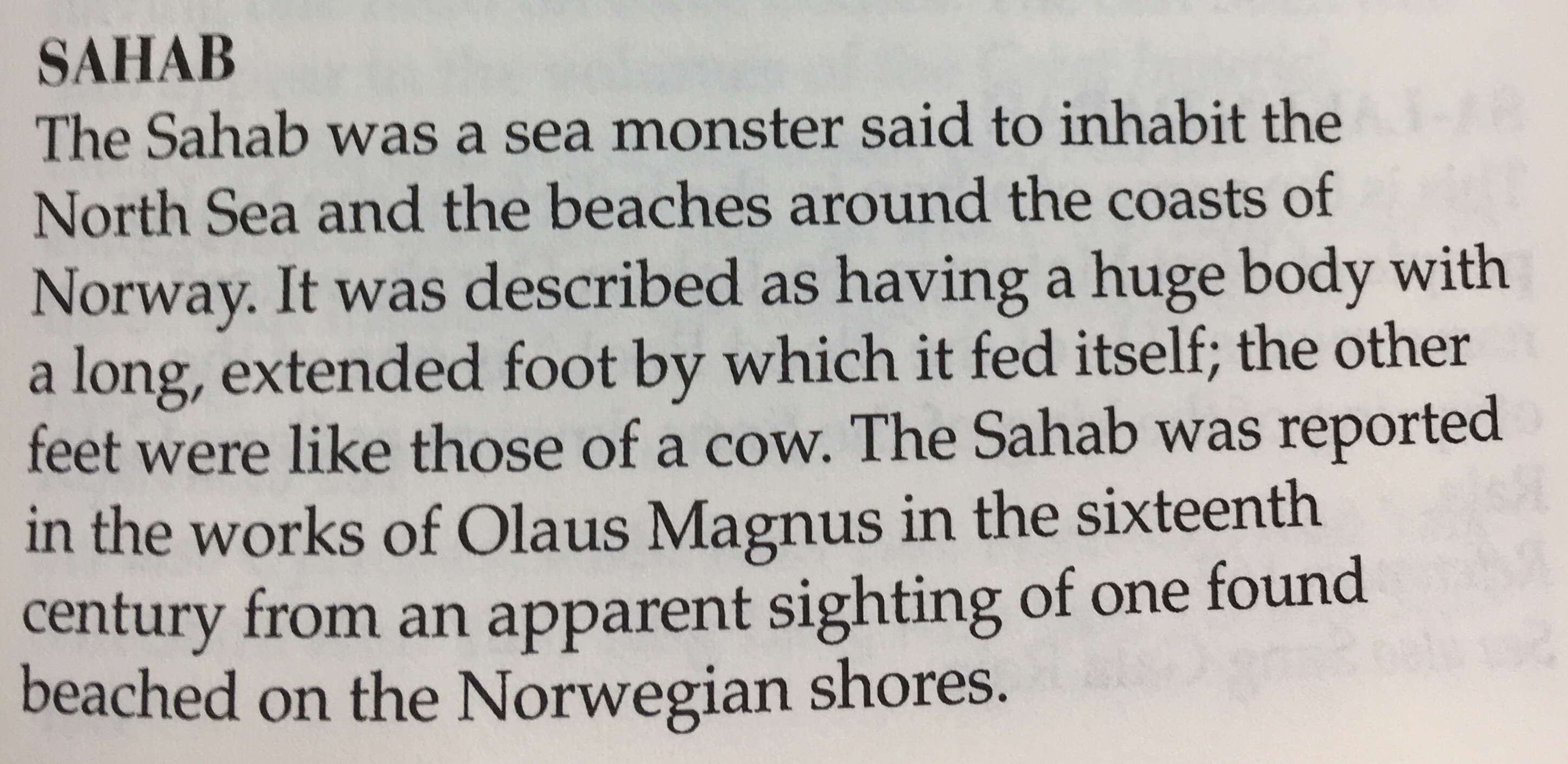
The last iteration of the cahab is provided by Olaus Magnus, who transposes this odd cartilage-legged sea creature into Scandinavia. He tactfully compares the cartilaginous feet to those of both cows and calves (vaccae, aut vituli). Olaus cites Albertus Magnus as the source of the cahab in the Latin version of his Historia, but the French and English translations omit this crucial citation.

Finally, the English translation misreads the name of the cahab as “sahab”, decisively casting this elephant adrift in a sea of translation errors.

References

Aristotle, Cresswell, R. trans. (1862) Aristotle’s History of Animals. Henry G. Bohn, London.

de Cantimpré, T. (1280) Liber de natura rerum. Bibliothèque municipale de Valenciennes.

Cuba, J. (1539) Le iardin de santé. Philippe le Noir, Paris.

Gauvin, B.; Jacquemard, C.; and Lucas-Avenel, M. (2013) L’auctoritas de Thomas de Cantimpré en matière ichtyologique (Vincent de Beauvais, Albert le Grand, l’Hortus sanitatis). Kentron, 29, pp. 69-108.

Magnus, A. (1920) De Animalibus Libri XXVI. Aschendorffschen Verlagbuchhandlung, Münster.

Magnus, O. (1555) Historia de gentibus septentrionalibus. Giovanni M. Viotto, Rome.

Magnus, O. (1561) Histoire des pays septentrionaus. Christophle Plantin, Antwerp.

Magnus, O. (1658) A compendious history of the Goths, Swedes, and Vandals, and other Northern nations. J. Streater, London.

Unknown. (1538) Ortus Sanitatis. Joannes de Cereto de Tridino.

Öfuguggi

Variations: Öfug-uggi, Reverse-Fin Trout, Fin; Afuggafiskur, Aufuggufiskur (meanings unclear)

Ofuguggi

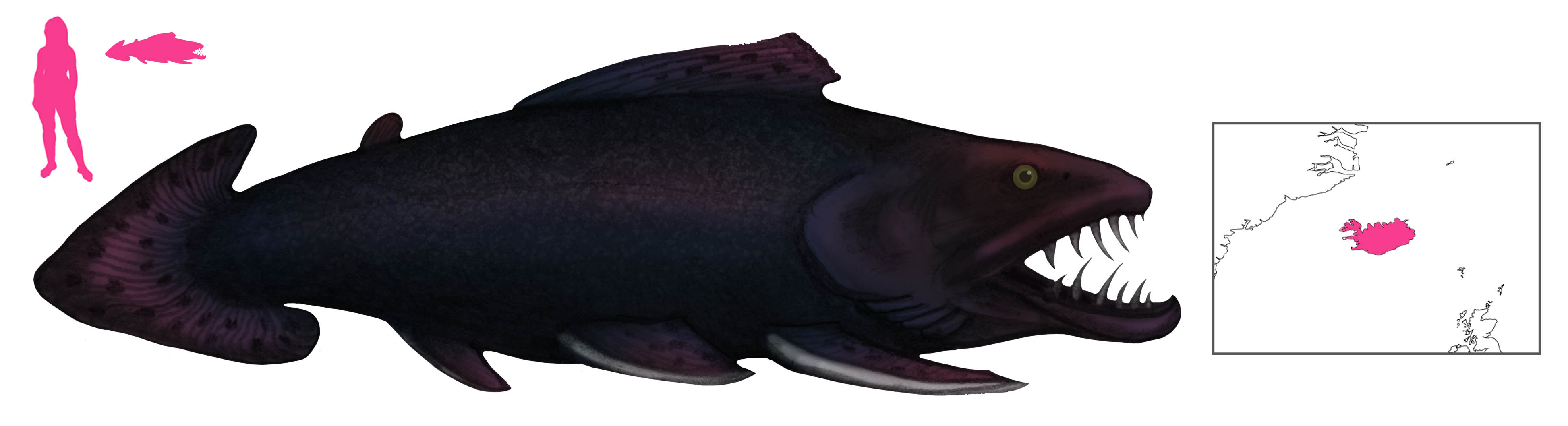
The Öfuguggi or Reverse-Fin Trout is one of several Icelandic fish distinguished by an extreme toxicity. Its poisonous reputation is such that its name has entered common Icelandic as a slur for jerks, perverts, loners, and homosexuals. The stories told of it are identical to those of the shaggy trout, and the two fishes are commonly confused. Accounts of this lethally poisonous fish date to before the mid-17th century.

As the name suggests, an öfuguggi looks deceptively like a normal brown trout with the exception of reversed fins and swimming organs, although Jónas Hallgrímsson specified in 1841 that only the small adipose fin is reversed. The öfuguggi swims backwards with its tail first and the head following; in color it is jet-black or coal-black. The flesh is red, indicating that the fish feeds on the bodies of drowned men.

Reverse-fin trouts live in the cold depths of freshwater lakes. There they are sometimes fished, prepared, and eaten – causing the deaths of all who tasted the meal. Öfuguggi poisoning may cause the victim to swell up until their stomach bursts, producing a cross-shaped wound. The most infamous poisoning incident is that of Kaldrani farm, where almost everyone on the household took ill and died after a meal of trout. The only survivor was a pauper girl who had no appetite at the time.

There have been sightings and tragic tales of the reverse-fin trout across Iceland. Known place names include Öfuguggatjörn (Reverse-Fin Pool), the vanished Öfuguggavatn (Reverse-Fin Lake), and Ofuggugavatnshaeðir (Reverse-Fin Lake Hills).

References

Davidsson, O. (1900) The Folk-lore of Icelandic Fishes. The Scottish Review, October, pp. 312-332.

Hlidberg, J. B. and Aegisson, S.; McQueen, F. J. M. and Kjartansson, R., trans. (2011) Meeting with Monsters. JPV utgafa, Reykjavik.

Pálsson, G. (1991) Coastal economies, cultural accounts: Human ecology and Icelandic discourse. Manchester University Press, Manchester.

Onniont

Onniont

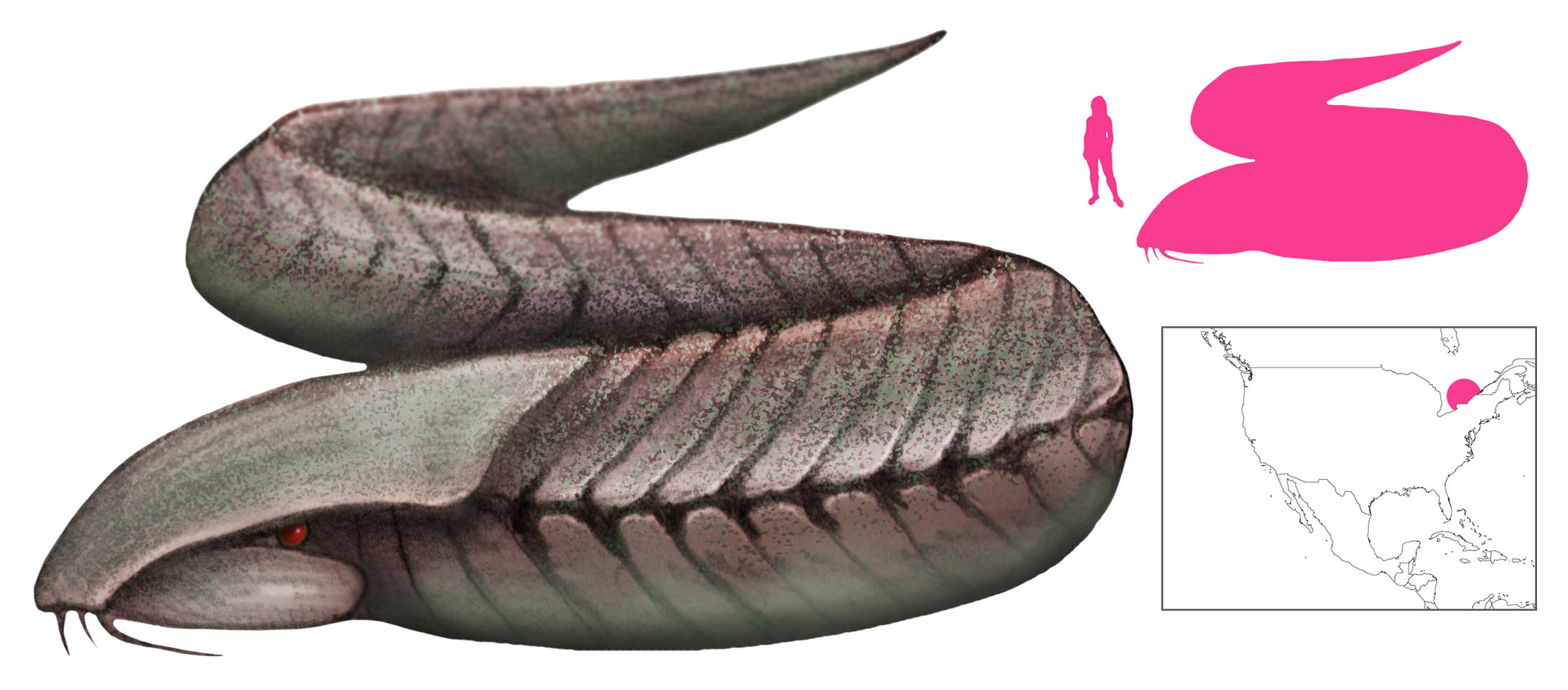
The Onniont is a huge serpent of Huron folklore that looks like an armored fish. When it travels, it breaks through everything in its path. Rocks, trees, and bears are all grist to its mill. An onniont is unstoppable. Any small part of it would make a potent talisman.

Nobody ever saw an onniont. According to Jesuit missionaries, however, neighboring Algonquin merchants claimed to sell pieces of onniont, and publicized the legend themselves.

References

Vimont, B. (1858) Relations des Jésuites, v. II. Augustin Coté, Quebec.

Opimachus

Variations: Chargol, Ophiomachis, Ophiomachus, Opimacus, Opymachus, Ibis, Snake-eater; Attachus (probably); Opinicus, Epimacus (probably)

Opimachus

There is only one Biblical mention of the insect called chargol, in Leviticus 11:22, as one of the four insects that are safe for consumption. It has been assumed to mean “beetle” in some translations. Other identifications include a katydid or bush cricket, a species of Gryllus cricket, or the wart-eating cricket.

The Septuagint’s translators borrowed heavily from Aristotle in an effort to give names to all the animals in the Bible. An Aristotelian account of locusts fighting and killing snakes (perhaps based on stories of insects feeding on dead snakes?) gave the chargol the name of ophiomachus, “snake fighter”. This in turn became the opimachus or opimacus, described by Thomas de Cantimpré and subsequently Albertus Magnus as a worm that attaches itself just below a snake’s head. It cannot be removed and kills the snake.

By the time the opimachus or opymachus was described in the Ortus Sanitatis (citing Thomas), it had become confused beyond recognition. While Thomas and Albertus list it among the insects, it is now placed with the birds as a small fowl. It is depicted as a quadrupedal griffin with a long pointed beak and large rabbit’s ears. It has longer hind legs to permit it to jump. It may or may not be the same as the bird known as attachus.

Dapper says that the ophiomachi or ibides (ibises) are birds that live in Ethiopia and are so named because they eat snakes.

Finally, the long journey of the snake-fighter comes to an end with the opinicus or epimacus, a variety of generic heraldic griffin whose name is almost certainly derived from a Levitical insect.

References

de Cantimpré, T. (1280) Liber de natura rerum. Bibliothèque municipale de Valenciennes.

Coogan, M. D.; Brettler, M. Z.; Newsom, C.; Perkins, P. (eds.) (2010) The New Oxford Annotated Bible. Oxford University Press, Oxford.

Cuba, J. (1539) Le iardin de santé. Philippe le Noir, Paris.

Dapper, O. (1686) Description de l’Afrique. Wolfgang, Waesberge, Boom, & van Someren, Amsterdam.

Harris, T. M. (1833) A Dictionary of the Natural History of the Bible. T. T. and J. Tegg, London.

Magnus, A. (1920) De Animalibus Libri XXVI. Aschendorffschen Verlagbuchhandlung, Münster.

Unknown. (1538) Ortus Sanitatis. Joannes de Cereto de Tridino.

Vinycomb, J. (1906) Fictitious and Symbolic Creatures in Art, with Special Reference to their Use in British Heraldry. Chapman and Hall, London.