Saratan

Variations: Zaratan (erroneously), Sarathan
Saratan

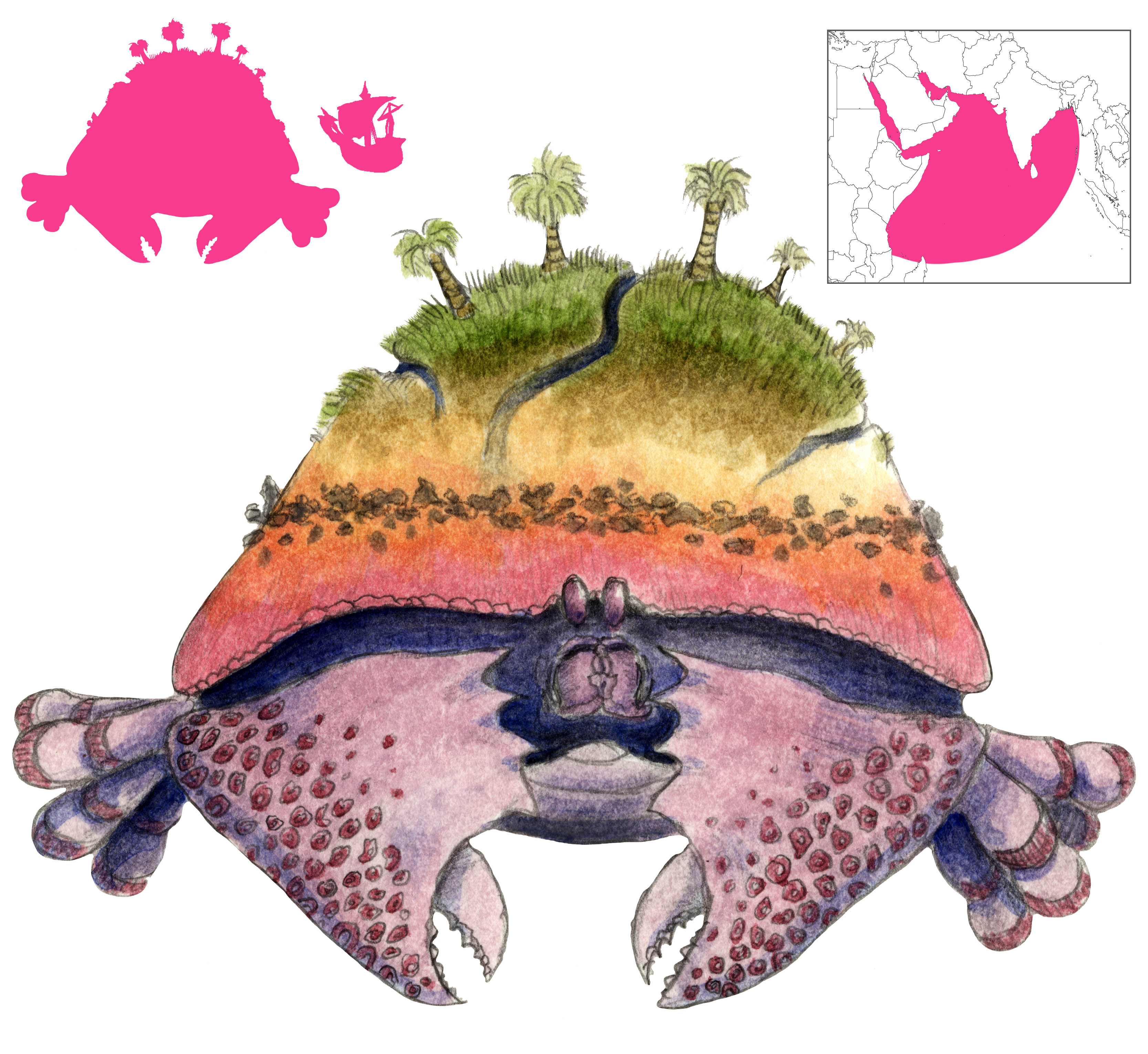
Saratan is Arabic for crab. It also means cancer, in the same way as cancer is Latin for crab. Hence, every use of the word saratan here can be replaced with “crab”.

Al-Jahiz knows what crabs are. He talks about how crabs have eight legs and two “teeth” which give the appearance of ten legs. They have eyes on their back. They live in water or burrows on the shore, where they lay their eggs, and feed out of greed instead of necessity.

But the “crab” he describes at one point is enormous in size and lives in the open ocean. Vegetation grows on its back as it rests on the surface. Cracks and crevices in its shell look like gullies and rivers. It is this monster that sleeps in the middle of the ocean until sailors land on it, mistaking it for an island. Then it awakens and dives underwater, drowning anyone incapable of swimming back to ship.

Al-Jahiz does concede that he cannot find anyone who claims to have seen this monster.

“What is the most wondrous thing you have ever seen?” Al-Jahiz and a group of friends ponder this question. “The elephant”, comes one response. “The soul”. “Sleep and awakening”. “Forgetfulness and memory”. “Fire”. “The belly of the cosmos”. Another of the scholars present expresses his amazement with the elephant. Finally, Ma’bad bin ‘Omar states “The saratan and the ostrich are greater miracles than the elephant”.

Elsewhere Al-Jahiz goes on to add “The greatest of God’s creations are the snake and the saratan and the fish”, and “The greatest animals created are the fish and the saratan”.

It is strange that the saratan is popularly known as “zaratan”, and described as a whale or turtle. The blame for this lies with Borges, who describes the saratan’s activities but neglects to mention that it is a gigantic crab. He quotes a Spanish translation of Al-Jahiz by Palacios which converts saratan to “zaratan”. Oddly enough, the English translation of Palacios’ text uses the more reasonable transliteration of “sarathan”. In either case, Palacios does describe this monster as a “certain crustacean of the sea” (“cierto crustaceo maritimo”), a fact that Borges omits.

References

Borges, J. L.; trans. Hurley, A. (2005) The Book of Imaginary Beings. Viking.

Al-Jahiz, A. (1966) Kitab al-Hayawan. Mustafa al-Babi al-Halabi wa Awladihi, Egypt.

Palacios, M. A. (1919) La escatologia musulmana en la Divina Comedia. Estanislao Maestre, Madrid.

Palacios, M. A.; Sunderland, H. trans. (1926) Islam and the Divine Comedy. John Murray, London.

Haemorrhois

Variations: Haemorrhous, Haemorrhe, Blood-letter, Blood-flower, Affodius, Afudius, Alsordium, Halsordium, Sabrine (Topsell gives the last five as corrupted, barbarous versions)

Haemorrois

The Haemorrhois – “bleeder” or “blood-letter” – is one of the many Saharan snakes feared for its venom. True to its name, it produces a violent hemotoxin that forces its victims’ blood out of their bodies. Topsell seemed uncertain as to whether it was an asp or a viper, but its appearance and effect of its venom strongly imply a viper.

Descriptions of the haemorrhois consistently agree that it is one foot long and has horns of some sort. Aelian gave it bristling horns, but Aldrovandi sets the number to one. It is pitch black or fiery in color, with bright eyes; Topsell believed it to be sandy yellow with black spots. The head is broad, tapering to a short, pointed tail. The scales of a haemorrhois are rough and make a rustling sound as the snake moves, suggesting that it may have been inspired in part by the saw-scaled viper. They are slow and sluggish animals, and make winding nests in rocky areas.

Sexual dimorphism is known. Males tend to hold their head up when traveling, while females remain close to the ground. Aelian adds that the venom of female haemorrhois specifically targets the gums and fingernails.

Envenomation by a haemorrhois is particularly gruesome. As the venom spreads, blood begins to leave by every opening possible, draining out through the eyes, ears, nostrils, mouth, even the very pores. Scars reopen. Teeth and nails fall out. The entire body becomes one bleeding wound, and death comes through catastrophic blood loss. Lucan, in describing the fate of young Tullus, compared the dying Roman to a statue gushing water, weeping and sweating blood.

One of these snakes was encountered by Menelaus and his men in Egypt. Helen crushed it and extracted its poison for reasons unknown. Since then, all haemorrhois have been slow creepers.

Topsell recommends a number of substances as antidotes to haemorrhois bite. These cures include vine-leaves with honey; powdered haemorrhois head taken with water; garlic with fleur-de-lis oil as an emetic; and raisins. To staunch the bleeding, plasters made of vine leaves and honey or purslane and barley leaves should be applied, and the wound washed with cold water. Finally, he concedes that the same remedies used for other snakes may prove effective. Hard eggs with salted fish, or a potion of radish seeds, poppy juice, lily roots, daffodil, rue, trefoil, cinnamon, cassia, and sweet myrrh can help.

References

Aelian, trans. Scholfield, A. F. (1959) On the Characteristics of Animals, vol. III. Harvard University Press, Cambridge, Massachusetts.

Aldrovandi, U. (1640) Serpentum, et Draconum Historiae. Antonij Bernie, Bologna.

Batinski, E. (1992) Cato and the Battle with the Serpents. Syllecta Classica, Vol. 3, pp. 71-80.

Eldred, K. O. (2000) Poetry in Motion: the Snakes of Lucan. Helios 27.1, p. 63.

Isidore of Seville, trans. Barney, S. A.; Lewis, W. J.; Beach, J. A.; and Berghof, O. (2006) The Etymologies of Isidore of Seville. Cambridge University Press, Cambridge.

Lucan, trans. Rowe, N. (1720) Pharsalia. T. Johnson, London.

Topsell, E. (1658) The History of Serpents. E. Cotes, London.

Yara-ma-yha-who

Yara ma ya who

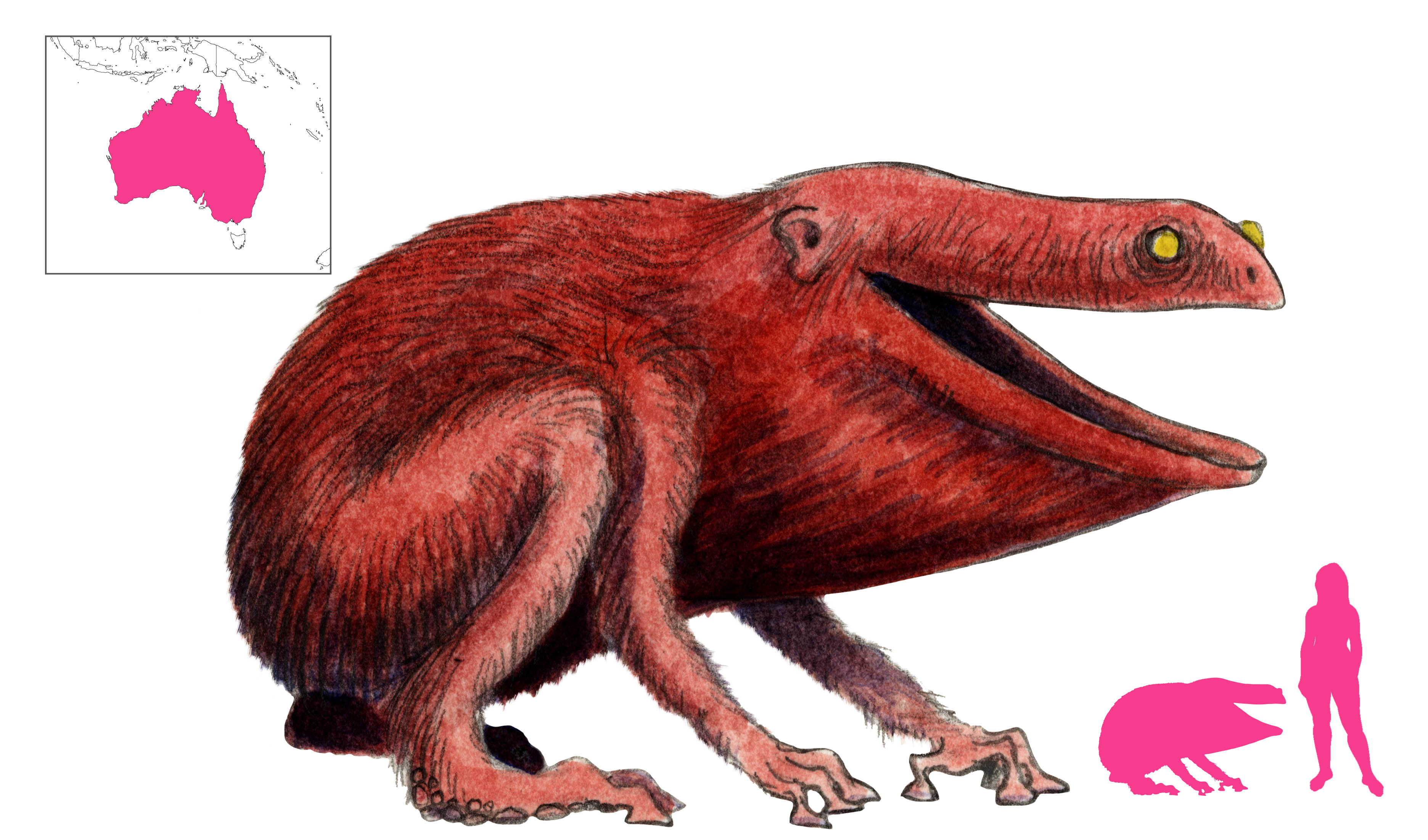
The Yara-ma-yha-who of Australia are restricted to the forests of the Pacific coast, and their absence elsewhere should be considered a blessing. They are primarily nursery bogies, dissuading children from frequenting dangerous areas.

A yara-ma-yha-who is a grotesque sight, and would be amusing were it not for its ghastly habits. Not more than four feet tall, red, and covered with fur, a yara-ma-yha-who has a disproportionately large head. It can open its toothless mouth like a snake, and its throat and belly are similarly distensible. An adult man can be easily swallowed by a yara-ma-yha-who without discomfort. Its fingers and toes are equipped with suction cups. Yara-ma-yha-who are good climbers, but can only waddle like cockatoos on land.

Thick-leaved fig trees are the yara-ma-yha-who’s favorite haunt. They can wait for days in the branches until some hapless traveler, perhaps seeking shelter from sun or rain, lies under the tree. Lone children are their favorite prey.

When a yara-ma-yha-who attacks, it attaches its hands and feet on its victim’s body, using the suction cups to drain the blood out of them. It does not empty them entirely, but only enough to make them faint. It then leaves its victim for a while, eventually returning to swallow them whole, head first. A little dance lets the food slide down, the meal is washed down with water, and the yara-ma-yha-who takes a nap.

After waking up, the yara-ma-yha-who vomits its prey out. The human is almost always alive and playing dead; there is no reason to fight back as the creature can overpower the strongest man. The yara-ma-yha-who takes five paces, then returns and pokes his victim’s sides with a stick. Then it walks away ten paces before returning to tickle the human under the arm or neck. A fifty-yard stroll is followed up by more tickling, then the yara-ma-yha-who goes behind a bush and sleeps.

This ritual is always repeated. The yara-ma-yha-who know that if they fail to carry out these actions, the spirit of the fig tree will mumble in their ears, causing them to transform into glowing tree mushrooms.

For this reason it is safest to play dead until this point, when you get to your feet and run. “Where have you gone, my victim?” calls the yara-ma-yha-who if it hears you escaping, but its awkward gait makes it easy to outrun. After failing to recapture prey, a spiteful yara-ma-yha-who will drink up all the water in nearby wells and water-holes, leading people to seek liquid from tree sap – and thus end up exposed to yara-ma-yha-who attack.

It is important not to let a yara-ma-yha-who swallow you multiple times. The second time you are swallowed and regurgitated, you become shorter and completely hairless. By the third time you are shorter still, and thick hair grows over your body. Eventully, after enough cycles of swallowing and vomiting, you become a yara-ma-yha-who yourself.

Heuvelmans believed the yara-ma-yha-who was inspired by tarsiers. Furry, big-eyed, and with suction-cup fingers, it is more a mammalian frog than anything else.

References

Heuvelmans, B. (1958) On the Track of Unknown Animals. Rupert Hart-Davis, London.

Smith, W. R. (2003) Myths and Legends of the Australian Aborigines. Dover Publications, Mineola.

Lavellan

Variations: Water Shrew, Water Mole, Blind Mouse, Common Lizard

Lavellan

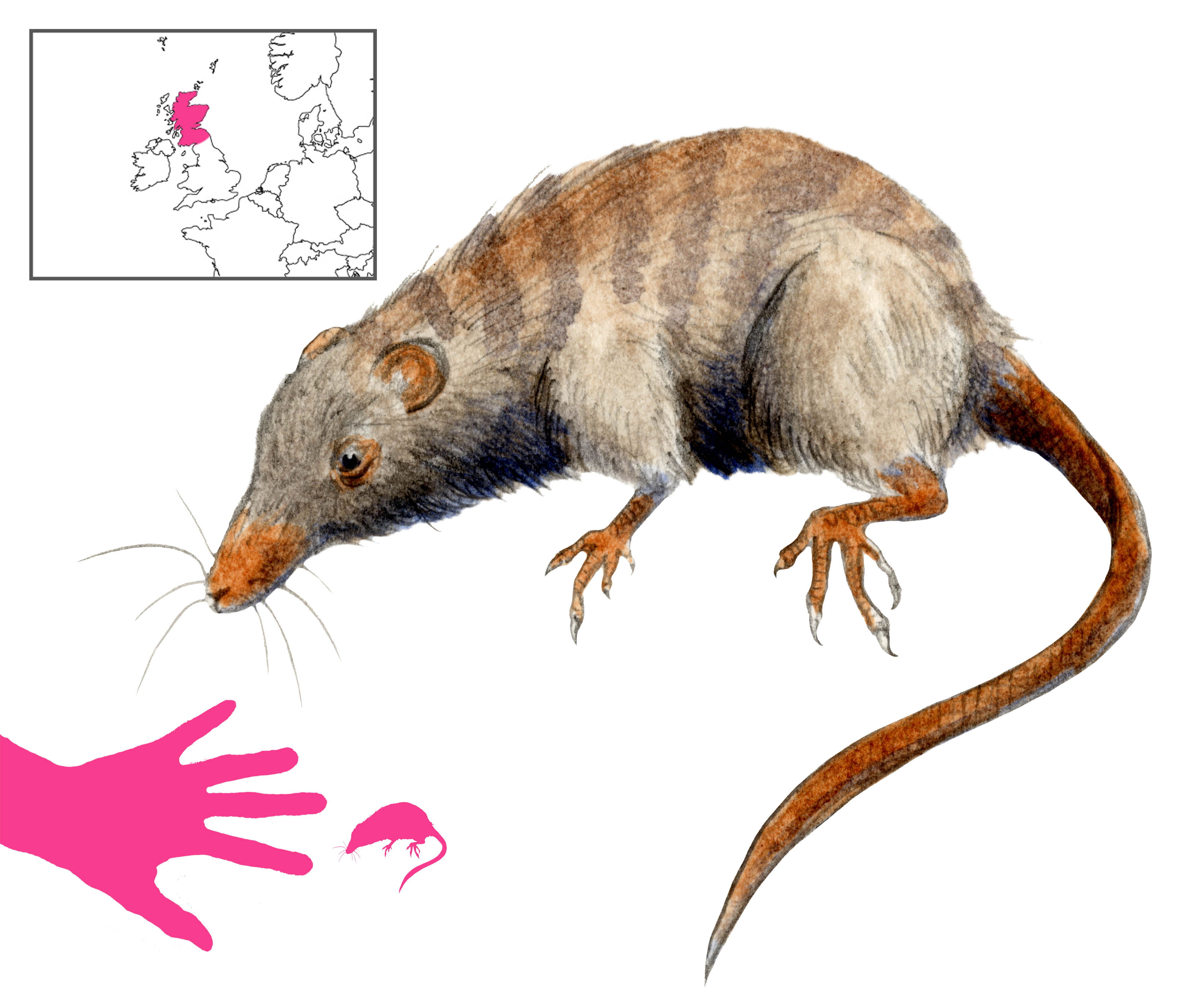
The Lavellan is a toxic mammal found in northern Scotland, primarily Caithness.

A lavellan’s appearance is unclear and unassuming; at the very least, it is believed to be small and furry. Sibbald believed it had the head and color of a marten, while other accounts describe it as resembling a shrew or a lizard. It has bright eyes and moves very quickly.

Lavellans are highly poisonous, and are capable of harming cattle from forty yards away. Their very breath is noxious. They are also lethal to humans, as told in one satirical song: “Let him not go away from the houses, to moss or wood, lest the Lavellan come and smite him”.

Farmers kill lavellans on sight and preserve their skin. Water in which a lavellan skin has been dipped is a certain remedy for lavellan poisoning. Boiling a lavellan head will also provide an antidote.

It has generally been assumed that the lavellan is a demonization of the water shrew, also known locally as water mole or blind mouse. The shrew’s saliva is mildly toxic but nowhere near as virulent as the lavellan’s. Harvie-Brown and Buckley, on the other hand, propose that the common lizard – brownish in color, bright-eyed, swift, and unfamiliar – was the originator of the lavellan. It may well be a combination of both.

References

Campbell, J. G. (1900) Superstitions of the Highlands and Islands of Scotland. James MacLehose and Sons, Glasgow.

Fleming, J. (1814) Contributions to the British Fauna. Memoirs of the Wernerian Natural History Society, Vol. II, Part I, pp. 238-251.

Harvie-Brown, J. A. and Buckley, T. E. (1887) A Vertebrate Fauna of Sutherland, Caithness, and West Cromarty. T. and A. Constable, Edinburgh University Press.

Pennant, T. (1818) British Zoology, vol. I. J. Christie, Dublin.

Tsenahale

Variations: Tse’nahale, Tse’na’hale, Tsanahale

Tsenahale

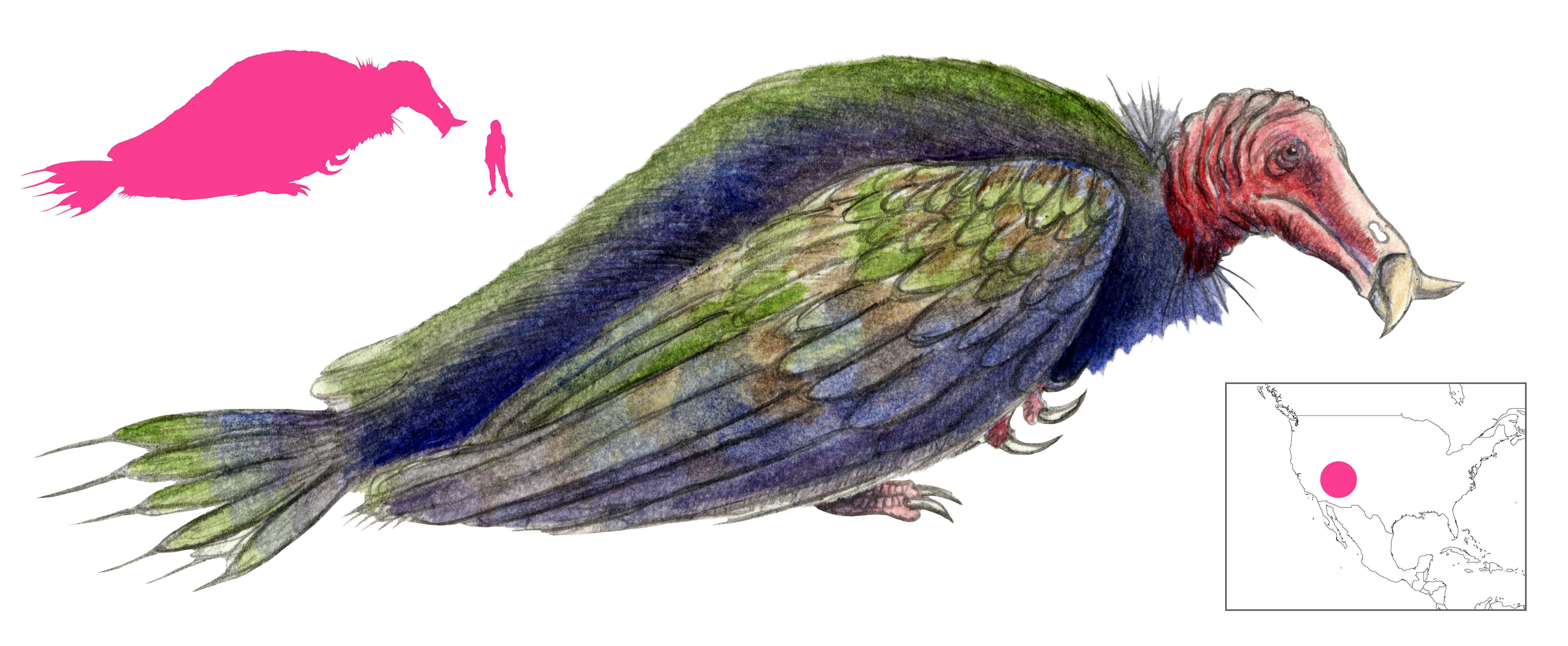
The Tsenahale were two of the Anaye, or “Alien Gods”, who plagued the land of the Navajo. They were born after men and women were separated, and the women resorted to unnatural practices as an outlet. In the case of the Tsenahale, the “father” was a pile of feathers; their mother must have been particularly desperate.

When the first Tsenahale was born, it was a misshapen creature with feathers on its back and shoulders. Its mother abandoned it in horror, but it survived and grew into a monstrous, bird-like creature likened to a huge eagle or a harpy. By the time Nayenezgani, the “Slayer of Alien Gods”, set out to rid the land of the Tsenahale, the Tsenahale were two in number, male and female. The male preyed solely on men, while the female hunted women. Raven was their spy.

Nayenezgani found the nest of the Tsenahale on Tse’bit’ai, the “Winged Rock”, or Shiprock as it is also known. As he approached, the male Tsenahale dive-bombed him, his huge wings whipping up a whirlwind as he swooped at him from four different directions. He seized him in his talons on the fourth attempt. The bird flew off with him and dropped him into the nest from a great height, but Nayenezgani was protected by his life-feather, and was unharmed. He cut open a bag of Teelget’s blood and let it spill, convincing the Tsenahale that he was safely dead.

As the two Tsenahale chicks approached him, Nayenezgani tried to silence them. “It’s not dead! It said ‘Sh!’ to us!” they screeched. “That’s air leaving the body. Just eat it”, snapped the father, before winging off.

Of course, Nayenezgani miraculously came back to life as soon as the Tsenahale was gone, and confronted the chicks. They were blue as a heron, with big eyes and sharp eagle beaks. “When will your father return?” asked Nayenezgani. “When we have a thunderstorm, he will be on that rock”, answered the chicks. “And your mother?” “When we have a rain shower, she will be on that crag”.

Soon a great storm formed, with thunder and lightning, and the male Tsenahale flew out of the clouds and perched on the rock as expected. Nayenezgani slew him with a single lightning arrow. Then the mother arrived in pouring rain, carrying with her a dead Pueblo woman in beautiful turquoise finery. Nayenezgani shot her in turn.

“What about us?” cried the chicks. “Are you going to kill us?” But Nayenezgani spared them. “You are not grown, and would grow into killers; but I will make something useful of you”. He picked the older chick up and told it “You will provide feathers for rites, and bones for whistles”. He swung it around four times and threw it into the air, turning it into a majestic eagle. Then he picked up the younger chick, telling it “Your voice will tell the future; sometimes you will lie, sometimes you will tell the truth”. He swung it as well, and it turned into an owl, which he threw into a crevice in the cliff.

As for the feathers of the Tsenahale, Nayenezgani took the largest from each wing as trophies. The others were plucked, and were metamorphosed into sparrows, warblers, chickadees, wrens, and all the little birds of the world.

References

Alexander, H. B. (1916) The Mythology of All Races v. X: North American. Marshall Jones Company, Boston.

Locke, R. F. (1990) Sweet Salt: Navajo folktales and mythology. Roundtable Publishing Company, Santa Monica.

Matthews, W. (1897) Navaho legends. Houghton Mifflin and Company, New York.

O’Bryan, A. (1956) The Diné: Origin Myths of the Navaho Indians. Bulletin 163 of the Smithsonian Institution, Washington, D. C.

Aksar

Aksar

Among the cavalcade of creatures Anthony faces in the Temptation is Aksar, described as “the python Aksar, sixty cubits long, who terrified Moses”. Thompson, drawing heavily from Flaubert, uses the basilisk of the Temptation for the appearance of Aksar, describing him as seventy cubits long, violet-colored, with a three-lobed crest and a single tooth in each jaw. He repeats Moses’ fear of Aksar, making him “the avatar of God’s red justice flaming far” and “the visible embodiment of all that is horrible, the incarnation of a desolation not merely physical, but of the soul.”

Flaubert derived Aksar from Bochart’s Hierozoicon. The original Aksar is far stranger than Flaubert leads us to believe.

Aksar is a monster of the apocalypse from Arabian legend. He is sixty cubits (almost 30 meters) long, and has the head of an ox, the eyes of a pig, the ears of an elephant, the antlers of a stag, the neck of an ostrich, the forequarters of a lion, the hindquarters of a cat, the tail of a ram, the legs of a camel, and the color of a leopard. There is no mention of any python characteristics.

God dragged Aksar out from his lair and brought him before Moses, who was greatly alarmed and requested the beast be removed from his sight. At the end of days, it is said Aksar will fly out with Moses’ staff, using it to mark people’s faces as “believers” or “unbelievers”.

There are some who say there is more than one of these creatures. Those people are hopefully mistaken.

References

Bochart, S. (1675) Hierozoicon. Johannis Davidis Zunneri, Frankfurt.

Flaubert, G. (1885) La Tentation de Saint Antoine. Quantin, Paris.

Seznec, J. (1943) Saint Antoine et les Monstres: Essai sur les Sources et la Signification du Fantastique de Flaubert. PMLA, Vol. 58, No. 1, pp. 195-222.

Thompson, J. W. (1921) The Lost Oracles: a Masque. W. M. Mill, Chicago.

Trolual

Variations: Trolwal, Trolval, Teufelwal, Teuffelwal, Devil Whale

Trolual

The Trolual or “devil whale” is one of the more familiar sights on ancient ocean maps. These malevolent cetaceans are mostly found in the northern Atlantic around Scandinavia.

Troluals are depicted as enormous whales with prominent tusks, frills, paws, and large scales on their body. They are as big as mountains, and may have vegetation growing on their backs.

A sleeping trolual on the surface of the ocean looks deceptively like a small island. Sailors will land on it, walk around, even start a fire – and then the whale awakens and sinks below the waves, drowning anyone unfortunate enough to remain on it. Unlike most other island monsters, troluals will also take a more proactive approach by crushing and overturning ships, making them a significant navigational hazard.

Fortunately, troluals can be distracted from their murderous intentions. One strategy is the sounding of trumpets, which are loud enough to momentarily startle and confuse the trolual. Barrels thrown overboard will also divert the whale’s attention. As the trolual plays with its new toys, the ship can sail to safety.

Even the great troluals are not immune to exploitation by humans. Munster states that the inhabitants of Iceland build their houses out of the bones of these whales.

The only major literary appearance of a trolual is in the fabulous tale of Alector, where one surfaces off the coast of the Asian Tangut Empire and ravages harbors every full moon. It is defeated and slain with the help of a magical flying hippopotamus.

References

Aneau, B. (1560) Alector, Histoire Fabuleuse. Pierre Fradin, Lyon.

van Duzer, C. (2013) Sea Monsters on Medieval and Renaissance Maps. The British Library, London.

Gessner, C. (1560) Nomenclator aquatilium animantium. Christoph Froschoverus.

Munster, S. (1552) La Cosmographie Universelle. Henry Pierre.

Nigg, J. (2013) Sea Monsters: A Voyage around the World’s Most Beguiling Map. University of Chicago Press.

Davalpa

Variations: Devalpa, Dawal-bay, Himantopus, Himantopode, Sciratae, Shaikh al-Bahr, Old Man of the Sea, Tasma-pair, Nasnas (erroneously)

Davalpa

“Would you be so kind as to carry me across the river?” The Davalpa, or “strap-leg”, looks up at you as he begs in a wheedling voice. It’s hard to deny the old man this one favor. He’s hunched, frail, and withered, dressed in rags which cover his entire body. It can’t hurt to help him, and you easily lift him up onto your shoulders. It is then that his legs appear – long, leathery straps that burst out of his clothes and wrap themselves around your neck. You find yourself barely able to breathe, staggering under your charge’s weight, all while the davalpa cackles and whips you, ordering you to move where he wishes. You’re his prisoner now, and will remain so until your death.

That is how davalpas catch their victims. Their legs, while 3 meters long and powerful, do not let them move around normally, and so they use unwilling humans as their mounts. Sometimes they have multiple long snakelike legs that erupt out of their belly, and a tail they use to whip their mounts. Sometimes they constrict their victims to death, a merciful fate compared to the slavery they impose.

Davalpas can be found in the Iranian deserts and on uncharted islands in the Indian Ocean, where they sit by the side of the road and wait for potential rides to show up. The most famous davalpa was the Old Man of the Sea, which Sindbad the Sailor met on his fifth voyage. The Old Man successfully enslaved Sindbad, forcing him to do his bidding, but Sindbad managed to escape the creature’s clutches by fermenting grape juice and offering it to him. After getting drunk, the Old Man’s grip loosened and he fell off; Sindbad smashed his head with a rock.

Sindbad’s adventure with the Old Man of the Sea is almost an exact copy of previous accounts. Al-Qazwini locates the davalpas on Saksar Island, which they share with the cynocephali. A sailor tells the story of how a strange person wrapped his legs around his neck and enslaved him, forcing him to pick fruits. He escaped by fermenting grapes and inebriating the davalpa; the experience left him with scars on his face.

Al-Jahiz refers to the creature as dawal-bay in Arabic. As with the Waq-waq, he believes it to be a cross between plants and animals.

Oddly enough, the davalpa is not of Persian origin. The earliest mention of davalpas is from Alexander’s Romance, where they are called the “savage Himantopodes” and share their land with Cynocephali, Blemmyes, Troglodytes, and other strange races. Himantopus means “strap foot”, and is currently in use today for the black-winged stilt, a shorebird with long slender legs. Pliny specifies that those strap-foots are incapable of walking, and get around by crawling; later he describes the snub-nosed, bandy-legged Sciratae, which seem to be one and the same.

One possibility is that the davalpa was inspired by apes, which can cling tightly and whose shorter legs might be less apparent at first glance. More intriguingly, Tornesello suggests that the various monstrous races of Hellenic myth arose from recollections of foreign soldiers during the Greco-Persian wars. The Sagartians in Xerxes’ army rode horses and used twisted leather lariats to entangle and kill enemies. The parallels with them and the davalpas include the leather-strap weapon, its use in strangling people, and the apparent incapability of walking (the Sagartians were always on horseback). Sagartioi can also be seen as the linguistic ancestor of Skiratoi.

Thus the davalpa concluded its journey. Inspired by Greek distortions of Persian warriors, it found its way back to Persia where it had lost all of its previous subtext and gained entirely new meaning. Today modern Iranian satirists and cartoonists have used the davalpa to represent greedy, parasitic institutions – especially helpful if those institutions disapprove of direct criticism.

References

Browne, E. G. (1893) A Year Amongst the Persians. Adam and Charles Black, London.

Christensen, A. (1941) Essai sur la Démonologie Iranienne. Ejnar Munksgaard, Copenhagen.

del Hoyo, J.; Elliott, A.; Sargatal, J.; Christie, D.A.; & de Juana, E. (eds.) (2013) Handbook of the Birds of the World Alive. Lynx Edicions, Barcelona.

Al-Jahiz, A. (1966) Kitab al-Hayawan. Mustafa al-Babi al-Halabi wa Awladihi, Egypt.

Marashi, M. (1994) Persian Studies in North America. Iranbooks, Bethesda.

Masse, H. (1954) Persian Beliefs and Customs. Behavior Science Translations, Human Relations Area Files, New Haven.

Al-Qazwini, Z. (1849) Zakariya ben Muhammed ben Mahmud el-Cazwini’s Kosmographie. Erster Theil: Die Wunder der Schöpfung. Ed. F. Wüstenfeld. Dieterichsche Buchhandlung, Göttingen.

Ricks, T. M. (1984) Critical Perspectives on Modern Persian Literature. Three Continents Press, Washington D. C.

Tornesello, N. L. (2002) From Reality to Legend: Historical Sources of Hellenistic and Islamic Teratology. Studia Iranica 31, p. 163-192.

Gigelorum

Variations: Giolcam-daoram

Gigelorum

The Gigelorum or Giolcam-daoram is the smallest of all known creatures. It makes nests in the ears of mites, and as no description of it has been given, any depiction of it will be purely conjectural.

References

Campbell, J. G. (1900) Superstitions of the Highlands and Islands of Scotland. James MacLehose and Sons, Glasgow.

Robinson, M. (1965) Some Fabulous Beasts. Folklore, Vol. 76, No. 4, pp. 273-287.

Lange Wapper

Variations: Lange-wapper, Long Wapper

Lange wapper

Centuries ago, the woods around Antwerp crawled with demons, goblins, and all sorts of evil creatures. They became so troublesome that the townsfolk organized a massive raid, mobilizing priests and arming themselves with bell, book, candle, and icons of the Virgin Mary. The countryside was scoured, and every monster they found was exorcised and banished to the sea.

They did not check the water. One creature escaped their attention by waiting quietly for them to leave. From there he made his way into the canals of Antwerp, where he settled down and incubated his resentment towards humanity.

This was Lange Wapper, or “Long Wapper”. As a shapeshifter, he has no fixed appearance or size. He can be be taller than buildings or the size of a mouse. However, his favored forms usually have long, skinny legs with which he walks on water. These legs can stretch to enormous lengths, allowing him to peer in windows and terrify the inhabitants. The strange movements he makes on those stilt-like legs are the origin of his name, as wapper is an antiquated term for “balance”, and an even more ancient term for “big man”.

Lange Wapper revels in his shapeshifting powers, using them for pranks of varying cruelty. He can become an abandoned kitten, a scared-looking dog, a priest, a nun, a rich man, a beautiful woman, a beggar in rags… any shape that lets him draw unsuspecting victims towards him. Other times Lange Wapper grows to gigantic size and towers over drunkards staggering home at night, frightening them to death. He can duplicate himself as much as he likes, filling dark alleyways with monstrous apparitions. Wappersrui and Wappersbrug are some of his preferred haunts.

A form he often used was a newborn baby, crying on the side of the road. If someone picked him up out of pity, they found their burden slowly growing in weight, until they finally drop it in alarm. The demon then laughs hysterically, and dives back into the canal. He loves milk and especially likes playing this trick on mothers and wet-nurses, draining them dry before making his escape. Lange Wapper also does his best to delay midwives and doctors from attending to women in childbirth.

One time Lange Wapper turned himself into a woman who had four suitors, and soon enough the first suitor arrived to demand her hand in marriage. “I accept, but only if you go to the Notre-Dame cemetery and lay yourself across the crucifix, until midnight”. Confused but elated, the man set off. He was followed by the second suitor, who made the same proposal. “Of course! But only if you go to the Notre-Dame cemetery, take a coffin, carry it to the crucifix, and lie in it until midnight”. The third suitor was told to knock three times on the lid of the coffin, and the fourth had to take an iron chain and run around the crucifix three times, dragging the chain behind him. As expected, the first suitor died of fright when he saw the second crawl into the coffin, the second had a heart attack when the third knocked on his coffin, and the third dropped dead when he heard the fourth running around and rattling his chain. The fourth suitor, baffled, returned to his lover – the real one, this time – to tell her the news, and she committed suicide upon hearing it. Lange Wapper found all this quite amusing.

Lange Wapper does have a soft spot for children, and often becomes a child himself to play with them. But old habits die hard, and he still can’t resist ending the games with some prank.

Unfortunately for Lange Wapper, Antwerp became more and more hostile to him. Modernization of the canals was certainly an annoyance, but the worst came when his fear of Our Lady was discovered. Images of the Virgin Mary proliferated, and soon the demon found himself facing religious imagery everywhere. He has not been seen in a long while; for all we know, he has given up and returned to the sea.

References

Griffis, W. E. (1919) Belgian Fairy Tales. Thomas Y. Crowell, New York.

van Hageland, A. (1973) La Mer Magique. Marabout, Paris.

Teirlinck, I. (1895) Le Folklore Flamand. Charles Rozez, Brussels.