Bosch

Bosch

Sometimes criminals face supernatural retribution for their crimes. In the Finistère region of Brittany, it is the victim that suffers instead. Crimes committed on board develop a life of their own and linger long after the guilty party has left the ship. Acts of greed summon evil spirits that populate the ship, bringing bad luck to the crew. In such cases humid straw must be burned to fumigate the ship. The demons can become small enough to hide in a thimble, so the smoke must reach every part of the ship. This must be performed before heading out to sea to avoid potential disaster.

In Audierne, committing a maritime theft actually guarantees good luck. The creature left behind is a Bosch, the physical manifestation of onboard theft. They have no clear appearance, and probably vary depending on the nature of the crime they embody. These wretched creatures come into existence after a theft occurs on a ship, and have a lifespan of a few months to a few years, at the end of which they weaken and disappear. During this time they hide in the bow of the ship and make life on board absolutely miserable. As long as a bosch is present, the nets will be empty, the wind will not blow, and bad luck will hound the crew.

Simply waiting for a bosch to die is therefore impractical. If a ship finds itself afflicted with a bosch, there are two ways to get rid of it. One is to steal an object from a “happy” ship, one whose crew is satisfied and whose catches are always plentiful. The ship should be moored near it, and during the following night the captain sneaks on board the other ship to steal some small object, usually a pair of oarlocks. The bosch will then go to other ship and become their problem.

If one does not wish to inflict the misery of a bosch on an innocent ship, the demon can be exorcised instead. The captain must steal a quantity of hay and hide it in the boat. At night he should set fire to the hay near the mizzenmast and yell “Devil on board!” The sailors, startled, will grab anything within reach and lash out randomly, beating every corner of the ship. Surrounded and beaten, faced with choking smoke and scorching flames, the terrified bosch dives into the sea.

References

van Hageland, A. (1973) La Mer Magique. Marabout, Paris.

Basilisk

Variations: Cockatrice, Basilisco, Basiliscos, Basiliscus, Basili-coc, Basilicok, Regulus (Small Prince), Codrille, Cocodrille, Cocadrille, Coquatrix, Harmena, Sibilus (Hisser), King of Serpents, Crested Crowing Cobra (potentially)

Basilisk

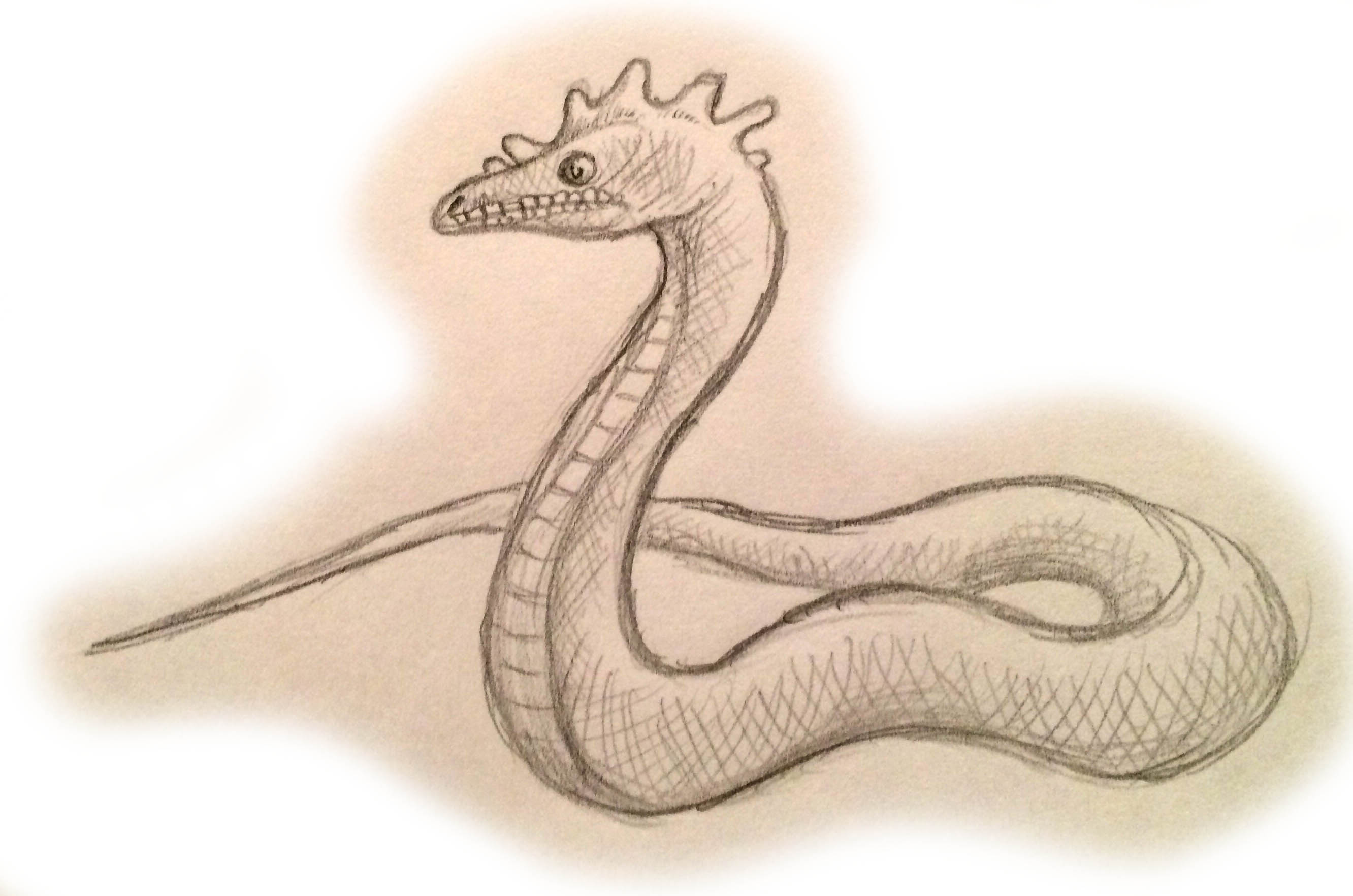
The Basilisk, the “little king” or “king of snakes”, is best known as a creature whose looks kill. Its primary claim to fame is a gaze that instantly kills anyone who sees it, or even anyone it looks at. The basilisk has appeared under a number of guises throughout the centuries, but there are at least a few constants. It is always deceptively small. It is a snake, or at least part snake, with or without rooster characteristics. It always has a crown – whether a white mark, a ring of hornlets, a rooster’s comb, or even a literal crown on its head. And finally, it is always extraordinarily virulent.
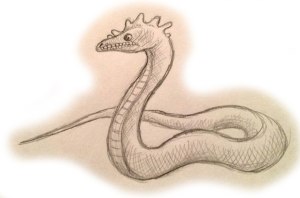
bas 1The basilisk is first and foremost a snake, born from the blood of Medusa as were all venomous snakes. It is found in the North African deserts – its very presence causes the desert, and it becomes frantic in the presence of water. At half a foot long, it is far from the biggest snake, but it is the king of snakes, traveling proudly with its head off the ground. It has a white spot or a crown on its head, and white markings down its back.

The exact nature of the basilisk’s deadliness is uncertain, as it is known to kill via venom, odor, and gaze. Murrus, one of Lucan’s soldiers, transfixed a basilisk with his spear, only to see the venom travel up his weapon and start corroding his hand. He survived by amputating his arm before the venom could reach his body. A basilisk can spit its venom skyward, frizzling up birds in flight. Its very gaze is deadly, as it can kill a man merely by looking at him with its gleaming red eyes. The regal nature of the basilisk and its propensity for projecting its venom suggest that cobras or spitting cobras were the origin of the legend.

Basilisks feared only three things: weasels, the crowing of roosters, and their own lethal gaze. The weasel was the only animal immune to the basilisk’s gaze and venom, making it the only natural predator of the king of snakes. Weasels were often sent into caves believed to harbor basilisks. This interaction also recalls that of the cobra and the mongoose. Basilisks also convulsed and died instantly upon hearing the crowing of a rooster. Travelers in the Libyan desert would be well advised to bring a rooster along with them. Topsell denied the possibility of basilisks perishing upon seeing each other, as “it is unpossible that any thing should hurt itself”; nonetheless, a basilisk in Vienna was killed by showing it a mirror.

With the passing of time the nature of the basilisk grew more and more confused. Various Biblical serpents were translated as basilisks. The basilisk gained more avian characteristics, including an origin in rooster eggs, and was confused with Cocodrillus (the crocodile); both of them were dangerous reptiles with small adversaries (the weasel for the basilisk, the hydrus for the crocodile). Further garbling of “cocodrillus” resulted in “cockatrice”. Wycliffe’s Bible had “cockatrice” as a translation of “basilisk”. Chaucer referred to the “basilicok”. With the accumulation of translation, grammar, and etymological errors, the basilisk (or cockatrice) became a hybrid of snake and rooster, with clawed wings, a rooster’s head, and a long serpentine tail (sometimes with an additional head at the end). This is the familiar cockatrice (or basilisk) of bestiaries, and an incarnation of the Devil himself. It further evolved into the alchemical cockatrice, holding its tail in its mouth, symbolizing the alchemical cycle and its mixed nature. The same nomenclatural confusion also gave rise to the Codrille, a basilisk from central France.

Despite efforts to separate the basilisk and the cockatrice – for example, making the basilisk a snake or lizard and the cockatrice a snake-rooster hybrid, or making them both snake-rooster hybrids, one with a snake head and the other with a rooster head – the fact remains that the names basilisk and cockatrice are interchangeable, and refer to the same animal. It is best to accept T. H. White’s statement that the cockatrice is “a medieval muddle” and leave it at that.
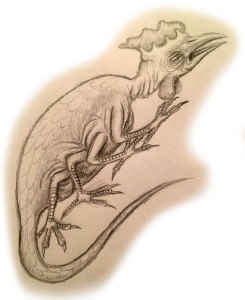
bas 2Cardano reported a basilisk found in the ruins of a demolished building in Milan. This particular specimen was wingless and featherless, with an egg-sized head that looked too large for its body. It had viper fangs, a bulky lizard-like body similar to that of the stellion, and only two stubby legs with catlike claws. The tail was as long as the body, with a swelling at its tip the size of the head. When standing up, it looked like a leathery, naked rooster.

Aldrovandi was apparently inspired by this animal for one of his images of the basilisk, helpfully giving it six more legs. Based on the description and appearance, it appears to have been inspired somewhat by scorpions. Ironically, while this eight-legged depiction has proven particularly enduring, Aldrovandi himself was apparently doubtful of its authenticity, placing this presumed African creature just before a couple rays preserved in the shape of basilisks. The true, snake-like basilisk is given a full-page spread. Aldrovandi also produces a couple of purported basilisk eggs.

Flaubert, taking considerable creative liberties, describes the basilisk as a huge violet snake with a three-lobed crest and two teeth, one on each jaw. It speaks to Saint Anthony, warning him that “I drink fire. I am fire – and I breathe it in from mists, pebbles, dead trees, animal fur, the surface of swamps. My temperature sustains volcanos; I bring out the gleam of gems and the color of metals.”

Finally, Hichens’ “crowing crested cobra” of sub-Saharan Africa appears to be some kind of basilisk. It resembles a cobra, but with a crest on its head and the call of a rooster.
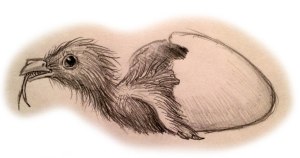
bas 3The life cycle of the basilisk is involved and complicated. The Egyptians believed it to be born from the egg of the ibis, while Neckham blames chickens. Basilisks are born from round shell-less eggs laid by old roosters in the summer (on a dungheap, in some accounts). Those eggs have to be incubated by a snake, a toad, or the rooster itself, eventually producing little terrors ready to kill at birth. As roosters may develop concretions that resemble eggs, and hens may look like roosters, any such fowl that seemed to be a male chicken laying an egg was immediately put to death. In 1474, one such heretical chicken was burned at the stake in Basle, in front of a large crowd.

The only plant immune to the withering gaze of the basilisk is rue, which is consumed by weasels to protect themselves from their enemies. Remedies for basilisk envenomation will always contain rue. A dead basilisk will ward away spiders, and one such basilisk carcass in Diana’s temple kept swallows at bay.

Borges quotes Quevedo as giving the paradox of the basilisk: its existence cannot be proven, as anyone who sees it and survives is a liar, and anyone who sees it and dies will not tell the tale.

The basilisk of biology, or Jesus Christ Lizard (Basiliscus) is a completely harmless South American lizard, known for walking on water. The lethal powers of the basilisk were also transposed by European settlers onto rattlesnakes, and the Mexican West Coast rattlesnake still bears the name of Crotalus basiliscus.

References

Aelian, trans. Scholfield, A. F. (1959) On the Characteristics of Animals, vol. I. Harvard University Press, Cambridge, Massachusetts.

Aldrovandi, U. (1640) Serpentum, et Draconum Historiae. Antonij Bernie, Bologna.

Barber, R. (1993) Bestiary. The Boydell Press, Woodbridge.

Borges, J. L.; trans. Hurley, A. (2005) The Book of Imaginary Beings. Viking.

Breiner, L. A. (1979) The Career of the Cockatrice. Isis, vol. 70, no. 1, pp. 30-47.

Breiner, L. A. (1979) Herbert’s Cockatrice. Modern Philology, vol. 77, no. 1, pp. 10-17.

Brown, T. (1658) Pseudodoxia Epidemica. Edward Dod, London.

Bulfinch, T. (1997) The Age of Fable. Macmillan, New York.

Cardano, G.; le Blanc, R. trans. (1556) Les Livres de Hierome Cardanus Médecin Milannois. Guillaume le Noir, Paris.

Evans, E. P. (1987) The Criminal Prosecution and Capital Punishment of Animals. Faber and Faber, London.

Flaubert, G. (1885) La Tentation de Saint Antoine. Quantin, Paris.

Hargreaves, J. (1983) The Dragon Hunter’s Handbook. Armada.

Hichens, W. (1937) African Mystery Beasts. Discovery (Dec): 369-373.

Isidore of Seville, trans. Barney, S. A.; Lewis, W. J.; Beach, J. A.; and Berghof, O. (2006) The Etymologies of Isidore of Seville. Cambridge University Press, Cambridge.

Lemnius, L. (1658) The Secret Miracles of Nature. Jo. Streater, London.

Liss, A. R. (1987) A Basilisk by Any Other Name… Teratology 35, pp. 277-279.

Lucan, trans. Rowe, N. (1720) Pharsalia. T. Johnson, London.

Pliny; Holland, P. trans. (1847) Pliny’s Natural History. George Barclay, Castle Street, Leicester Square.

de la Salle, L. (1875) Croyances et légendes du centre de la France, Tome Premier. Chaix et Cie., Paris.

Sax, B. (1994) The Basilisk and Rattlesnake, or a European Monster Comes to America. Society and Animals, vol. 2, no. 1.

Topsell, E. (1658) The History of Serpents. E. Cotes, London.

White, T. H. (1984) The Book of Beasts. Dover Publications, New York.

Múshveli

Variations: Mushveli, Mousewhale; Hafmús, Hafmus (“Sea-mouse”)

Mushveli

The chimaera, ratfish, or rabbitfish (Chimaera monstrosa) is a small and completely harmless deep-sea fish. Evidently its legendary counterpart the Múshveli, or “mousewhale”, is enormous and highly dangerous. As one of the illhveli (“evil whales”) of Iceland, it is inedible and delights in causing death and destruction.

Múshvelis are mostly mouth, ear, and tail. The gaping, deeply split mouth is large enough to swallow a rowboat in a single gulp, and the large, prominent ears stick out like sails while the animal swims. A long whiplike tail without a fin allows the múshveli to swim at terrifying speeds, so fast that the sea churns ahead of it. Instead of fins, there are two stumpy hoofed legs. These animals are over ten meters long, and light gray or brownish-black in color.

Múshvelis sink ships by ramming them or rearing up, placing their feet on the gunwales, and pushing down until the ship capsizes. If a múshveli is sighted, the best course of action is usually to make for shore as fast as possible, and once there make for higher ground. Unlike most other evil whales, múshvelis can clamber onto the beach with their stubby legs, but they are out of their element and give up quickly. One múshveli ran a boat aground and followed the sailors as far as it could. It easily shrugged off three bullets, and eventually returned to the sea with the next high tide.

Large boats are usually impregnable to múshvelis. In one account, two Icelandic fishermen on a small boat were alerted to the presence of a múshveli by the roar of the foaming sea. It was making right for their boat, and terror made them freeze up. Fortunately, the crew of a French fishing schooner saw their plight, and steered their boat into the múshveli’s path. The sea-mouse rammed the ship so hard that it listed to one side, but remained afloat. The múshveli continued to take its rage out on the French schooner while the fishermen were taken aboard to safety, and eventually the monstrous whale gave up and disappeared.

References

Davidsson, O. (1900) The Folk-lore of Icelandic Fishes. The Scottish Review, October, pp. 312-332.

Hlidberg, J. B. and Aegisson, S.; McQueen, F. J. M. and Kjartansson, R., trans. (2011) Meeting with Monsters. JPV utgafa, Reykjavik.

Llamhigyn y Dwr

Variations: Water Leaper, Water Spirit

Llamhigyn y Dwr

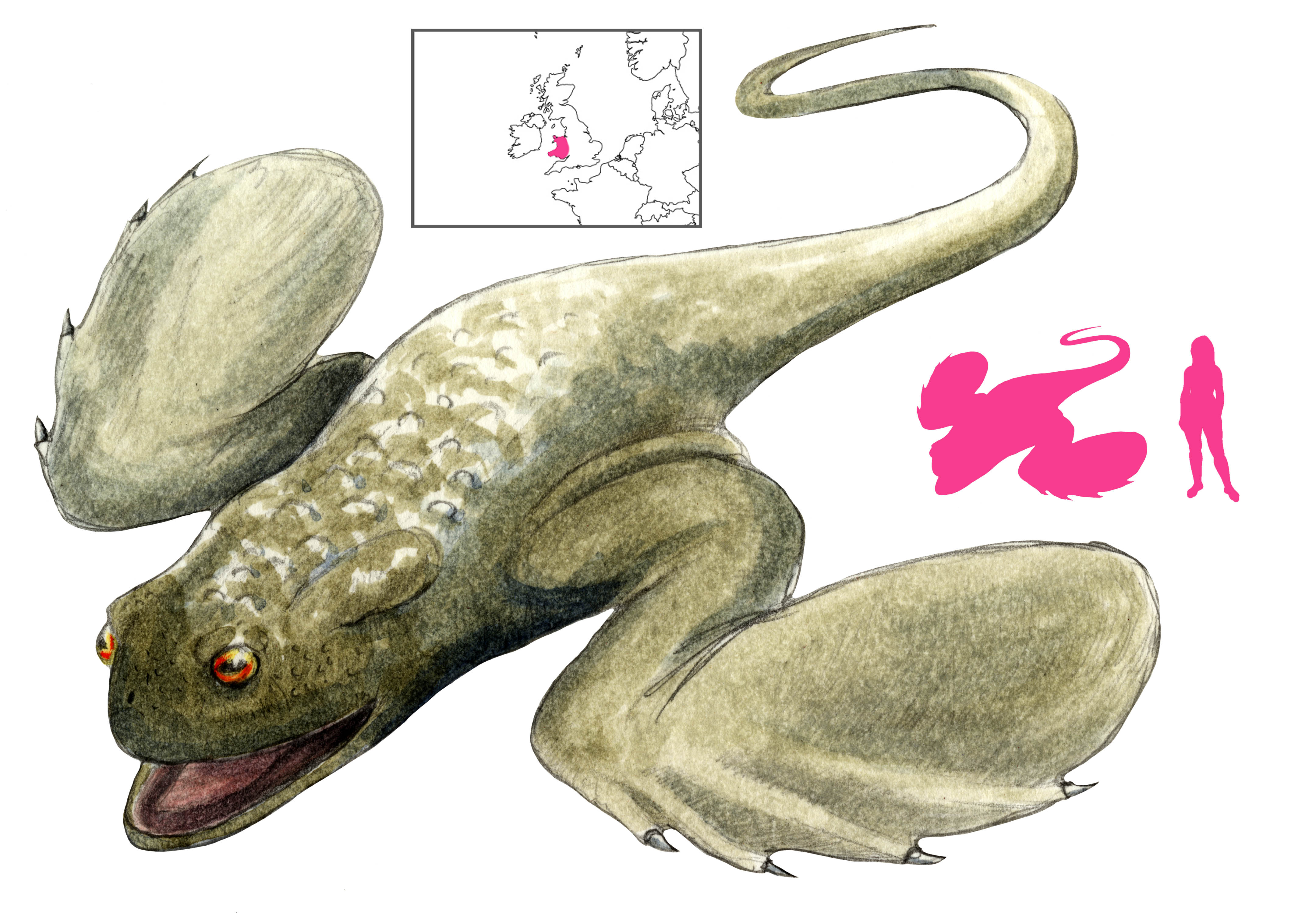
Welsh fishermen, especially around Llyn Gwynan and Llyn Glas, have to contend with the attention of the troublesome Water Spirit, the Llamhigyn y Dwr or “Water Leaper”.

A llamhigyn y dwr looks like a large and monstrous toad, except with a long tail and wings instead of legs. It hides in lakes and other bodies of water, and is carnivorous by nature. Shepherds know not to let their sheep or dogs near the water’s edge, lest the llamhigyn y dwr pounce on them and drag them below.

Fish lost to anglers in those lakes are always the work of a llamhigyn y dwr. It will take the bait cleanly off hooks, or even pull fishermen into the lake. They are fast and powerful swimmers, and will run away with hook, line, rod, and angler. One fisherman’s grandfather told of hooking a llamhigyn y dwr, only for it to emit an ear-splitting shriek, and it would have pulled him off the boat had his friend not been with him.

These tales of the llamhigyn y dwr were told – with significantly more colorful language – by one Ifan Owen, a trustworthy angler by trade with no reason to exaggerate.

References

Jones, T. G. (1930) Welsh Folklore and Folk-custom. Methuen and Co., London.

Rhys, J. (1901) Celtic Folklore: Welsh and Manx, vol. I. Clarendon Press, Oxford.

Baxbakwalanuxsiwae

Variations: Baxbaxwalanuksiwe, Baxbakualanuxsi’wae, Baqbakualanusi’uae, Baqbakualanosi’uae, Baqbakualanuqsi’uae, Baqbakua’latle, Cannibal-at-the-North-End-of-the-World, He-Who-First-Ate-Man-at-the-Mouth-of-the-River, He-Who-First-Ate-Humans-on-the-Water, Ever-More-Perfect-Manifestation-of-the-Essence-of-Humanity, Man-Eater

Baxbaxwalanuksiwe

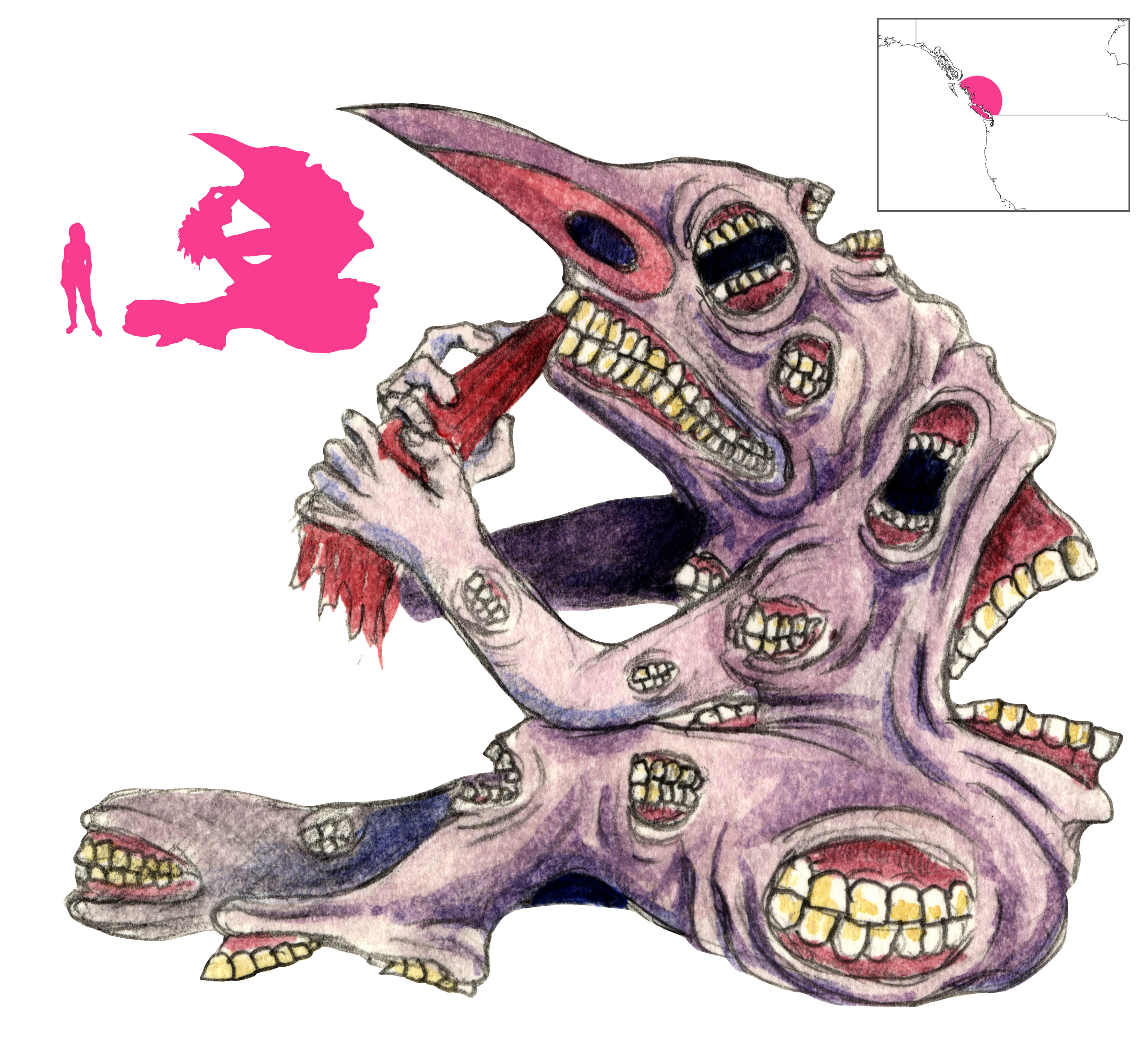
Baxbakwalanuxsiwae is the greatest and most terrifying of beings in Kwakwaka’wakw folklore. His name is alternately translated as “Cannibal-at-the-North-End-of-the-World” and “He-Who-First-Ate-Man-at-the-Mouth-of-the-River”; “Ever-More-Perfect-Manifestation-of-the-Essence-of-Humanity” is a more sanitized and euphemistic version. “Man-Eater” succinctly describes him. He is the central figure of the enigmatic Hamatsa, or “Cannibal” ceremony.

The appearance of Baxbakwalanuxsiwae is horrifying. He is anthropomorphic or bearlike in appearance. His entire body is covered in gaping, snapping, bloody mouths, and his call is “hap, hap, hap” (“eat, eat, eat”). His house is covered in red cedar bark, with blood-red smoke pouring out of the chimney.

He is attended by a number of equally vile creatures. His wife Qominaga, wearing red and white cedar bark, and his slave Kinqalalala, bring him his human meals. Qoaxqoaxualanuxsiwae, the “Raven-at-the-North-End-of-the-World”, pecks out his victims’ eyes. Hoxhogwaxtewae, “Hoxhok-of-the-Sky”, a giant crane, cracks skulls with its very long beak and devours the brains. Gelogudzayae (“Crooked-Beak-of-the-Sky”) and Nenstalit (“Grizzly-Bear-of-the-Door”) stand guard. These monstrous bird-ogres are all an extension of Baxbakwalanuxsiwae himself; they are his eyes and ears, and nothing can hide from them.

A wise shaman once encountered Baxbakwalanuxsiwae while hunting in the mountains. He was captured by Qominaga, who shouted to Baxbakwalanuxsiwae “come and devour him!” The man managed to squirm out of Qominaga’s grip, losing all his hair in the process, and was chased by Baxbakwalanuxsiwae through forests and caves. Eventually he tricked Baxbakwalanuxsiwae, luring him into a pit trap. The ogre and his wife fell into the pit and were incinerated; the shaman blew into the ashes, and they became the bloodthirsty mosquitoes of the Earth.

The Hamatsa ceremony itself tells the tale of Baxbakwalanuxsiwae possessing the young initiate, making him go into a frenzy where he gnashes, bites, and shouts “hap, hap, hap”. He is then symbolically exorcised, tamed, and inducted into the society. Baxbakwalanuxsiwae and his attendants are represented with spectacular, ornately carved masks worn by the Hamatsa dancers.

References

Boas, F. (1897) The Social Organization and the Secret Societies of the Kwakiutl Indians. Government Printing Office, Washington.

Bouchard, R. and Kennedy, D.; Bertz, D. trans. (2002) Indian Myths and Legends from the North Pacific Coast of America. Talonbooks.

Hays, H. R. (1975) Children of the Raven: The Seven Indian Nations of the Northwest Coast. McGraw-Hill Book Company, New York.

McDowell, J. (1997) Hamatsa: The Enigma of Cannibalism on the Pacific Northwest Coast. Ronsdale Press.

Vatnagedda

Variations: Eiturgedda, Vatna-gedda, Loch Pike, Poisonous Pike

Vatnagedda

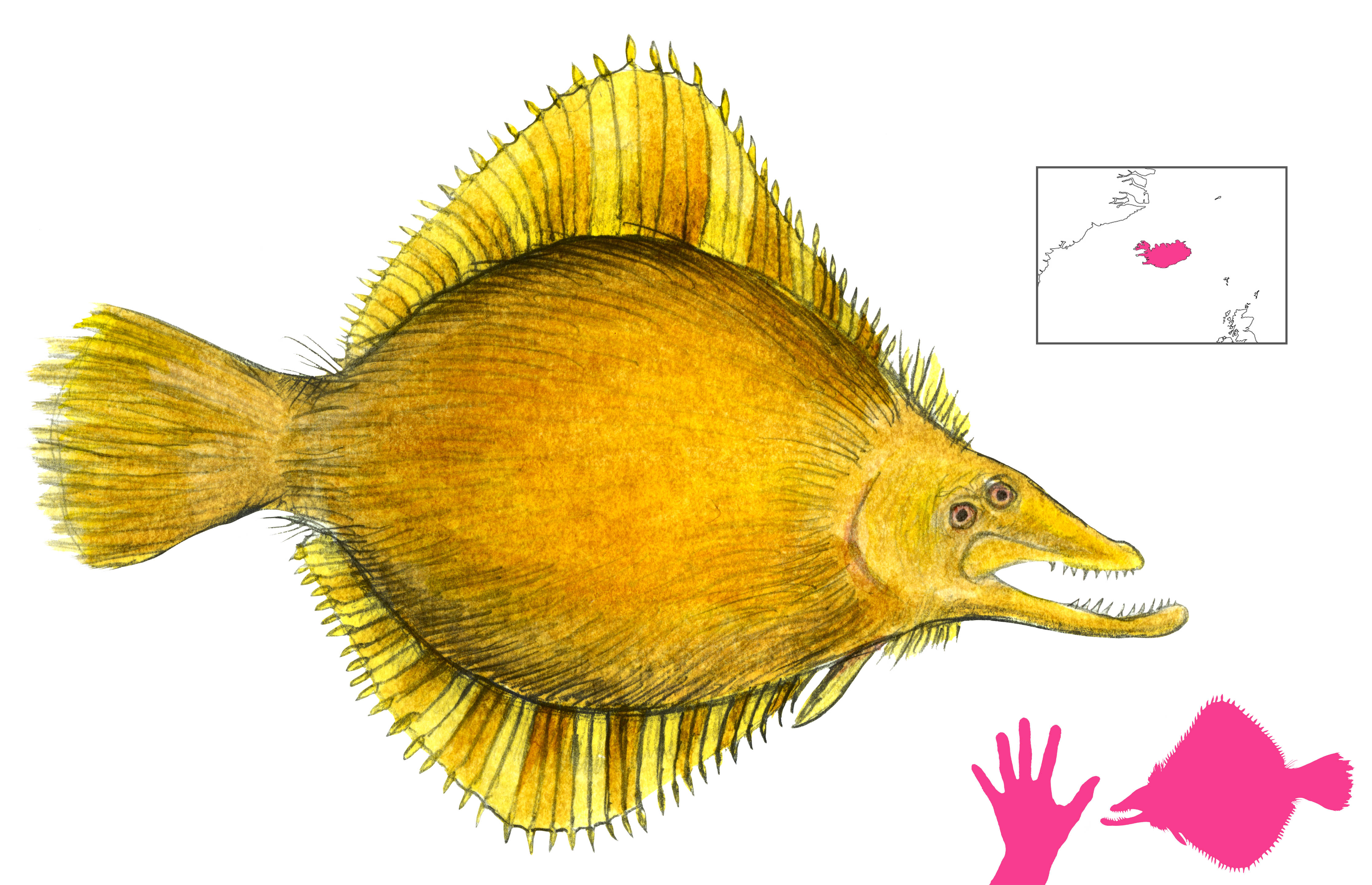
A number of Icelandic fishes are extremely toxic, but the Vatnagedda or “loch-pike” is probably the deadliest of all. Despite its name, it looks less like a pike and more like a small furry flounder, golden in color (although blue variants have been reported). They are also known as Eiturgedda, or “poisonous pike”.

The poison of the vatnagedda is found in its flesh and skin. Merely touching it is enough to cause death. The corrosive toxins can dissolve organic and inorganic matter alike, and eat through layers of clothing. Even ghosts are not immune to vatnagedda poison. The presence of a dead vatnagedda is enough to scare off any evil spirit, and vatnagedda fat will cure pain caused by ghosts and sorcery.

Vatnageddas live at the bottom of murky lakes. They hate light, which is said to kill them, and so are only seen at the surface before storms and in fog. To catch one, the hook must be baited with gold. Anglers must wear gloves made of human skin, or multiple layers of skate-skin; even then, handling the fish will result in rashes and inflammation.

The main problem after landing a vatnagedda is holding on to it, as its poison will eventually destroy any material around it. One specimen that had been wrapped in two horse-skins melted its way underground and vanished into the earth. Wrapping it in the caul of a child, followed by the caul of a calf, is the only known way to transport a vatnagedda.

Jon Arnason tells of a sorcerer who aided a farmer and his son. Some evil spirit was visiting their home, and its repeated hauntings were driving the young daughter to madness. The sorcerer, wearing human-skin gloves and armed with a hook baited with gold, captured a vatnagedda from Gedduvatn (Pike Lake). The dead fish was placed in a bottle, wrapped in multiple layers of sheepskins and leather, and loaded onto a pack-horse for the journey home. By the time the sorcerer returned, the horse had developed a hairless, sunken patch on its back where the vatnagedda had been, and it was debilitated for the rest of its life. The vatnagedda was buried under the threshold of the house, and the ghost never returned. The girl made a full recovery.

References

Davidsson, O. (1900) The Folk-lore of Icelandic Fishes. The Scottish Review, October, pp. 312-332.

Hlidberg, J. B. and Aegisson, S.; McQueen, F. J. M. and Kjartansson, R., trans. (2011) Meeting with Monsters. JPV utgafa, Reykjavik.

Alicanto

Alicanto

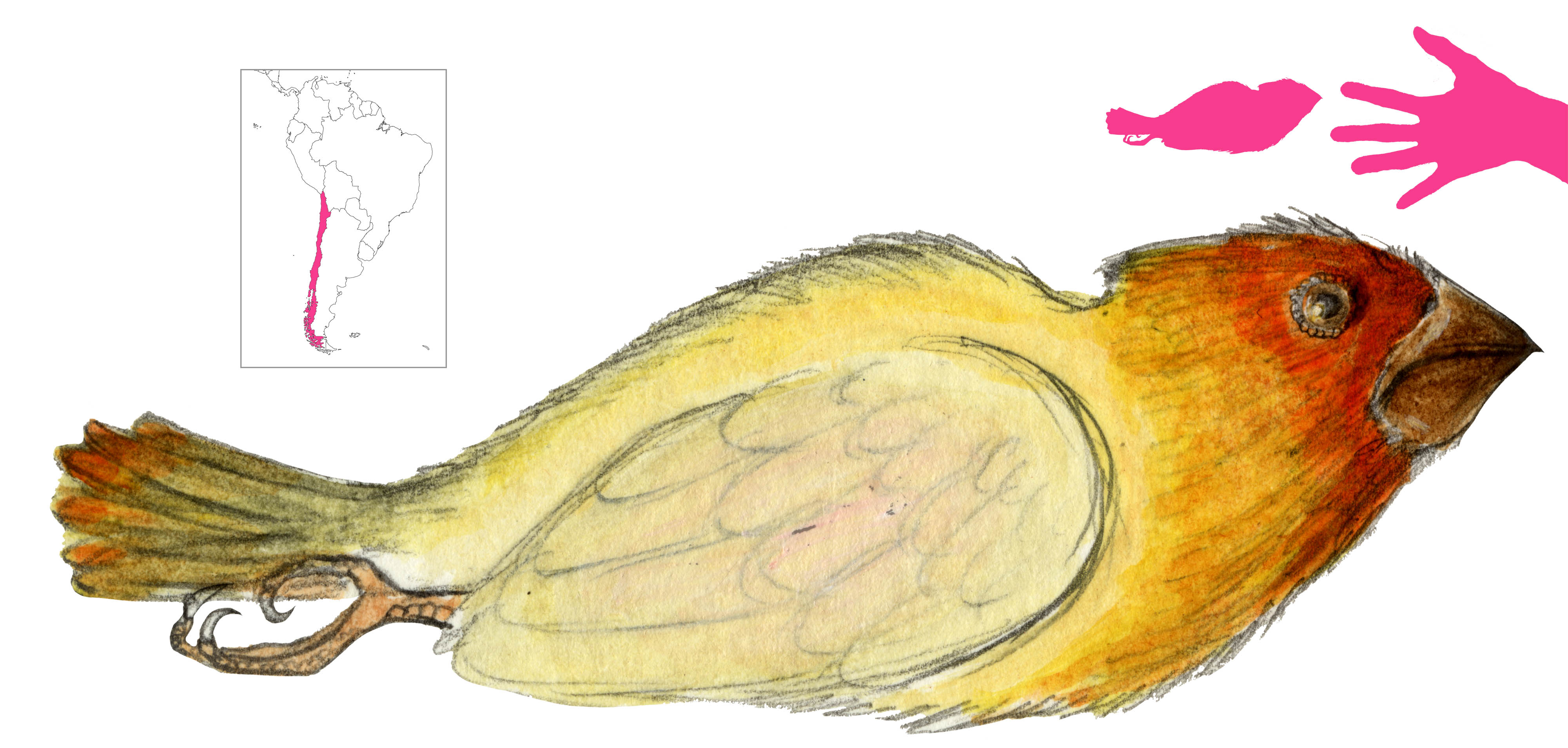
The Alicanto is a glowing nocturnal bird comparable to the Carbuncle, perhaps sharing the same folkloric origin. It is  known to inhabit Chile, and has been reported from Atacama, San Bernardo, Santiago, Talagante, and Tarapacá.

Alicantos feed exclusively on metal ores, and take on the color of the metal they ingest – a gold-eating alicanto emits a golden light, while the silver-eating variety glows a cold metallic gray. The rare copper-eating alicanto is greenish, with large wings, a hooked beak, long legs, and sharp claws. Due to its phosphorescence, an alicanto does not cast a shadow. The eyes are bright and gleam silver.

These birds are flightless, but their wings are perfectly functional. They will often gorge themselves on metal, filling their crop so much that they cannot fly. At best they run fast with their wings held open; a full alicanto can barely drag itself along the ground.

Alicantos live around mines and hidden treasure, and nest in small caves. The female always lays two eggs, the shells of which are made of the metal she eats.

As an alicanto indicates the presence of precious metal, finding one can be highly lucrative. For that reason they are sought out by prospectors, engineers, miners, and unscrupulous looters hoping that the birds will lead them to rich veins. However, an alicanto is highly protective of its food sources, and if it knows it’s being followed, it will stop glowing and disappear into the darkness – or worse, lead its pursuers to a cliff.

References

Aguirre, S. M. (2003) Mitos de Chile. Random House, Editorial Sudamericana Chilena.

Cifuentes, J. V. (1947) Mitos y supersticiones (3rd Ed.). Editorial Nascimento, Santiago, Chile.

Saratan

Variations: Zaratan (erroneously), Sarathan

Saratan

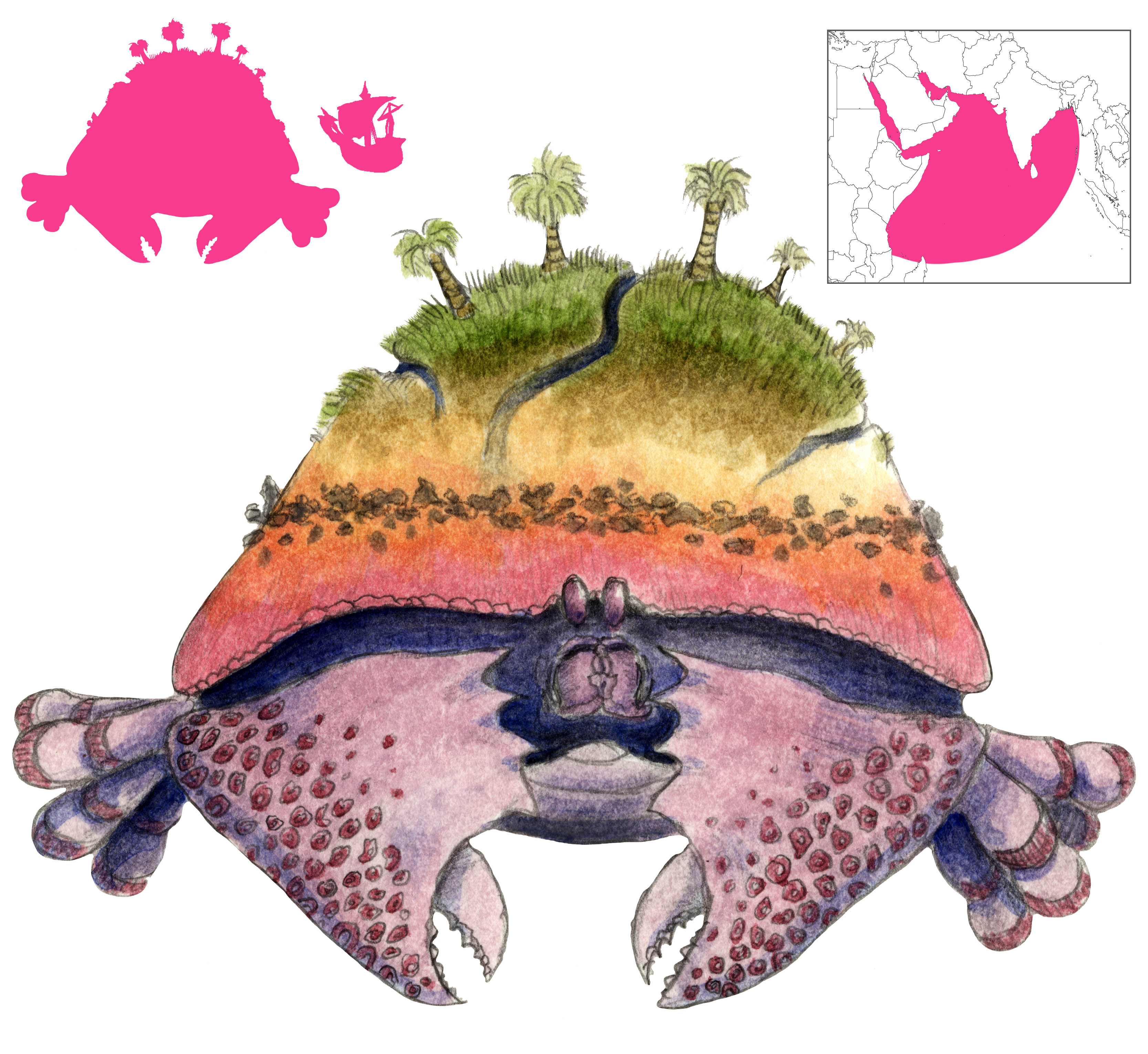
Saratan is Arabic for crab. It also means cancer, in the same way as cancer is Latin for crab. Hence, every use of the word saratan here can be replaced with “crab”.

Al-Jahiz knows what crabs are. He talks about how crabs have eight legs and two “teeth” which give the appearance of ten legs. They have eyes on their back. They live in water or burrows on the shore, where they lay their eggs, and feed out of greed instead of necessity.

But the “crab” he describes at one point is enormous in size and lives in the open ocean. Vegetation grows on its back as it rests on the surface. Cracks and crevices in its shell look like gullies and rivers. It is this monster that sleeps in the middle of the ocean until sailors land on it, mistaking it for an island. Then it awakens and dives underwater, drowning anyone incapable of swimming back to ship.

Al-Jahiz does concede that he cannot find anyone who claims to have seen this monster.

“What is the most wondrous thing you have ever seen?” Al-Jahiz and a group of friends ponder this question. “The elephant”, comes one response. “The soul”. “Sleep and awakening”. “Forgetfulness and memory”. “Fire”. “The belly of the cosmos”. Another of the scholars present expresses his amazement with the elephant. Finally, Ma’bad bin ‘Omar states “The saratan and the ostrich are greater miracles than the elephant”.

Elsewhere Al-Jahiz goes on to add “The greatest of God’s creations are the snake and the saratan and the fish”, and “The greatest animals created are the fish and the saratan”.

It is strange that the saratan is popularly known as “zaratan”, and described as a whale or turtle. The blame for this lies with Borges, who describes the saratan’s activities but neglects to mention that it is a gigantic crab. He quotes a Spanish translation of Al-Jahiz by Palacios which converts saratan to “zaratan”. Oddly enough, the English translation of Palacios’ text uses the more reasonable transliteration of “sarathan”. In either case, Palacios does describe this monster as a “certain crustacean of the sea” (“cierto crustaceo maritimo”), a fact that Borges omits.

References

Borges, J. L.; trans. Hurley, A. (2005) The Book of Imaginary Beings. Viking.

Al-Jahiz, A. (1966) Kitab al-Hayawan. Mustafa al-Babi al-Halabi wa Awladihi, Egypt.

Palacios, M. A. (1919) La escatologia musulmana en la Divina Comedia. Estanislao Maestre, Madrid.

Palacios, M. A.; Sunderland, H. trans. (1926) Islam and the Divine Comedy. John Murray, London.

Haemorrhois

Variations: Haemorrhous, Haemorrhe, Blood-letter, Blood-flower, Affodius, Afudius, Alsordium, Halsordium, Sabrine (Topsell gives the last five as corrupted, barbarous versions)

Haemorrois

The Haemorrhois – “bleeder” or “blood-letter” – is one of the many Saharan snakes feared for its venom. True to its name, it produces a violent hemotoxin that forces its victims’ blood out of their bodies. Topsell seemed uncertain as to whether it was an asp or a viper, but its appearance and effect of its venom strongly imply a viper.

Descriptions of the haemorrhois consistently agree that it is one foot long and has horns of some sort. Aelian gave it bristling horns, but Aldrovandi sets the number to one. It is pitch black or fiery in color, with bright eyes; Topsell believed it to be sandy yellow with black spots. The head is broad, tapering to a short, pointed tail. The scales of a haemorrhois are rough and make a rustling sound as the snake moves, suggesting that it may have been inspired in part by the saw-scaled viper. They are slow and sluggish animals, and make winding nests in rocky areas.

Sexual dimorphism is known. Males tend to hold their head up when traveling, while females remain close to the ground. Aelian adds that the venom of female haemorrhois specifically targets the gums and fingernails.

Envenomation by a haemorrhois is particularly gruesome. As the venom spreads, blood begins to leave by every opening possible, draining out through the eyes, ears, nostrils, mouth, even the very pores. Scars reopen. Teeth and nails fall out. The entire body becomes one bleeding wound, and death comes through catastrophic blood loss. Lucan, in describing the fate of young Tullus, compared the dying Roman to a statue gushing water, weeping and sweating blood.

One of these snakes was encountered by Menelaus and his men in Egypt. Helen crushed it and extracted its poison for reasons unknown. Since then, all haemorrhois have been slow creepers.

Topsell recommends a number of substances as antidotes to haemorrhois bite. These cures include vine-leaves with honey; powdered haemorrhois head taken with water; garlic with fleur-de-lis oil as an emetic; and raisins. To staunch the bleeding, plasters made of vine leaves and honey or purslane and barley leaves should be applied, and the wound washed with cold water. Finally, he concedes that the same remedies used for other snakes may prove effective. Hard eggs with salted fish, or a potion of radish seeds, poppy juice, lily roots, daffodil, rue, trefoil, cinnamon, cassia, and sweet myrrh can help.

References

Aelian, trans. Scholfield, A. F. (1959) On the Characteristics of Animals, vol. III. Harvard University Press, Cambridge, Massachusetts.

Aldrovandi, U. (1640) Serpentum, et Draconum Historiae. Antonij Bernie, Bologna.

Batinski, E. (1992) Cato and the Battle with the Serpents. Syllecta Classica, Vol. 3, pp. 71-80.

Eldred, K. O. (2000) Poetry in Motion: the Snakes of Lucan. Helios 27.1, p. 63.

Isidore of Seville, trans. Barney, S. A.; Lewis, W. J.; Beach, J. A.; and Berghof, O. (2006) The Etymologies of Isidore of Seville. Cambridge University Press, Cambridge.

Lucan, trans. Rowe, N. (1720) Pharsalia. T. Johnson, London.

Topsell, E. (1658) The History of Serpents. E. Cotes, London.

Yara-ma-yha-who

Yara ma ya who

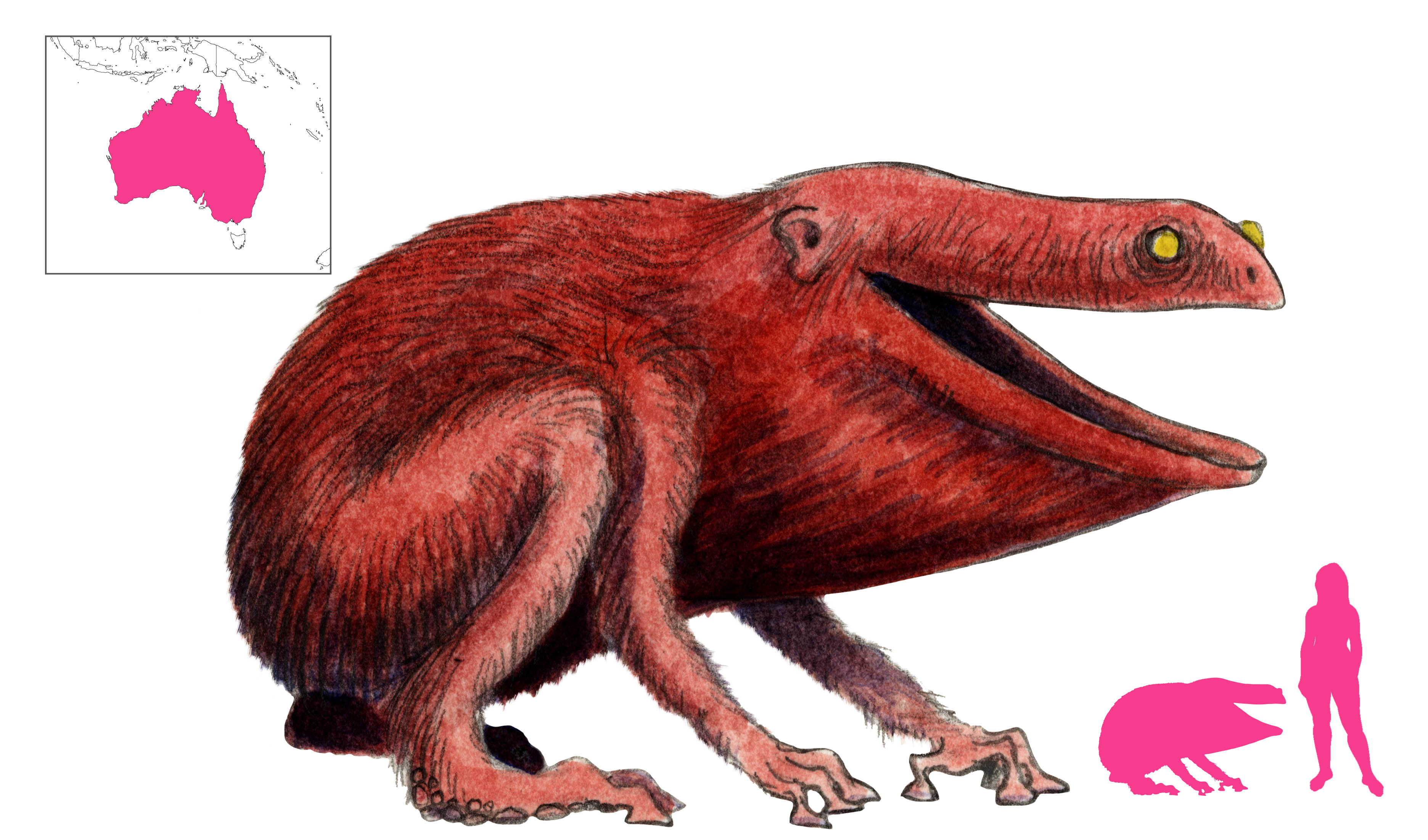
The Yara-ma-yha-who of Australia are restricted to the forests of the Pacific coast, and their absence elsewhere should be considered a blessing. They are primarily nursery bogies, dissuading children from frequenting dangerous areas.

A yara-ma-yha-who is a grotesque sight, and would be amusing were it not for its ghastly habits. Not more than four feet tall, red, and covered with fur, a yara-ma-yha-who has a disproportionately large head. It can open its toothless mouth like a snake, and its throat and belly are similarly distensible. An adult man can be easily swallowed by a yara-ma-yha-who without discomfort. Its fingers and toes are equipped with suction cups. Yara-ma-yha-who are good climbers, but can only waddle like cockatoos on land.

Thick-leaved fig trees are the yara-ma-yha-who’s favorite haunt. They can wait for days in the branches until some hapless traveler, perhaps seeking shelter from sun or rain, lies under the tree. Lone children are their favorite prey.

When a yara-ma-yha-who attacks, it attaches its hands and feet on its victim’s body, using the suction cups to drain the blood out of them. It does not empty them entirely, but only enough to make them faint. It then leaves its victim for a while, eventually returning to swallow them whole, head first. A little dance lets the food slide down, the meal is washed down with water, and the yara-ma-yha-who takes a nap.

After waking up, the yara-ma-yha-who vomits its prey out. The human is almost always alive and playing dead; there is no reason to fight back as the creature can overpower the strongest man. The yara-ma-yha-who takes five paces, then returns and pokes his victim’s sides with a stick. Then it walks away ten paces before returning to tickle the human under the arm or neck. A fifty-yard stroll is followed up by more tickling, then the yara-ma-yha-who goes behind a bush and sleeps.

This ritual is always repeated. The yara-ma-yha-who know that if they fail to carry out these actions, the spirit of the fig tree will mumble in their ears, causing them to transform into glowing tree mushrooms.

For this reason it is safest to play dead until this point, when you get to your feet and run. “Where have you gone, my victim?” calls the yara-ma-yha-who if it hears you escaping, but its awkward gait makes it easy to outrun. After failing to recapture prey, a spiteful yara-ma-yha-who will drink up all the water in nearby wells and water-holes, leading people to seek liquid from tree sap – and thus end up exposed to yara-ma-yha-who attack.

It is important not to let a yara-ma-yha-who swallow you multiple times. The second time you are swallowed and regurgitated, you become shorter and completely hairless. By the third time you are shorter still, and thick hair grows over your body. Eventully, after enough cycles of swallowing and vomiting, you become a yara-ma-yha-who yourself.

Heuvelmans believed the yara-ma-yha-who was inspired by tarsiers. Furry, big-eyed, and with suction-cup fingers, it is more a mammalian frog than anything else.

References

Heuvelmans, B. (1958) On the Track of Unknown Animals. Rupert Hart-Davis, London.

Smith, W. R. (2003) Myths and Legends of the Australian Aborigines. Dover Publications, Mineola.