Sverðhvalur

Variations: Sverdhvalur, Sword-whale, Swordwhale; Sverðfiskur, Sverðfiskar, Sverðfiskr (Sword-fish); Sverðurinn (Sworder); Brúnfiskur, Brún-fiskur (Brown-fish); Sveifarfiskur (Crank-fish); Slambakur (Slap-whale); Staurhvalur (Stump-whale); Einbægslingur (One-fin); Haskerðingur (High-Fin; potentially the basking shark or the swordwhale); Killer Whale, Orca, Swordfish

Sverdhvalur

The Sverðhvalur (“Swordwhale”) or Sverðfiskur (“Swordfish”) is one of the illhveli, or “evil whales” that lurk off the coast of Iceland. Like the other evil whales, it is unfit for eating, and the steypireyður or blue whale is its mortal enemy.

The sverðhvalur’s most distinctive feature is the sharp bony fin growing out of its back. This fin is 3-12 cubits (1.5-6 meters) tall. The sverðhvalur is about the size of a sperm whale at the largest, and its spouting is short and heavy. Its face is owlish in appearance, with a pointed snout and a large mouth set with vicious teeth. If the brúnfiskur (“brown-fish”) is one of its many aliases, it can be assumed to be brown in color, but another account describes it as grey.

The sverðhvalur is a fast swimmer, and beats the water on either side of it with its fin when agitated. It is often accompanied by a smaller whale – perhaps its offspring – that swims under its pectoral fin and feeds on its scraps. The bladed dorsal fin is used as a weapon, and a sverðhvalur will swim underneath good whales to cut their bellies open with crisscross slashes. Whales will beach themselves rather than suffer a sverðhvalur’s attack. Sverðhvalurs are also wasteful eaters, choosing to eat only the tongue of cetacean prey and leaving the rest to rot. Boats are treated in the same way as whales are, with the dorsal fin punching holes through hulls or slicing cleanly through smaller boats and sailors alike.

Other encounters, especially with larger vessels, are more harmful for the whale. A trading ship sailing from eastern Iceland to Copenhagen came to a stop in the middle of a large pod of whales, and suddenly felt a strong tug coming from below. When the ship moored in Copenhagen, a large fish’s tusk was found sticking out of the hull.

Another sverðfiskur followed a boat off Eyjafjörður, and gave up the chase only after a gun was fired into its gaping mouth.

The term sverðfiskur or sverðfiskr (“sword-fish”) has been used to refer to the swordfish, the sawfish, and the killer whale. The basking shark and the killer whale have also been accused of slicing through ships and eviscerating whales with their fins, and it is the killer whale or “swordwhale” that appears to be the sverðhvalur’s ancestor.

References

Anderson, P. (1955) Bibliography of Scandinavian Philology XXIV. Acta Philologica Scandinavica, Ejnar Munksgaard, Copenhagen.

Árnason, J.; Powell, G. E. J. and Magnússon, E. trans. (1866) Icelandic Legends, Second Series. Longmans, Green, and Co., London.

Davidsson, O. (1900) The Folk-lore of Icelandic Fishes. The Scottish Review, October, pp. 312-332.

Hermansson, H. (1924) Jon Gudmundsson and his Natural History of Iceland. Islandica, Cornell University Library, Ithaca.

Hlidberg, J. B. and Aegisson, S.; McQueen, F. J. M. and Kjartansson, R., trans. (2011) Meeting with Monsters. JPV utgafa, Reykjavik.

Traîcousse

Variations: Trécouche

Traicousse

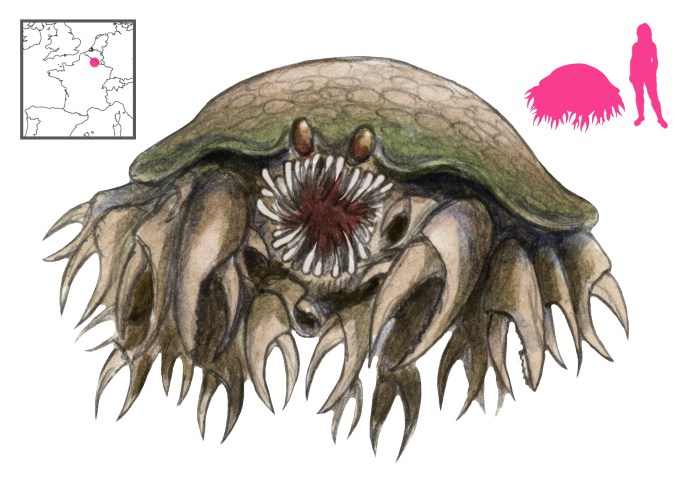
The Traîcousse, also known as Trécouche (pronounced tré-coutche) is a vile creature that can be found lurking in the ponds and waterways of the Southwestern Ardennes and the Semois, especially Hautes-Rivières in France and Bohan in Belgium. As a water bogey, it is invoked to discourage children from entering rivers.

In appearance the traîcousse is most like a large crab, a meter in diameter, with a flattened, rounded body covered with palm-sized brownish scales. Its bloodshot eyes are the size of a human fist. Its mouth is huge and bristles with sharp shark-like teeth, while countless pincer-tipped legs allow it to move and grasp its prey. In some areas the traîcousse has become an ugly river witch.

The deepest part of the river, where the current is fastest, is where the traîcousse lives. It digs itself into small cavities and rocky ledges as it waits for prey to come near. Anything that approaches is seized and dragged under, never to be seen again. Missing livestock, fishermen, and children are its doing.

Every now and then the traîcousse will vomit up the skin and bones of its prey, which rise to the surface in a macabre mix of foam and blood.

References

Lambot, J. (1987) L’Ardenne. Pierre Mardaga, Brussels.

Tijskens, J. (1965) Les Noms du Croquemitaine en Wallonie. Enquêtes du Musée de la Vie Wallonne, nos. 117-120, tome X, pp. 257-391.

Romŝiwamnari’

Variations: Romŝiwamnare’

Romsiwamnari

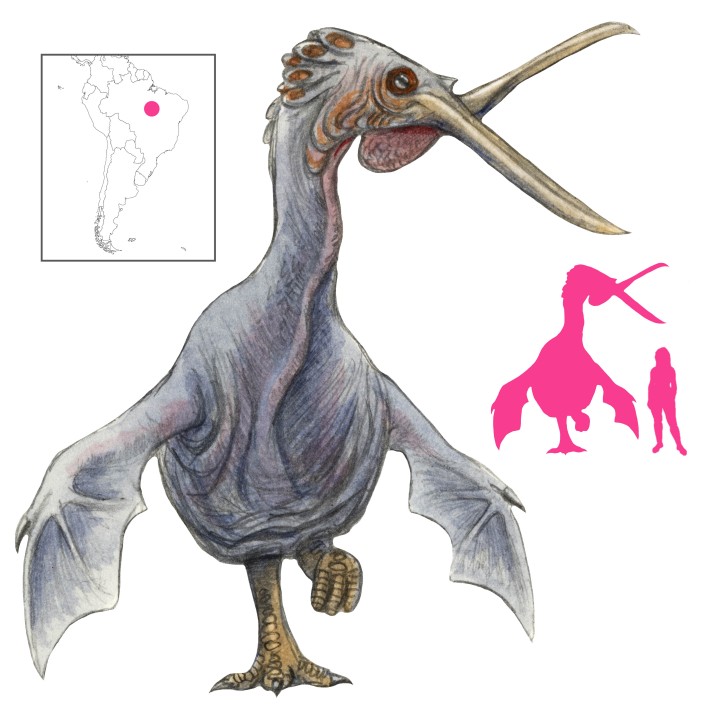
The Romŝiwamnari’ are forest and cave demons, known to the Šerente people of Tocantins, Brazil. They look like large birds with flabby, flightless bat’s wings, armed with beaks like scissors. Their call is an eerie whistle. Romŝiwamnari’ also appear as tapirs, or as stout humans with prominent teeth and a howler monkey’s tail. When in human guise, a romŝiwamnari’ resembles the Pope – a relic of missionary activity in Brazil.

Romŝiwamnari’ not only prey upon the living, but also ambush and consume the souls of the dead. A sufficiently powerful shaman can kill them while in the realm of death, but other souls are greedily devoured.

A man of the krara’ society and his pregnant wife once encoutered a pair of romŝiwamnari’ in a cave. The man held the monsters off as long as he could while his wife escaped, but he was outmatched and decapitated by the romŝiwamnari’. The woman brought the news to the rest of the village, and the other krara’ launched an assault on the romŝiwamnari’ cave. Three of the villagers were killed in the battle, but they slew the two romŝiwamnari’ – unaware that there were two more in hiding. However, the boy the woman gave birth to grew into a mighty hero in less than a year, and he avenged his father by burning the romŝiwamnari’ bones and killing the other two demons. The romŝiwamnari’ were not seen again in that area.

References

Crocker, W. H.; Giaccaria, B.; Heide, A.; Lea, V.; Melatti, J. C.; Nimuendajú, C.; Seeger, A.; Verswijver, G.; Vidal, L.; Wilbert, J. and Simoneau, K. (eds.) (1984) Folk Literature of the Gê Indians, v. 2. UCLA Latin American Center Publications, University of California, Los Angeles.

Nimuendajú, C.; Lowie, R. H. (trans.) (1942) The Šerente. The Southwest Museum, Los Angeles.

Stella

Variations: Sea Star

Stella

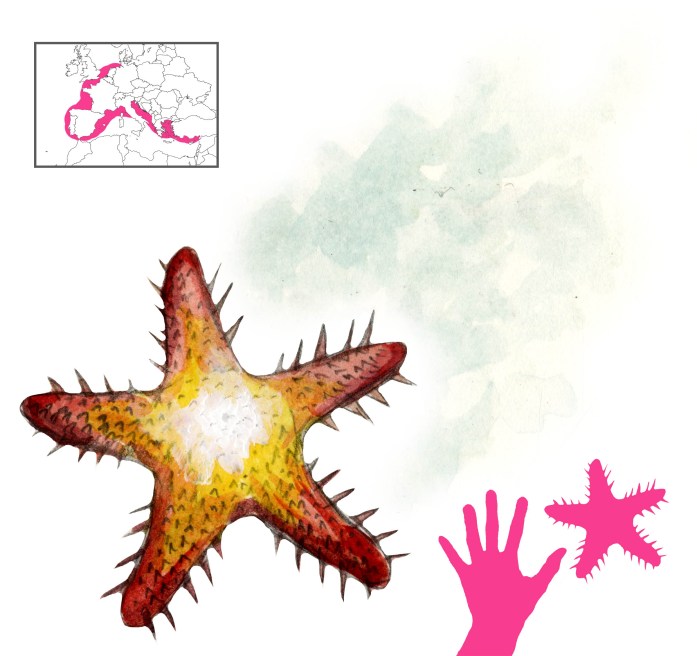
Stella, or the sea star, derives its name from its unusual appearance that resembles a painted star.

Much like its namesake, a stella is so hot that it burns, liquefies, and effectively cooks anything it comes in contact with. It will intentionally touch fish in order to kill them. Evidence for this incandescent nature was found in a large stella washed up on the shores of Maguelonne. Almost a foot in diameter, it was found to have five mollusk shells inside it, two of which were half-liquefied.

References

Boaistuau, P. (1564) Histoires Prodigieuses. Vincent Norment et Iehanne Bruneau, Paris.

Peteu

Variations: Peteu de Vergisson, Bête Faramine, Oiseau de Vergisson, Esiau de Vregesson, P’teu, Pteu

Peteu

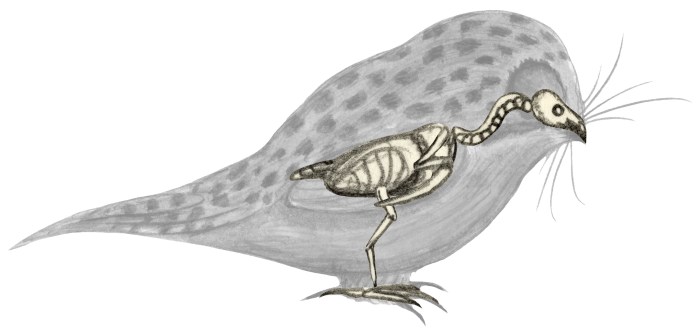
The picturesque town of Vergisson, in France’s Saône-et-Loire, was once home to the Peteu. This was a great and monstrous bird, with broad wings and whiplike feathers surrounding its razor-sharp beak. It was spiritually descended from the emouchet or kestrel (Falco tinnunculus), but also of the humble kinglet, whose name in the Maconnais dialect is répteret, répeteret, or repteu, which in turn is shortened to pteu.

The peteu would fly from the Rock of Solutré to the Rock of Vergisson, soaring over its domain in search of prey. When it spotted something, it folded its wings, dove, and carried off its prize. The peteu devoured sheep, pigs, goats, cows, horses and their carts! Its loud wingbeats terrified livestock and sent them running all the way back to their stables. Most heinous of all, it dove at Mr. Bruys de Serrières, who was quietly writing his History of the Popes, and defecated onto his manuscript before flying away. There was no end to the peteu’s evil.

It was Émilien Protat who organized a hunting party to rid Vergisson of the bird’s tyranny. The small but courageous group of men made for the Rock of Solutré where the peteu was last seen. When the raptor flew over their heads, blocking out the sun, the quick-thinking Émilien fired his rifle into it. The peteu fell to the ground, but would have taken Émilien’s head off had he not rammed his rifle into its mouth and fired.

The hunters returned to Vergisson in triumph to have their quarry plucked and roasted. Imagine their surprise when the peteu, stripped of its feathers, weighed no more than four ounces!

Peteu skeleton

References

Ducrost, A. (1888) Le P’teu ou L’Esiau de Vregesson Qu’ere ine Bête Faramine. Annales de l’Academie de Macon, s. II, t. VI, pp. 379-397.

Protat, G. (1966) Le Peteu de Vergisson ou la Bête Faramine. Protat Frères, Macon.

Brethmechin

Variations: Arabian Breth-mechin, Whale Panther

Brethmechin

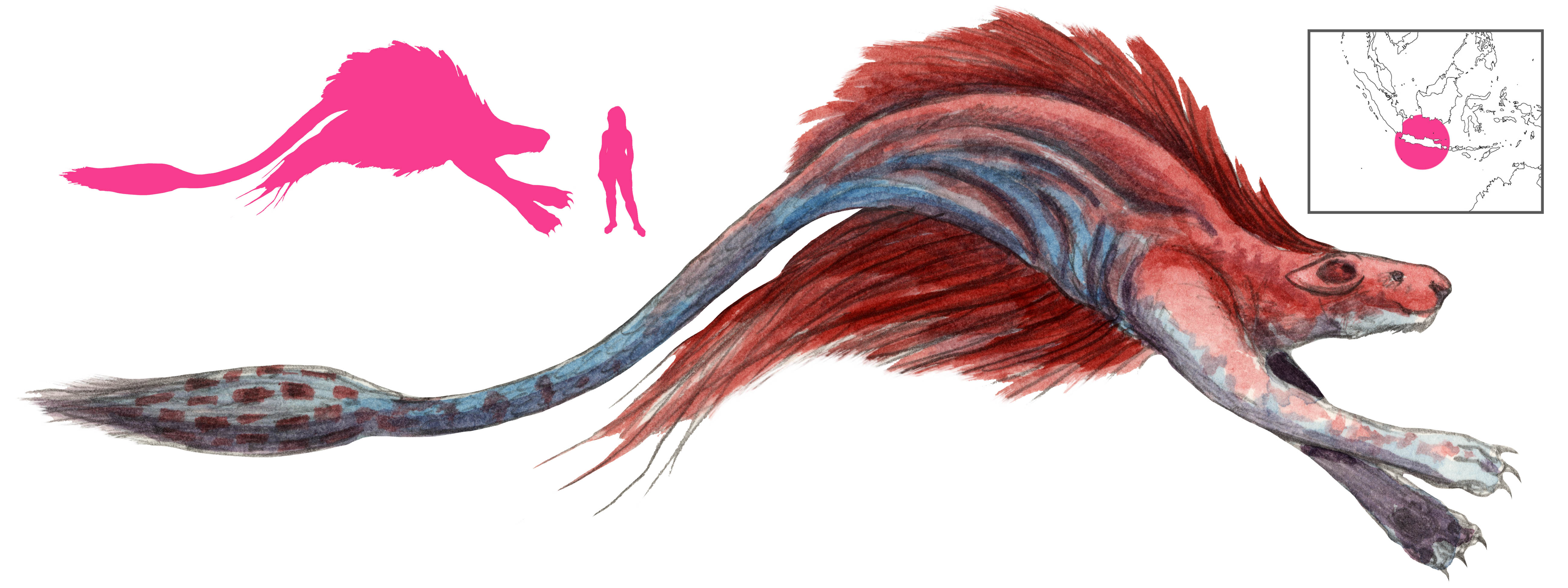
Gessner describes the Brethmechin as an amphibious beast found near the island of Java. He gives the name as being of Arabic etymology, although it is hard to tell what words it derives from. Gessner’s contact was Theodorus Beza, who reported a brethmechin washed up on the Javan shore on April 14, 1551.

A brethmechin is 10 cubits (about 4.5 meters) long and 2 cubits (about 1 meter) high. It has two legs, which allow it to move around on land to some extent. It has a panther’s head and a lion’s claws, with a horse-like tuft of hair on the tip of its pantherine tail. Brethmechins are red in color with blue markings, and have a lighter cerulean tail with red spots. They are well furnished with red dorsal and ventral bristles, with the ventral bristles being particularly long towards the tail.

The brethmechin has seen minor use in heraldry.

References

Gessner, C. (1560) Nomenclator aquatilium animantium. Christoph Froschoverus.

Holme, R. (1668) The academy of armory, or, A storehouse of armory and blazon containing the several variety of created beings, and how born in coats of arms, both foreign and domestick. Printed by the author at Chester.

Cherruve

Variations: Cheruvoe, Cheurvoe, Cheurvue, Cherufe

Cherruve

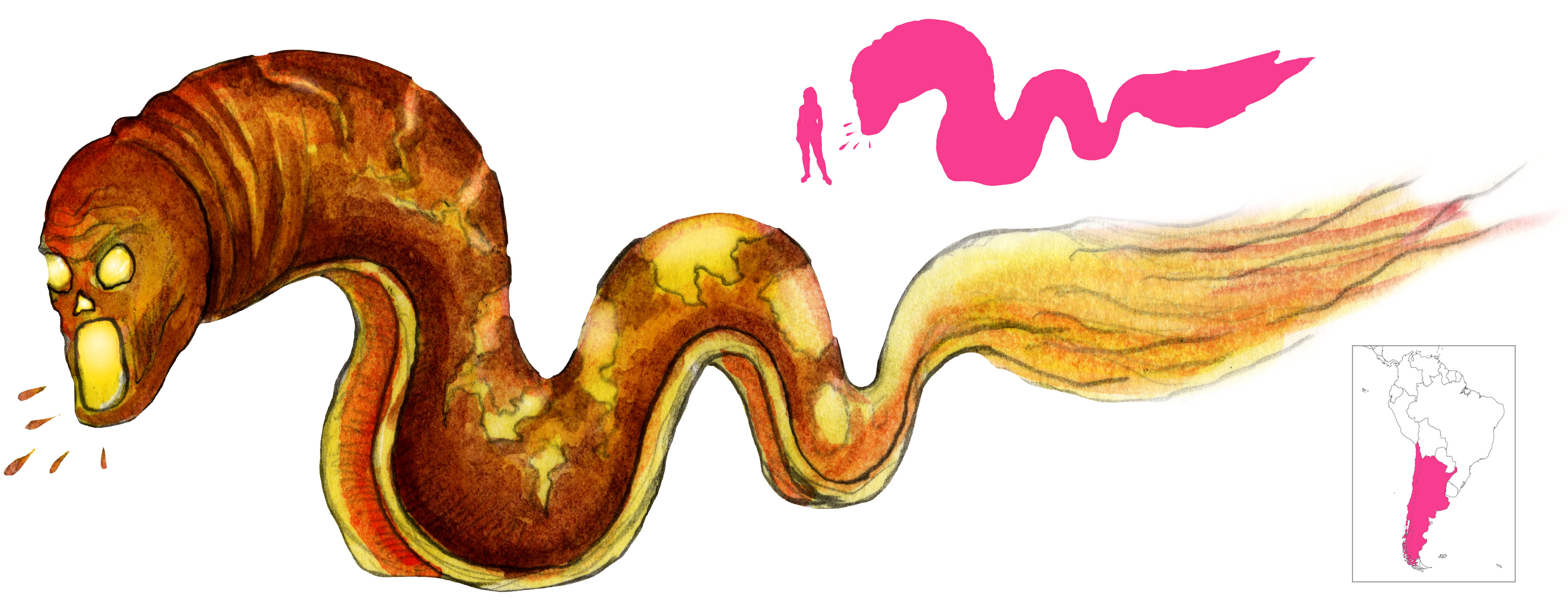
The Cherruve is the Chilean spirit of comets and asteroids. Originally no more than the Araucanian meteorite, the cherruve’s role has since expanded to include lava, volcanoes, fiery exhalations, will-o-the-wisps, whirlwinds, and animate stone axes.

Cherruve appearance varies from area to area, but it is usually described as a comet, or a great serpentine creature with a human head and lava dribbling from its mouth. Its appearance has been anthropomorphized to various degrees and conflated with aspects of European mythology; in the Andes it becomes a huge seven-headed dragon; elsewhere it is confused with dragons, devils, and giants, or bipedal goats with flaming eyes.

Cherruves live underground and in volcanoes, and streak across the sky by night. The appearance of a cherruve in the sky heralds the spread of an epidemic, the death of a great leader, or other misfortunes, while the cherruve’s vomit is lava and its movements underground cause earthquakes. They make thunder by tossing human heads. The more dragon-like cherruves may demand the sacrifice of Mapuche maidens, and will withhold the flow of rivers if their demands are not met.

Comets, asteroids, and meteors are all cherruves, as are meteorites and oddly-shaped volcanic rocks. Cherruve rocks are collected by sorcerers, who use them to carry out their evil purposes by sending them at their enemies. They are ordered to suck blood and inflict death and disease, and can operate on their own, returning diligently to their masters after performing their duties.

Cherruves are also capable of feeling more human emotions. One cherruve married a Cloud, and their beautiful daughter, ethereal and pale, was Snow. Despite the cherruve’s jealous attempts to keep his wife under lock and key, she was abducted by his mortal enemy Wind. Every now and then Wind would blow Cloud over the volcano, and her tears became rain, while the cherruve’s own despair turned into destructive eruptions. The cherruve redoubled his efforts to protect Snow, and kept her from leaving the mountain during the daylight hours. Snow’s curiosity about the world outside continued to grow, and one day she finally managed to escape her father and climb out into the light. She marveled at the sun, the songs of birds, the colors, all infinitely beautiful and unknown to her. The longer she stayed outside, the happier she was, and yet the weaker she felt. Her mother tried to protect her, but the spiteful Wind carried the Cloud away. When Snow sat down, exhausted, the love-stricken Sun came down to give her a kiss. When the cherruve finally caught up with his daughter, he found nothing but a puddle of crystalline water.

References

Faron, L. C. (1964) Hawks of the Sun. University of Pittsburgh Press, Pittsburgh.

Guevara, T. (1908) Psicolojia del pueblo araucano. Imprenta Cervantes, Santiago de Chile.

Latcham, R. E. (1924) La organización social y la creencias religiosas de los antiguos araucanos. Imprenta Cervantes, Santiago de Chile.

Lenz, R. (1897) Estudios Araucanos. Imprenta Cervantes, Santiago de Chile.

Pino-Saavedra, Y.; Gray, R. (trans.) (1967) Folktales of Chile. The University of Chicago Press, Chicago.

Soustelle, G. and Soustelle, J. (1938) Folklore Chilien. Institut International de Coopération Intellectuelle, Paris.

Yedua

Variations: Jeduah, Jidoa, Feduah, Fedoui, Fadua, Adne Hasadeh, Adnei Ha-sadeh, Adne Sadeh, Abne Hasadeh, Avnei Ha-sadeh, Bar Nash D’tur, Jidra (erroneously)

yedua

The Talmudic equivalent of the Barometz, the Barnacle Goose, and other zoophytes is the Yedua. This name was used by Rabbi Meir, and these creatures are the yidoni of Leviticus 19:31, often translated to “wizards” in English. The exact pronunciation of the name is debatable, although one variation (“Jidra”) appears to be a misreading of Jidoa as used by Lewysohn. The yedua is also known as Adne Hasadeh (“lords of the field” or “men of the field”), Abne Hasadeh (“stones of the field”), or Bar Nash D’Tur (“man of the field”).

The size of the yedua is unspecified, but it has a human shape, having a face, body, arms, and feet.  However, Rabbi Jochanan, following Moses Chusensis of Ethiopia on the authority of Rabbi Simeon, believed the yedua to be a vegetable lamb, perhaps after confusion with the barometz. This wild man of the mountains lives through its navel, which connects it to the ground with a stem like that of a gourd or pumpkin. If this umbilicus is cut or uprooted the yedua dies. It will maul and kill any living thing within the radius of its stem, and will eat all vegetation within that circle. It is impure, and its body causes spiritual impurity in buildings.

It is valuable in witchcraft, as its bones placed in the mouth, along with certain incantations, allow one to see the future. Yedua hunters killed their quarry by shooting arrows into the navel-stem from a safe distance.

The account of the yedua can be read as an early observation of apes. Rabbi Lipschutz believed the yedua to be inspired by relict populations of chimpanzees or orangutans in the Lebanese cedar forests. The origin of the creature appears to have come about by a simple misspelling that turned tur (“field”) into tavur (“navel”).

References

Coogan, M. D.; Brettler, M. Z.; Newsom, C.; Perkins, P. (eds.) (2010) The New Oxford Annotated Bible. Oxford University Press, Oxford.

Laufer, B. (1915) The Story of the Pinna and the Syrian Lamb. The Journal of American Folk-lore, vol. XXVIII, no. CVIII, pp. 103-128.

Lee, H. (1887) The Vegetable Lamb of Tartary. Sampson Low, Marston, Searle, and Rivington, London.

Lewysohn, L. (1858) Die Zoologie des Talmuds. Joseph Baer, Frankfurt.

Ley, W. (1959) Exotic Zoology. The Viking Press, New York.

Slifkin, N. (2011) Sacred Monsters. Zoo Torah, Jerusalem.

Lyngbakur

Variations: Lyng-bakur, Lyngbakr, Ling-back, Heather-back; Jasconius, Iascanus; Hólma-fiskur, Hólmafiskur (Island Fish)

Lyngbakur

The Lyngbakur is the largest of all the illhveli, the largest of the whales, indeed one of the largest creatures in the sea. In Icelandic lore only the hafgufa (or kraken) is bigger than it, and the two giants are frequently interchangeable.

Despite its enormous size, the lyngbakur is rarely seen, and it does not go out of its way to sink ships the way its smaller brethren do. Most of the time its back is the only thing seen, looking like an island covered with a growth of heather. Its eyes are dorsally located, giving the impression of circular pools of water. From a distance the lyngbakur seems jet-black, but on closer inspection it is a mossy grey. It is tailed and finned like other whales.

The lyngbakur is a slow swimmer, and tends to doze at the surface, looking indistinguishable from a heather-covered island. It is possible to go right up and land on it, but the whale eventually awakes and dives, and anyone still on it will be drowned. Some fishermen in southern Iceland stayed two days on the whale’s back before it sunk, but they had the presence of mind to escape while they could. Trying to draw water from the “pools” on the island is certain to awaken it. The lyngbakur feeds only once every three years, but when it does it engulfs anything in its path, fish, birds, and whales alike.

The saga of Arrow-Odd relates the titular hero’s adventures, which include an encounter with a lyngbakur sent by his enemy Ogmund. He stopped by a large heather-covered island, and had five of his crew disembark to find drinking water. Before long the island began to move, going underwater and drowning the unfortunate crewmen.

Saint Brendan moored at a small island covered with sparse vegetation and with no sand on its shores. He and his followers spent the night praying on the island, but left next morning in a hurry as the ground began to shake. They returned to their ship in time, where they found out that they had been on the back of a Jasconius or Iascanus, a great whale that seems to be none other than the lyngbakur. The next time they encountered the whale, Saint Brendan fearlessly sang Easter Mass on it, and none were harmed.

It is said that there is only one lyngbakur, and it will live until Armageddon.

References

Davidsson, O. (1900) The Folk-lore of Icelandic Fishes. The Scottish Review, October, pp. 312-332.

Edwards, P. and Pálsson, H. (1970) Arrow-Odd: A Medieval Novel. New York University Press, New York.

Hlidberg, J. B. and Aegisson, S.; McQueen, F. J. M. and Kjartansson, R., trans. (2011) Meeting with Monsters. JPV utgafa, Reykjavik.

Yuanat

Yuanat

The Yuanat is a type of serpent reported by Thevet from the island of Hispaniola, or Cuba. It lives in trees, on land, and in the water, making it fish, fowl, and land beast.

This greatly terrifying creature is about the size of a rabbit and is frightful to behold. It has the tail of a lizard, and four weak bird’s legs, with the forelegs longer than the hindlegs and long claws on each toe. Its teeth are sharp. It has a spine running down its back like the fin of a fish. Underneath its throat there is a colorful flap of skin reaching down to its belly, its varied hues making it hard to tell which color is dominant. It can swim well, and is completely mute.

Despite its horrifying appearance, the yuanat tastes excellent, and its flesh is more highly prized than that of rabbits. It is also so gentle and harmless that the natives would keep a yuanat on a leash for ten or twelve days before eating it, and it would never attempt to harm them. However, Thevet notes that yuanat meat is harmful to those who have had the pox, as it causes the disease to return in full force.

References

Thevet, A. (1575) La Cosmographie Universelle. Guillaume Chaudiere, Paris.