Auñ Pana

Variations: Pehiwetinome

Aun Pana

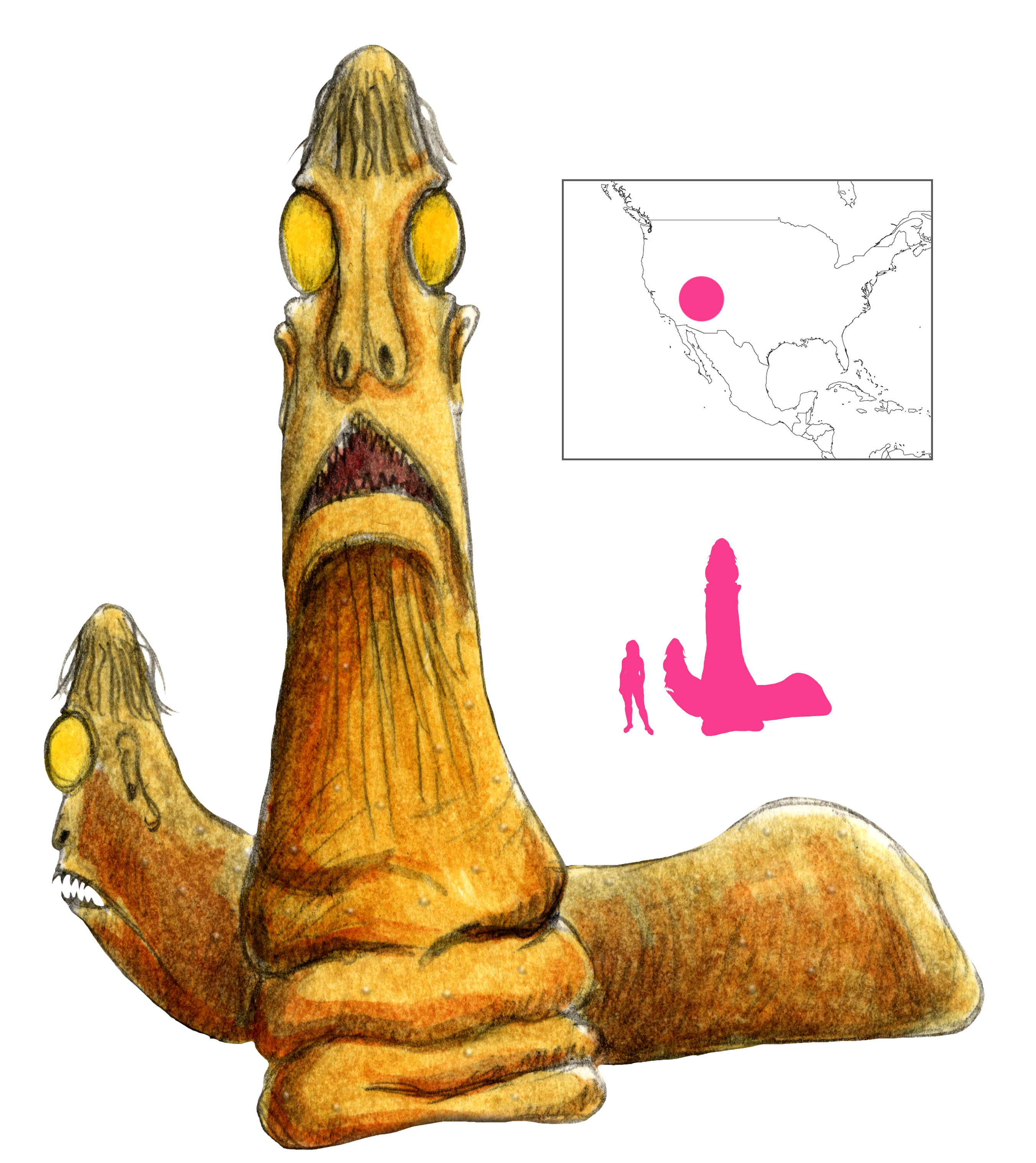
The Auñ Pana are evil man-eating fish from the folklore of the Yanomami of Brazil and Venezuela. They are large, have arms, and are covered with hair. Apparently they also have some degree of magical power. The auñ pana live in deep water and school with Pehiwetinome, which are equally large and anthropophagous.

A group of auñ pana and pehiwetinome once tore down a bridge that the Yanomami were crossing by biting through its wood. The bridge collapsed and became a raft, and the surviving Yanomami were turned into monkeys and pigs.

References

Albert, B.; Becher, H.; Borgman, D. M.; Cocco, L.; Colchester, M. E. M.; Finkers, J.; Knobloch, F.; Lizot, J.; and Wilbert, J.; Wilbert, J. and Simoneau, K. eds. (1990) Folk Literature of the Yanomami Indians. UCLA Latin American Center Publications, University of California, Los Angeles.

Sirānis

Variations: Sirānas, Suryānās, Sirinā, Siwānis

Siranis

According to al-Qazwini, the Sirānis can be found in the undergrowth of Kabul and Zabulistan. Its name is derived from the Greek siren, from which the sirānis evolved beyond recognition.

Originally the sirānis was believed to be a marine animal with seven openings in its mouth, and which used its seven toes to play its snout like a musical instrument. This description, in turn, came to be that of the Qaqnus or Arghun, which was known by the same name as well. Sirinā was also the name of a system of walls with holes in them that replicated the call of the sirānis, and which was used by the Byzantines to attract and capture that animal.

Al-Qazwini, however, places the sirānis firmly on land as a carnivorous mammal with 12 openings in its snout. When it breathes, those orifices produce a pleasant sound like that of the mizmar or flute; indeed, it is said that it was the inspiration for the musical instruments.

A sirānis uses its musical prowess to capture prey. It produces a melody so entrancing that animals gather around it and swoon in wonder, giving the sirānis an open buffet to choose from. If none of the animals present are satisfactory, it lets out an earsplitting screech that scares its audience away.

In time, the proximity of the sirānis to the shādawār in al-Qazwini’s text led later authors to combine them, granting the more iconographically defined shādawār the predatory nature of the sirānis.

References

Contadini, A. Musical Beasts: The Swan-Phoenix in the Ibn Bakhtishu’ Bestiaries. In O, Kane, B. (2005) The Iconography of Islamic Art. Edinburgh University Press.

Contadini, A. (2012) A World of Beasts: A Thirteenth-Century Illustrated Arabic Book on Animals (the Kitab Na’t al-Hayawan) in the Ibn Bakhtishu’ Tradition. Brill, Leiden.

Ettinghausen, R. (1950) The Unicorn. Studies in Muslim Iconography, Freer Gallery of Art Occasional Papers Vol. 1, No. 3, Washington.

al-Qazwini, Z. (1849) Zakariya ben Muhammed ben Mahmud el-Cazwini’s Kosmographie. Erster Theil: Die Wunder der Schöpfung. Ed. F. Wüstenfeld. Dieterichsche Buchhandlung, Göttingen.

Bocarin

Variations: Manati

Bocarin

Thevet’s visit to the island of Hispaniola turned up a number of unusual and exotic creatures, one of which is a grass-eating fish known as the Bocarin or Manati.

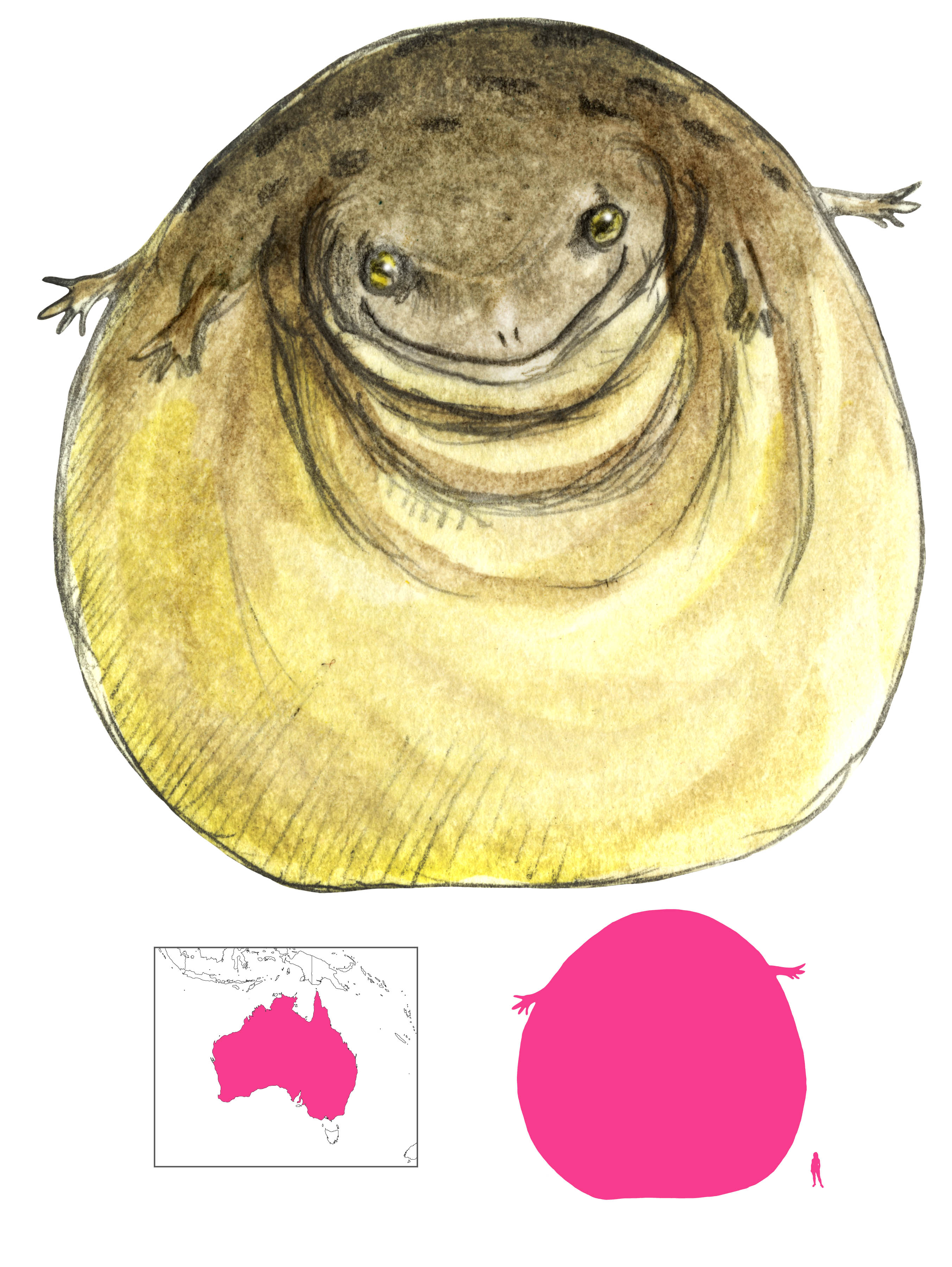
Found in both rivers and the ocean, the bocarin looks primarily like a full wineskin tapering from the navel to the end of the tail. This corpulent monster is 20 feet long and 10 feet wide, and has grey skin with sparse hair. It has two legs at its shoulders, which it uses to swim with, and round, four-toed elephant’s feet with prominent nails. Its head is like that of an ox, except with a smaller face, much smaller eyes, and a much larger and fleshier chin. Females bocarins give birth to live young, and suckle them from teats much like whales do.

Thevet deemed it to be the most deformed and grotesque fish he had ever seen in that part of the world, but for all its ugliness it did have its uses. Its flesh tasted more like veal than like fish, and was fine to eat. Its skin was used to make shoes, its fat was used in leather-making and as ointment. Stones known as enar-onacpy in a bocarin’s head, ground into powder and taken with white wine, were remedies against kidney and bladder stones.

A Spaniard swore to Thevet that a bocarin had been kept for 20 or 30 years in a pond, and eventually became so tame that it would let people scratch its back and ride on it. But Thevet saw that as absurd, as who could imagine a fish being tamed in such a way, let alone a monstrously ugly one like the bocarin?

References

Lestringent, F. (1997) Le Brésil d’André Thevet. Éditions Chandeigne, Paris.

Thevet, A. (1558) Les Singularitez de la France Antarctique. Maurice de la Porte, Paris.

Thevet, A. (1575) La Cosmographie Universelle. Guillaume Chaudiere, Paris.

Hrosshvalur

Variations: Hrosshvalr, Hrosshualar, Hrosshveli, Rosshvalur, Equinus Cetus, Horse-whale; Saehestur (Sea Horse); Stökkull (Jumper, probably erroneously); Stori Svinhvalur (Large Pig-whale); Pollur (Tenacious One); Monoculus
Hrosshvalur

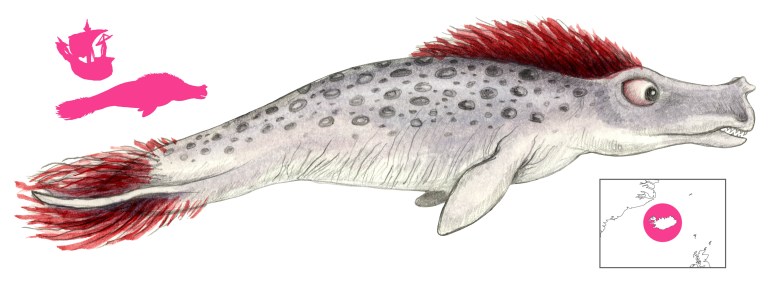
The Hrosshvalur, or “Horse-whale”, is among the most cruel and dreaded of the Icelandic illhveli, or “Evil Whales”. Only the Stökkull and Raudkembingur rival it in malice. It is irredeemably evil and is unfit for eating, its flesh vanishing from the pot if cooked, and its consumption was banned by law.

The hrosshvalur is easily confused with its fellow illhveli; notably, it has a red crest similar to the raudkembingur, and tends to jump onto ships like the stökkull. It is distinguished from those two by its enormous eyes, which have earned it the nickname of Monoculus (“One-Eyed”). It earned its name from a somewhat equine head, a flowing red mane covering more or less of its neck, a horse’s tail, and a call like a horse neighing. It also smells bad, is covered with fine fur, and its insides are like those of a horse. Jon Gudmundsson, who confused it with the stökkull, depicted it with a dappled back. These whales grow 30 to 80 cubits (15 to 40 meters) long.

As with other illhveli, the hrosshvalur delights in destroying ships. A hrosshvalur will charge over the waves at high speed, holding its head just above the water with its mane trailing behind. These whales sink ships by jumping onto them, or pressing their weight on them until they capsize. Horse-whales are also portents of bad weather, and can create huge waves by whipping their tails. A number of euphemistic names are used to refer to horse-whales, to avoid attracting their attention. While not as easily distractable as raudkembingurs and stökkulls, their large eyes are a notable weakness.

In the 13th century, a hrosshvalur that surfaced alongside a ship was bombarded with every heavy implement available, which caused it to sink back below the waves. Another hrosshvalur attacked the heroes Hjalmper and Olvir; it was defeated with the help of a Skeljungur (“shell whale”), vagnhvalur (“chariot whale”, or killer whale), and two vultures. A cutlass thrown into one of its large eyes weakened it significantly, and it was torn apart by the whales.

Hrosshvalurs are also associated with the dark arts. The size and ferocity of the horse-whale made it an excellent accomplice for sorcerers and witches bent on destruction, and a perfect form to assume when causing chaos. In the Kormaks saga, the witch Dorveig transforms herself into a hrosshvalur to attack the brothers Kormakr and Dorgils. They recognize her from her eyes, and drive her off by throwing a javelin into her back.

It is generally believed that the hrosshvalur was derived from the walrus, and ultimately gave it its name by converting hval-hross to walrus. However, it was clear early on that it and the walrus were very different animals, as Gudmundsson separately describes both the hrosshvalur and the walrus (rostungur) in detail.

References

Davidsson, O. (1900) The Folk-lore of Icelandic Fishes. The Scottish Review, October, pp. 312-332.

Dillmann, F. Les Yeux de Dorveig: À propos de la métamorphose en hrosshvalr d’une sorcière de la Kormaks saga. In Heizmann, W. and van Nahl, A. (2003) Runica – Germanica – Medievalia. Walter de Gruyter, Berlin.

Fraser, F. C. An Early 17th Century Record of the Californian Grey Whale in Icelandic Waters. In Pilleri, G. (1970) Investigations on Cetacea, vol. II. Benteli AG, Bern.

Hermansson, H. (1924) Jon Gudmundsson and his Natural History of Iceland. Islandica, Cornell University Library, Ithaca.

Hlidberg, J. B. and Aegisson, S.; McQueen, F. J. M. and Kjartansson, R., trans. (2011) Meeting with Monsters. JPV utgafa, Reykjavik.

Larson, L. M. (1917) The King’s Mirror. Twayne Publishers Inc., New York.

Nunda

Variations: Nundá, Eater of People

Nunda

The cat of Sultan Majnún was unusually fierce. One day it killed a calf, but the Sultan dismissed the event, stating that “the cat is mine, and the calf is also mine”. Then the cat proceeded to kill and eat a goat, then a cow, a donkey, a horse, and a camel, with the good Sultan shrugging each time. “I will not kill it, let it even eat a man”. Sure enough, the cat killed a human child next, and followed up with a man.

By this time the creature had grown large and monstrous on its diet of flesh, and it left the town on its own. It hid in the undergrowth outside city, and feasted on anyone who passed by, human or animal. At night, it would sneak into the dark roads and abduct hapless wanderers. Sultan Majnún still refused to see the danger. “You all want me to kill this cat. It’s my cat and everything it eats is mine”. He refused to address any more complaints, and the population of the town slowly dwindled. Anyone and anything not locked up indoors was at risk.

Eventually, it would come to pass that Sultan Majnún went out to look at the countryside with six of his sons, whereupon the cat pounced on them and killed three of the sons. It was then that Sultan Majnún finally came to his senses. “That is no longer my cat”, he said firmly. “That is a Nunda, and it will eat even me if I give it the chance”. He sent his soldiers to kill the nunda, but it killed some of them and scattered the rest.

Sultan Majnún’s seventh son, having heard of the carnage, swore a solemn oath that he would slay the nunda. “I shall find the nunda who killed my brothers”, he told his mother as he set out alone with a spear and a knife.

The young prince was nothing if not zealous. The first vaguely intimidating creature he ran into was a large dog, which he promptly killed and dragged home. “Mamá, wee, niulága nundá mla wátu“, he sang triumphantly. “O mother, I have killed the nunda, eater of people”. But his mother shook her head sadly and said “My son, this is not he, the nunda, eater of people. The nunda is much larger”.

So the son set out again, and successively killed a civet, a larger civet, a zebra, a giraffe, a rhinoceros, and an elephant, bringing each one back in turn only to be corrected by his mother. In time, he gathered a small group of followers, and managed to piece together a description of the nunda: it was elephant-sized or larger, had small ears, was broad and not long, had two blotches like a civet, and had a thick tail.

Finally, the youth’s efforts paid off, and the nunda was found asleep in the shade of a grove of trees. That was clearly the nunda, as it fit his mother’s description of it perfectly, and did not resemble anything else he had killed so far. He and his slaves fired their guns into the nunda at close range, but did not hang around for fear that it was still alive. Instead they slept through the night, and checked on it in the morning. The huge cat was undeniably dead.

The beast was dragged back to the city in triumph, and the prince sang of his victory, to which his mother chanted back “Mwanangu, ndiyeye nundá mla watu. My son, this is he, the nunda, eater of people”. The nunda’s carcass was buried, a house was built on top of it, and a guard was placed at the house.

This is but one tale of the insatiable nunda. It is another “swallowing monster”, and sometimes it swallows up the entire populace except for one hero. The hero kills the nunda and cuts it open, releasing the victims unharmed.

References

Steere, E. (1870) Swahili Tales. Bell & Daldy, London.

Sarmatian Sea Snail

Variations: Sarmatian Snail, Limaçon de la Mer Sarmatique, Philosmon (Greek, potentially), Aknib (Turkish, potentially), Albakr (Tartar, potentially), Lucrab (Arabic, potentially), Cochlea Sarmatica

Sarmatian Sea Snail

Anyone wishing to make a book on monstrous fishes should head to the Sarmatian Sea, exhorts Thevet. There, in what is now known as the Baltic Sea, may be found enough nightmares to satisfy the most avid teratologist.

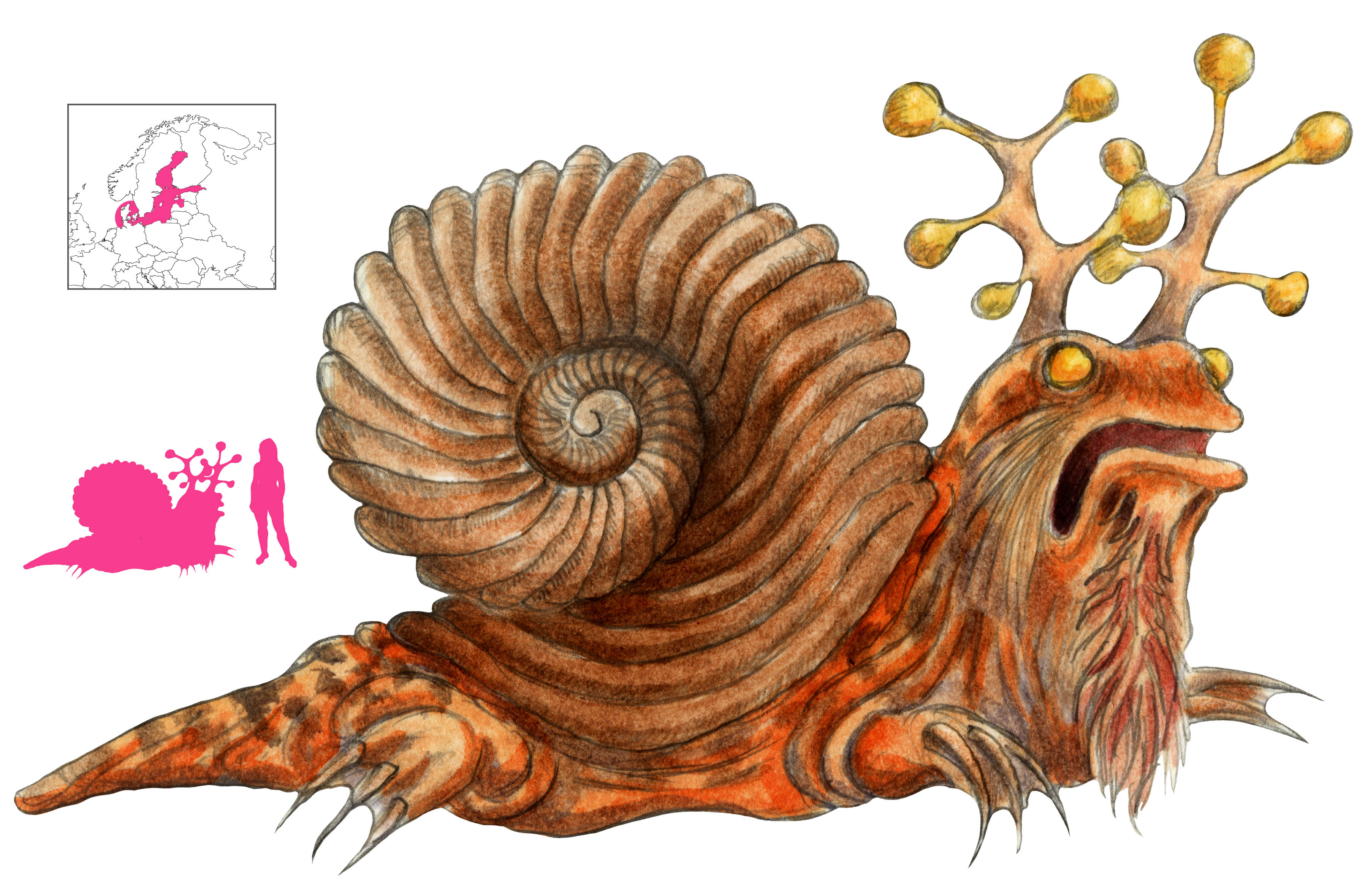
One of these is an enormous snail, the size of a barrel. It has antlers like those of a stag, equipped with gleaming, pearl-like tips. It has a rounded cat-like snout with whiskers, and glowing eyes that light its path like candles. Its mouth is deeply slit, and a hideous fleshy excrescence dangles below it. Its neck is thick, and its tail is long, multicolored, and mottled like a tiger’s. Unlike most other snails, it has four feet armed with hooked claws.

While amphibious, the giant snail is usually out in the open sea, and is rarely seen on the coast due to its wariness.  During good weather it will crawl up onto the beach to graze. Its flesh is tasty and good to eat, and helps against liver and lung problems, much like the meat of large Madagascan turtles cures leprosy.

Thevet reports the Sarmatian Sea snail from Denmark, and mentions having seen similar creatures in the Black Sea, where they are known as Philosmon by the Greeks, Aknib by the Turks, Albakr by the Tartars, and Lucrab by the Arabs. These may well be the same animal.

Linnaeus cautiously included the Sarmatian Sea snail as Cochlea Sarmatica in a footnote, admitting that “fabulosa est“.

It is most likely that this giant snail was born of confusion between the shells of turtles and the shells of snails. Thevet was also working with a number of notes taken at different times, and it does not seem implausible that he muddled them together to create chimeras. Turtles were long seen as bizarre creatures, and the Ortus Sanitatis represents them as snails with legs, making them the basis for the giant snail. Further confusion with seals led to the whiskers and large eyes, and the antlers were provided by branching fungi. For all we know, none of these were from the Baltic Sea.

References

Linnaeus, C. (1759) Animalium Specierum. Theodor Haak, Leiden.

Paré, A. (1614) Les Oeuvres d’Ambroise Paré. Nicolas Buon, Paris.

Thevet, A. (1575) La Cosmographie Universelle. Guillaume Chaudiere, Paris.

Unknown. (1538) Ortus Sanitatis. Joannes de Cereto de Tridino.

Vallot, M. (1834) Mémoire sur le Limacon de la Mer Sarmatique. Mémoires de L’Académie des Sciences, Arts, et Belles-Lettres de Dijon, Partie des Sciences, Frantin, Dijon.

Shahmat al-Ard

Variations: Kharȃti

Shahmat-al-ard

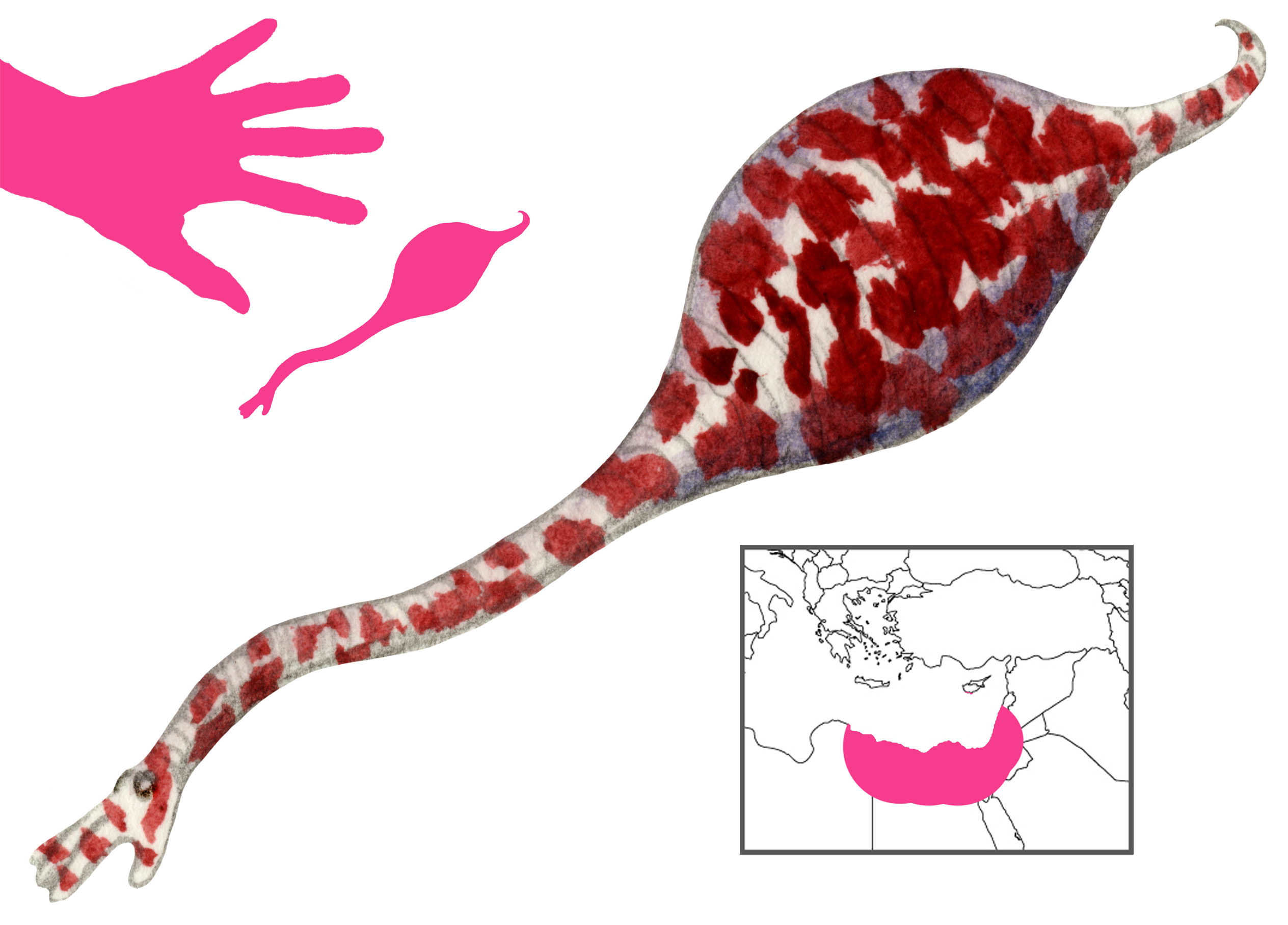
Shahmat al-Ard, the “fat of the earth” or “grease of the earth”, is a worm that contracts into a bead if touched. Al-Qazwini, who called it the Kharȃti, said that it was long, red, and lived in damp areas. On the other hand, al-Zamakshari believed it to be small, white, speckled with red spots, and resembling both a white fish and the hand of a woman. Hurmus said that it smelled good, and was immune to fire, being capable of crawling through a bonfire unharmed.

Its primary value is in the variety of medicinal benefits it provides. Its fat, if painted onto one’s skin, will protect from fire. The entire worm, dried and eaten, cures jaundice and scrofula; dried and taken with water, causes immediate delivery in the case of a difficult birth. Roasted and eaten with bread, it dissolves bladder-stones. A shahmat al-ard reduced to ashes, mixed with oil, and applied to the head will cure alopecia and restore hair growth.

Nonetheless it is not generally eaten, since as a filthy worm it is unclean and unfit for human consumption.

References

al-Damiri, K. (1891) Hayat al-hayawan al-kubra. Al-Matba’ah al-Khayriyah, Cairo.

Jayakar, A. S. G. (1908) Ad-Damiri’s Hayat al-Hayawan (A Zoological Lexicon), vol. II, part I. Luzac and Co., London.

Bo

Variations: Poh

Bo

According to the Guideways through Mountains and Seas, the animal known as Bo can be found around Mount Winding-Center (identified as Mount Xue), where Huai-trees grow and where jade, realgar, and metals are plentiful. It can also be found on the plains of Mongolia and on islands in the Northern Sea. The existence of bo in the district of Shen Su was unknown to its residents, until a man called Leu Chang informed them by quoting the Shan Hai Jing for good measure.

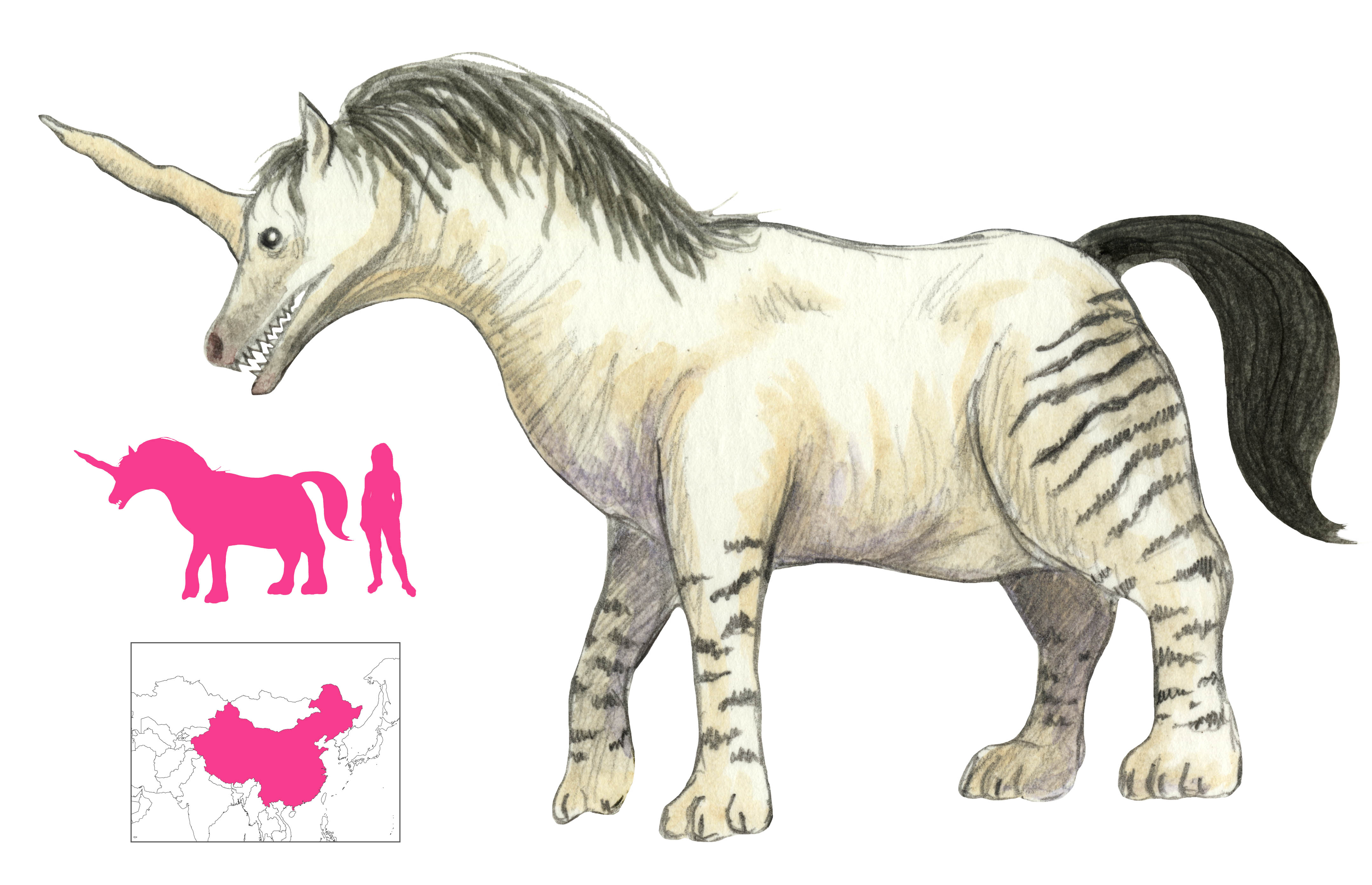
A bo looks like a horse with a white body and a black tail, with a single horn on its head. It has tiger’s feet and saw-like tiger’s teeth, and makes a sound like a rolling drum. Bo are strict carnivores that feed upon tigers and leopards, although other sources state that leopards eat bo, and bo in turn eat tigers. A bo will protect against weapons if its flesh is eaten, or if tamed and used as a soldier.

Bo are just and honorable animals, and will reward virtuous behavior accordingly. When the wise magistrate Chung Wa of the Kingdom of Peh Chi faced an invasion by a large number of carnivorous wild animals, six bo appeared and slaughtered the beasts in thanks for the magistrate’s goodness. Duke Huan of Qi’s horse looked like a bo, according to his prime minister Guan Zhong, but presumably did not eat tigers.

References

Gould, C. (1886) Mythical Monsters. W. H. Allen and Co., London.

Mathieu, R. (1983) Étude sur la mythologie et l’ethnologie de la Chine ancienne. Collège de France, Paris.

Strassberg, R. E. (2002) A Chinese Bestiary: Strange Creatures from the Guideways Through Mountains and Seas. University of California Press.

Aloés

Aloes

The Aloés is a large fish from the Caribbean around Hispaniola, reported by Thevet. It looked like a goose in general shape, with the top of its skull in the shape of a bon-chrétien (Williams) pear. It had four underslung fins, a fish-like tail, and no scales on its plump body. Several could be observed swimming alongside the boats, along with shoals of fish, and they looked remarkably like geese diving in and out of the waves.

References

Paré, A. (1614) Les Oeuvres d’Ambroise Paré. Nicolas Buon, Paris.

Thevet, A. (1575) La Cosmographie Universelle. Guillaume Chaudiere, Paris.

Aíǰe

Variations: Aíge, Spirit-Tadpole

Aige

The Aíǰe is associated with the Bororo of Brazil and Bolivia, and in particular the Páiwoe and Aróroe clans. It is a gigantic tadpole, somewhat like a hippopotamus.

Rubúgu of the Páiwoe first found the aíǰe while walking through a swamp. He liked the little animal and decided to keep it, taking it home in a vessel of water. Rubúgu had great plans for his little pet, and wanted it to become something great and amazing, so before covering its container with a fan he told it “Grow for me; thrive and become an extraordinary creature”.

And grow the aíǰe did. It became larger, and stronger, and it could sing a loud, buzzing song. Rubúgu had to keep switching it to increasingly large containers to support its bulk, and eventually he had nowhere left to put it. He tried doing a dance for the aíǰe, but the tadpole rejected Rubúgu’s mediocre talents. Instead, Chief Baitogógo of the Aróroe took the aíǰe, and honored it with a macaw-feather headdress and a marvelous dance, both of which pleased the tadpole greatly. Baitogógo told the aíǰe that it had to live in ponds, swamps, and lakes away from the Bororo, for it was so big and the magic of its song so powerful, it could pose a serious threat.

The aíǰe accepted, and before leaving it told Baitogógo that if the Bororo missed it, then they should fashion little tadpole sculptures in remembrance. Those figurines could be tied to a stick and swung in the air, making an amphibian buzzing much like aíǰe did. Thus the aíǰe went on to become one of the totems of the Bororo.

References

Albisetti, C.,; Colbacchini, A.; and Venturelli, A. J.; Wilbert, J. and Simoneau, K. eds. (1983) Folk Literature of the Bororo Indians. UCLA Latin American Center Publications, University of California, Los Angeles.