Sverðhvalur

Variations: Sverdhvalur, Sword-whale, Swordwhale; Sverðfiskur, Sverðfiskar, Sverðfiskr (Sword-fish); Sverðurinn (Sworder); Brúnfiskur, Brún-fiskur (Brown-fish); Sveifarfiskur (Crank-fish); Slambakur (Slap-whale); Staurhvalur (Stump-whale); Einbægslingur (One-fin); Haskerðingur (High-Fin; potentially the basking shark or the swordwhale); Killer Whale, Orca, Swordfish
Sverdhvalur

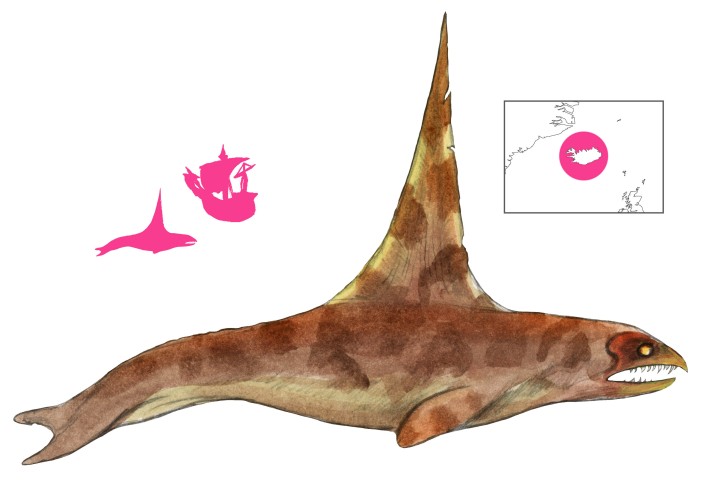
The Sverðhvalur (“Swordwhale”) or Sverðfiskur (“Swordfish”) is one of the illhveli, or “evil whales” that lurk off the coast of Iceland. Like the other evil whales, it is unfit for eating, and the steypireyður or blue whale is its mortal enemy.

The sverðhvalur’s most distinctive feature is the sharp bony fin growing out of its back. This fin is 3-12 cubits (1.5-6 meters) tall. The sverðhvalur is about the size of a sperm whale at the largest, and its spouting is short and heavy. Its face is owlish in appearance, with a pointed snout and a large mouth set with vicious teeth. If the brúnfiskur (“brown-fish”) is one of its many aliases, it can be assumed to be brown in color, but another account describes it as grey.

The sverðhvalur is a fast swimmer, and beats the water on either side of it with its fin when agitated. It is often accompanied by a smaller whale – perhaps its offspring – that swims under its pectoral fin and feeds on its scraps. The bladed dorsal fin is used as a weapon, and a sverðhvalur will swim underneath good whales to cut their bellies open with crisscross slashes. Whales will beach themselves rather than suffer a sverðhvalur’s attack. Sverðhvalurs are also wasteful eaters, choosing to eat only the tongue of cetacean prey and leaving the rest to rot. Boats are treated in the same way as whales are, with the dorsal fin punching holes through hulls or slicing cleanly through smaller boats and sailors alike.

Other encounters, especially with larger vessels, are more harmful for the whale. A trading ship sailing from eastern Iceland to Copenhagen came to a stop in the middle of a large pod of whales, and suddenly felt a strong tug coming from below. When the ship moored in Copenhagen, a large fish’s tusk was found sticking out of the hull.

Another sverðfiskur followed a boat off Eyjafjörður, and gave up the chase only after a gun was fired into its gaping mouth.

The term sverðfiskur or sverðfiskr (“sword-fish”) has been used to refer to the swordfish, the sawfish, and the killer whale. The basking shark and the killer whale have also been accused of slicing through ships and eviscerating whales with their fins, and it is the killer whale or “swordwhale” that appears to be the sverðhvalur’s ancestor.

References

Anderson, P. (1955) Bibliography of Scandinavian Philology XXIV. Acta Philologica Scandinavica, Ejnar Munksgaard, Copenhagen.

Árnason, J.; Powell, G. E. J. and Magnússon, E. trans. (1866) Icelandic Legends, Second Series. Longmans, Green, and Co., London.

Davidsson, O. (1900) The Folk-lore of Icelandic Fishes. The Scottish Review, October, pp. 312-332.

Hermansson, H. (1924) Jon Gudmundsson and his Natural History of Iceland. Islandica, Cornell University Library, Ithaca.

Hlidberg, J. B. and Aegisson, S.; McQueen, F. J. M. and Kjartansson, R., trans. (2011) Meeting with Monsters. JPV utgafa, Reykjavik.
Stella

Variations: Sea Star

Stella

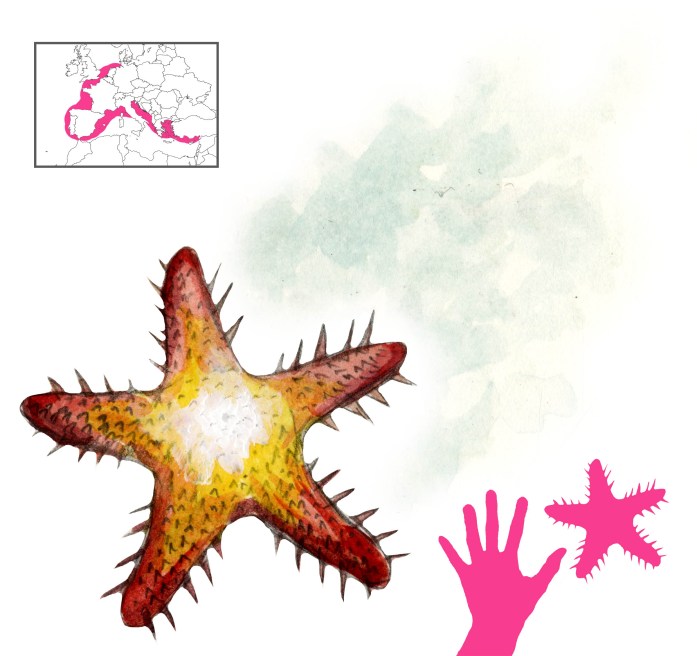
Stella, or the sea star, derives its name from its unusual appearance that resembles a painted star.

Much like its namesake, a stella is so hot that it burns, liquefies, and effectively cooks anything it comes in contact with. It will intentionally touch fish in order to kill them. Evidence for this incandescent nature was found in a large stella washed up on the shores of Maguelonne. Almost a foot in diameter, it was found to have five mollusk shells inside it, two of which were half-liquefied.

References

Boaistuau, P. (1564) Histoires Prodigieuses. Vincent Norment et Iehanne Bruneau, Paris.

Brethmechin

Variations: Arabian Breth-mechin, Whale Panther

Brethmechin

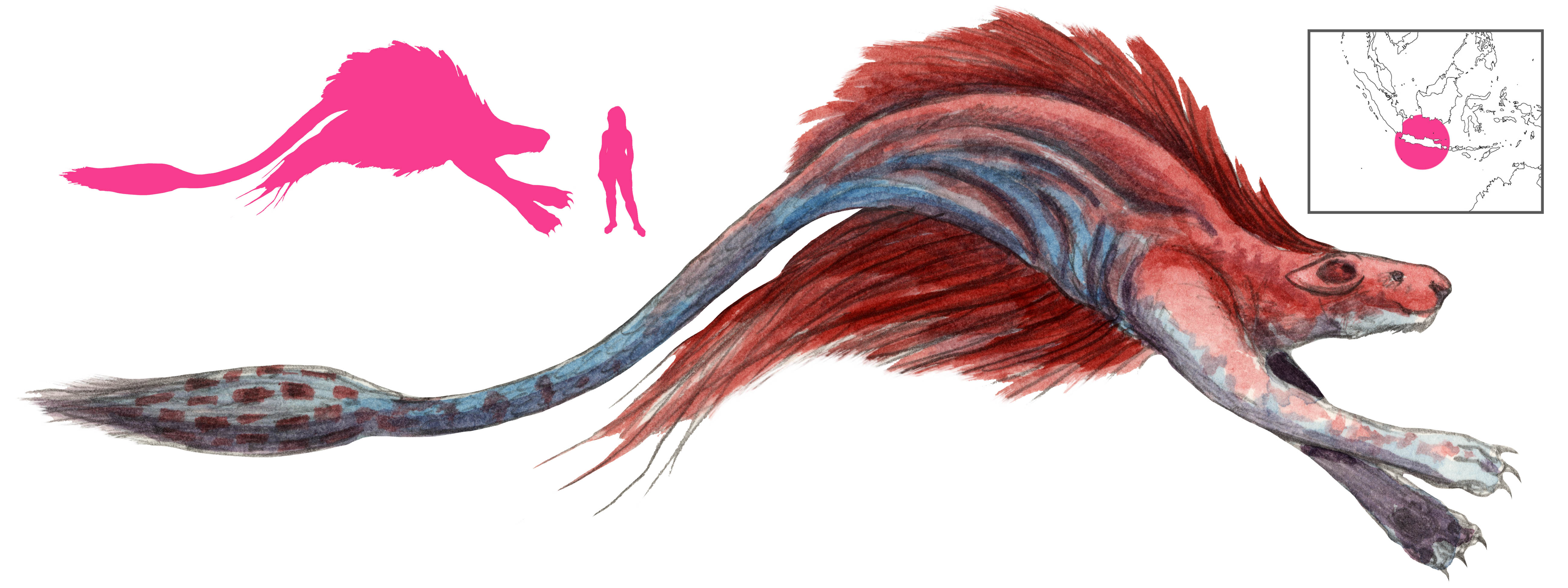
Gessner describes the Brethmechin as an amphibious beast found near the island of Java. He gives the name as being of Arabic etymology, although it is hard to tell what words it derives from. Gessner’s contact was Theodorus Beza, who reported a brethmechin washed up on the Javan shore on April 14, 1551.

A brethmechin is 10 cubits (about 4.5 meters) long and 2 cubits (about 1 meter) high. It has two legs, which allow it to move around on land to some extent. It has a panther’s head and a lion’s claws, with a horse-like tuft of hair on the tip of its pantherine tail. Brethmechins are red in color with blue markings, and have a lighter cerulean tail with red spots. They are well furnished with red dorsal and ventral bristles, with the ventral bristles being particularly long towards the tail.

The brethmechin has seen minor use in heraldry.

References

Gessner, C. (1560) Nomenclator aquatilium animantium. Christoph Froschoverus.

Holme, R. (1668) The academy of armory, or, A storehouse of armory and blazon containing the several variety of created beings, and how born in coats of arms, both foreign and domestick. Printed by the author at Chester.

Skeljúngur

Variations: Skieliungur; Svarfhvalur, Suarfhualur (Iron Whale); Skútuhvalur (Schooner Whale); Tigrishvalur (Tiger Whale); Hnúfubakur, Humpback Whale

Skeljungur

The Skeljúngur, or “shell whale” is one of the many illhveli, or “evil whales” of Iceland. Unlike its brethren, the skeljúngur is edible and safe to eat, making it the most dangerous of the edible whales. It has even helped humans on occasion; one young skeljúngur aided Hjalmper and Olvir in battle against a vicious hrosshvalur.

It is described as ranging from 20 to 45 meters long. It is very fat and short-flippered, lacks dorsal fins, and its entire body is covered with shells that rattle as it swims. The shells tend to make it itchy, and it will rub its head against rocks in deep coastal waters. Despite its portly appearance, it is a fast swimmer, earning it the nickname of “tiger whale”. It dives vertically, and sleeps vertically with its head sticking out of the sea. Whether it has teeth or baleen is unclear.

A shell-whale will position itself in the path of an oncoming ship, and will continue to obstruct the vessel’s course if the captain tries to avoid it. Skilled sailors should change their course fast enough to evade it, as sailing right onto it causes the whale to throw the ship and kill all on board. When destroying boats, it likes to strike them with its fins and tails. Skeljúngur armor makes them impervious to most attacks and quite fearless, and the whales will play dead to entice prey within range. The whaling ship Minerva off Grimsey thought they had killed a skeljúngur, but the seemingly dead whale immediately recovered and destroyed the boat sent to finish it off.

Skeljúngurs hate the sound of iron being ground and filed. If one of these whales hears that loathed sound, it will go frantic and beach itself to get away from it. The alternate name of svarfhvalur (“iron whale”) is derived from this aversion.

Skeljúngur is also another name of the humpback whale or hnúfubakur.

References

Davidsson, O. (1900) The Folk-lore of Icelandic Fishes. The Scottish Review, October, pp. 312-332.

Hermansson, H. (1924) Jon Gudmundsson and his Natural History of Iceland. Islandica, Cornell University Library, Ithaca.

Hlidberg, J. B. and Aegisson, S.; McQueen, F. J. M. and Kjartansson, R., trans. (2011) Meeting with Monsters. JPV utgafa, Reykjavik.

Larson, L. M. (1917) The King’s Mirror. Twayne Publishers Inc., New York.

Númhyalikyu

Variations: Númhyělekum

Numhyalikyu

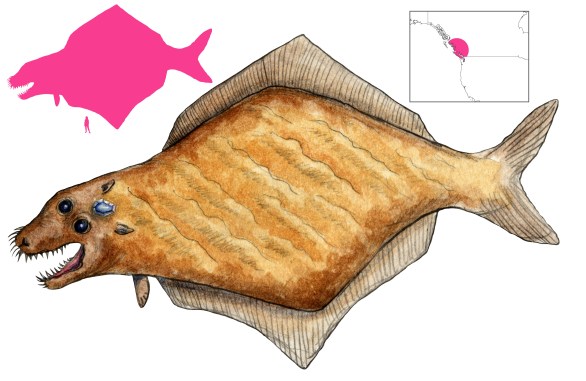
Númhyalikyu, “one chief one”, is an enormous, monstrous halibut of Pacific Northwest Kwakwaka’wakw folklore. Its back looks like a beach, complete with ripples left behind by the waves. It has the head of a seal, with a shining spot that gleams like fire.

If a númhyalikyu is killed, its head can be stabbed and its gleaming ornament extracted, revealing it to be a hard and shiny crystalline object. This is known as tlúgwi, and it is highly valuable. It is hard to pinpoint the location of a númhyalikyu, however, as it makes a deep humming sound that reverberates through water and air and rumbles through the trees, seeming to come from everywhere at once.

Númhyalikyu brings bad weather and storms. When it comes to the surface, it creates treacherous shallows that wreck canoes. Its rippled back, often just below the surface of the water, can be easily mistaken for a small island.

Númhyalikyu’s dance is númkahl, “personification of númhyalikyu”. The initiate playing the part of númhyalikyu wears a face mask, and is caught on the beach after metaphorically leaving the sea.

References

Curtis, E. S. (1915) The North American Indian, v. X. The Plimpton Press, Norwood.

Orabou

Variations: Orobon (erroneously)

Orabou

Mount Marzouan, once known as Mount Orabou, was described by Thevet in his Cosmographie. It is home to a small population of Arabs, and the waters of the sea there house a fish known as Orabou, for which the mountain was once named.

Not much is known of the orabou’s appearance. Thevet only states that it is nine to ten feet long, and is plated with armor like a brigandine, although its scales are not as tough as a crocodile’s hide. The depiction of the orabou provided gives it a humpbacked, rather feline appearance.

Orabou flesh is particularly foul-tasting, and Thevet believed that old camel meat and Livonian mastiff were preferable to the execrable orabou. Eating it also results in kidney and bladder stones. Despite that, the inahabitants of Mount Marzouan eat it anyway, treating their stones with a diuretic concoction of orabou fat, two handfuls of false gold dust, and cyclamen.

Paré takes the orabou from Thevet, but misspells its name as the phonetically-similar “orobon” and its locality as “Mount Mazouan”. Ever the embellisher, he also adds that it is extremely ferocious towards other fish.

The orabou may have been inspired by crocodiles, although Thevet makes a distinction between the two. Another possibility is a monitor lizard, like a similar creature encountered by Sir Andrew de Toulongeon and Pierre de Vaudrei in the desert of Palestine. It was a three-foot-long green lizardlike animal covered with sturgeon-like scales, having feet like the hands of a child, a head like a hare’s, and a long lizard’s tail. It made sounds like a cat, and was feared by the Arabs accompanying the knights. Naturally this affront to the natural order was promptly slain.

References

Butazzoni, F. (1997) Los Ensayos del Orobon. Ariel, Montevideo.

Paré, A. (1614) Les Oeuvres d’Ambroise Paré. Nicolas Buon, Paris.

Thevet, A. (1575) La Cosmographie Universelle. Guillaume Chaudiere, Paris.

Wright, T. (1848) Early Travels in Palestine. Henry G. Bohn, London.

Taumafiskur

Variations: Taumhveli (Bridle-whale); Taumur, Taumi (Bridle, Striped One); Stóri-hnýfill (Big Shorthorn)

Taumafiskur

The Taumafiskur, or “bridle fish”, is one of the many illhveli – the “evil whales” of Iceland. It is the most dangerous and feared of the evil whales, as are the others. Its flesh is inedible, and speaking its name at sea will attract its unwelcome attention.

Its name is derived from the white or pink stripes extending from its eyes to its mouth, and from its mouth outwards. These contrast sharply with its raven-black color, and give the appearance of a bridle. In the East Fjords it is known as the “big shorthorn”, distinguishing it from the “little shorthorn” or minke whale which is smaller and shorter-finned. The taumafiskur is slightly larger than the stökkull in size.

Taumafiskurs are cruel, destructive, and spiteful; worse than that, they have an excellent memory and will hold grudges for as long as they live, tracking down anyone who has escaped them. They flip boats over, tear them up with their teeth, pummel them with their tails, and even get under them crosswise and fold them in half.

One minister from Fáskrúðsfjörður survived a taumafiskur’s attack by clinging to the wreckage of his boat. Since then, he was unable to go to sea without the whale zeroing in on him again, seeking to kill him once and for all.

Another time the crew of a Danish fishing boat sighted a taumafiskur around the Snæfellsnes glacier. They were saved by the quick thinking and skill in the dark arts of the captain, who dove overboard with a small bag in hand, and when he returned he assured them the taumafiskur would not bother them anymore. And sure enough, it was not seen again that day.

Exactly what the captain used to repel the taumafiskur is unknown. The substances known to be abhorrent to taumafiskurs (and most likely other illhveli) include chewed angelica, rotting baitfish, bilge-water, cod-liver oil, live fire in a bucket, juniper, cow or sheep manure, sulfur, chopped fox testicles, and yarrow. Setting fire to these substances before throwing them overboard was believed to make them more potent. Taumafiskurs can also be distracted by loud noises and barrels thrown into the water, and sailing into the sun can dazzle them into giving up the chase.

References

Davidsson, O. (1900) The Folk-lore of Icelandic Fishes. The Scottish Review, October, pp. 312-332.

Hlidberg, J. B. and Aegisson, S.; McQueen, F. J. M. and Kjartansson, R., trans. (2011) Meeting with Monsters. JPV utgafa, Reykjavik.
Katthveli

Variations: Katthvalur, Kettuhvalur; Kattfiskur (Cat-fish); Kisa (Kitty); Bísill (Feline); Sea-cat

Katthveli

The Katthveli (“Cat-whale”), is one of Iceland’s many evil whales or “illhveli”. It is generally smaller and of a less harmful nature than its larger brethren, and has even been tamed on occasion. As with other illhveli, it is inedible and will zero in on anyone who mentions its name. Speaking about it at sea is considered highly foolish.

The katthveli has been described as a seal, dolphin, or whale with bulky forequarters and narrower hindquarters, with the mouth of a leopard, the strength of a lion, and the hunger of a hound. It earns its name from the long, furzy whiskers on its snout and the sounds it makes, ranging from a purr when it exhales to mews and hisses when agitated. It is fairly small and kittenish at 16 cubits (8 meters), with a short rounded head with nodules that resemble ears. It has short, sharp teeth protruding from its upper jaw, and Saint Brendan adds that it has boar’s tusks. The eyes gleam brazenly. The flippers are large, and nasty hooked claws are present. Known colors include pink, grey, peaty brown, and countershaded; the one encountered near the Faroe Islands was pale under the chin and had woolly skin.

Katthvelis have been known to school with rorquals and large fish. These whales are cruel and vicious, using their speed and agility to swim underneath boats and flip them. One katthveli chased a boat off the Skálanesbjarg cliffs, but gave up after it was outsped by the rowers. Another one intercepted a ship at Héradsflói and remained alongside it, preventing the sailors from fishing and following them with its eyes. Harpooning it was ruled out as nobody wanted to provoke it, and it eventually dove and disappeared by nightfall. Ásmundur Helgason and his companions were attacked by one off Seley Island; it rammed their boat and stuck its head through the hull. After a terrifying struggle, they managed to push it out and make for safety despite the damage. A Faroese katthveli at Suðuroy reared out of the water and put its flippers on the gunwale of a boat, hissing and spitting like a cat and snapping at the sailors until one quick-thinking man put his gun in its mouth and fired, whereupon it slid off into the depths.

St. Brendan encountered a “sea-cat” the size of a horse on a small island. It had originally been brought as a pup along with twelve pilgrim sailors, and was quite friendly and tame, but soon grew bigger and hungrier and eventually ate all but one of the sailors, who took refuge in a small stone church. St. Brendan prayed for aid, and immediately a great whale lunged out of the sea and seized the sea-cat, pulling it into the sea where they both drowned each other.

The wolffish Anarhichas lupus was also known colloquially as the cat-fish or sea-cat in older English, and may be associated with the katthveli. If it was born from mistaken identity, a large seal such as the walrus or bearded seal is a more plausible contender.

References

Cunningham, J. T. (1896) The Natural History of the Marketable Marine Fishes of the British Islands. MacMillan and Co., London.

Joensen, J. P. Tradition and Changes in the Concepts of Water-Beings in Faroese Folklore. In  Lysaght, P.; Ó Catháin, S.; and Ó hÓgáin, D. (1996) Islanders and Water-Dwellers. Proceedings of the Celtic-Nordic-Baltic Folklore Symposium, DBA Publications, Dublin.

Hlidberg, J. B. and Aegisson, S.; McQueen, F. J. M. and Kjartansson, R., trans. (2011) Meeting with Monsters. JPV utgafa, Reykjavik.

Stokes, W. S. (1890) Lives of Saints from the Book of Lismore. Clarendon Press, Oxford.

Tsemaus

Variations: Tsemaus, Chemouse, Narhnarem-tsemaus, Snag, Supernatural Snag, Tsem’aus, Tcamaos, Tca’maos, Tidewalker, Ts’um’os, Tsamaos, Kanem Ktsem’aus; Weegyet, Wi’git

Tsemaus

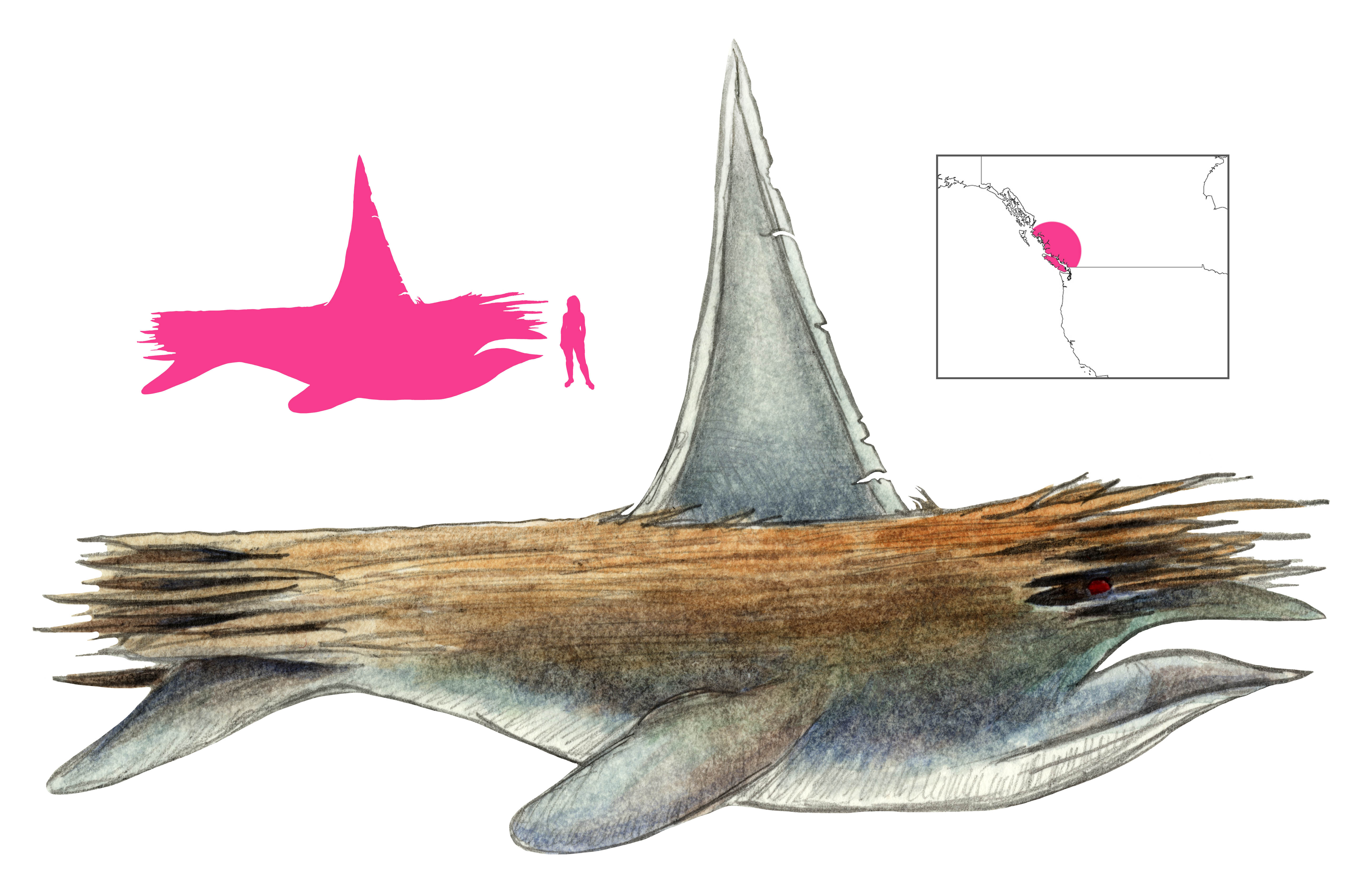
The Tsemaus (“Snag”) or Narhnarem-Tsemaus (“Supernatural Snag”) is the personification of river snags., floating logs, and other hazards of the water. It is found in the folklore and art of the Pacific Northwest, notably in Tsimshian and Haida culture around the mouth of the Skeena River.

One of its names, Wi’git or Weegyet, connects it to Raven the trickster, and it is one of his many forms. The creator and trickster Nanki’islas also assumed the form of a tsemaus after he was done.

A tsemaus can vary a lot in appearance, much like the driftwood it imitates, but it almost always has a snag for a dorsal fin – or is itself a snag. It can be as simple as a dead log with a tail that can swim against the current. It can be a huge sea lion with dorsal fins and blowholes, or an enormous grizzly bear with a downturned mouth like a dogfish and two sharp snags protruding from its back, with or without one or more sharp fins of a killer whale. It can be a hybrid of bear and killer whale, or raven and killer whale, with multiple bodies. It can be a large frog covered in seaweed with a snag sticking out of its back, and can even be a canoe or a schooner. Meurger states that it can cleave swimmers with its fin.

The tsemaus uses its fin to destroy boats. It has no problem swimming upstream and plowing through log jams. If angered it breaches and lands on canoes, smashing them to bits, or makes huge waves to capsize boats. It drowns people, who then become killer whales.

It is found as a crest on the totem poles of the coastal clans.

References

Barbeau, M. (1950) Totem poles. Bulletin No. 119, Anthropological Series No. 30, National Museum of Canada, Ottawa.

Barbeau, M. (1953) Haida Myths Illustrated in Argillite Carvings. Bulletin No. 127, Anthropological Series No. 32, National Museum of Canada, Ottawa.

Boas, F. (1951) Primitive Art. Capitol Publishing Company, New York.

Deans, J. (1893) Totem Posts at the World’s Fair. The American Antiquarian and Oriental Journal, Vol. XV, No. 4, pp. 281-286.

Meurger, M. (1988) Lake Monster Traditions: A Cross-Cultural Analysis. Fortean Tomes, London.

Swanton, J. R. (1909) Contributions of the Ethnology of the Haida. Memoirs of the American Museum of Natural History, Vol. VIII.

Nauthveli

Variations: Nauthvalur, Nautshval (Ox-whale); Nautfiskur (Ox-fish); Kýrhvalur (Cow-whale); Fjósi (Byre-whale); Baulhveli (Bellow-whale); Búrhvalur, Sperm Whale

Nauthveli

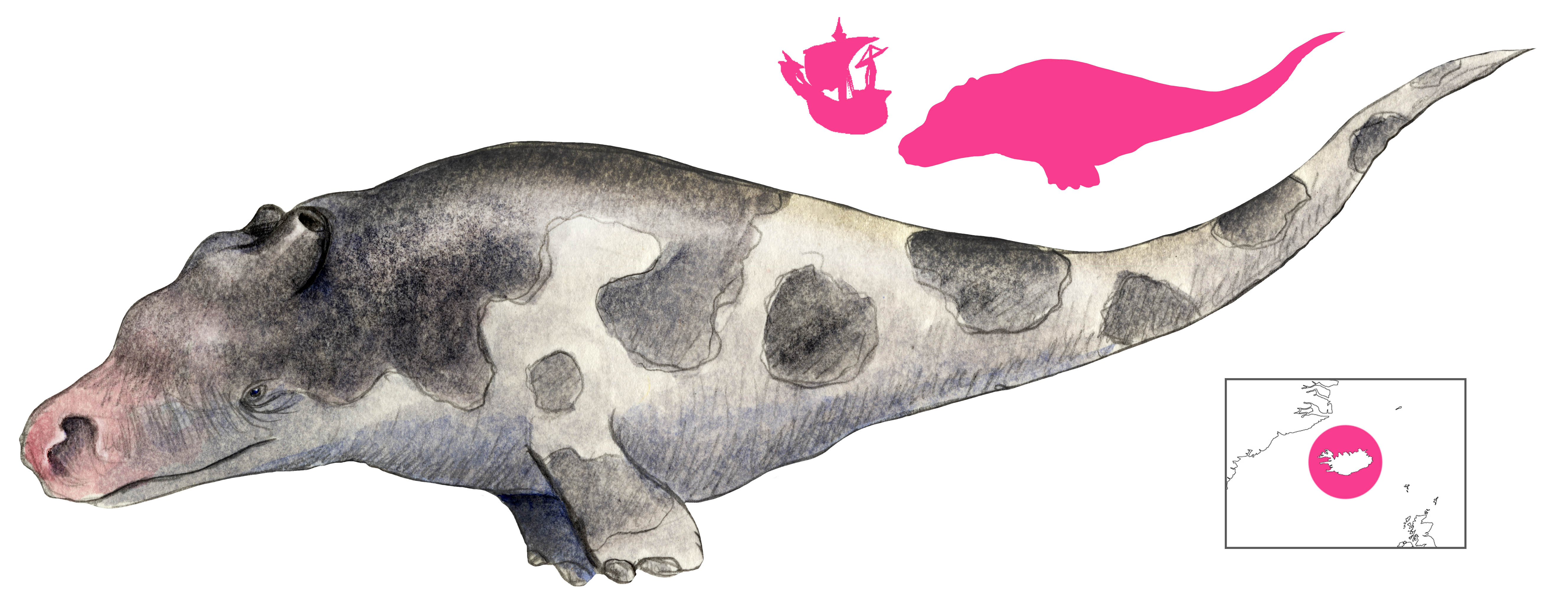
The Nauthveli or Nauthvalur (“Ox-whale”) is one of the many illhveli or “evil whales” of Iceland. It is the second biggest of the evil whales, and like the others, it is inedible and will show up if its name is said out loud.

A nauthveli is a toothed whale, bicolored much like a cow. The large head is similar to that of a bull and has two nodules on top. The trunk tapers off, wormlike, and lacks fins.

However, the nauthveli is named not for its appearance, but rather for the terrifying bull-like bellow it makes when hungry, a sound like that of roaring, maddened bulls. The call of a nauthveli is made in the open sea or near the shore, and can be heard reverberating over long distances. The vibrations cause the ground to shake and knock oars out of sailors’ hands. Going out to sea is forbidden if nauthveli bellowing can be heard.

As will all evil whales, the nauthveli delights in killing men and scuttling smaller boats, but it has a particular fondness for beef. The bellow of a nauthveli is hypnotic to cattle, compelling them to run off cliffs and headlong into the sea. There the nauthveli plays with them like a cat does with a mouse before biting them in half and eating them. The whales are attracted to cattle on board ship; one nauthveli off Grimsey harassed a vessel until they released the one cow on board, who promptly dove into the sea. Cattle have to be locked up for days until the nauthveli’s spell wears off, and indeed cow-herding was strongly discouraged in areas where nauthvelis had been heard. Sacrificing one bull or cow usually satisfies the nauthveli, making it safe to go out to sea again.

Gudmundsson listed the nauthveli as synonymous with the búrhvalur or sperm whale.

References

Davidsson, O. (1900) The Folk-lore of Icelandic Fishes. The Scottish Review, October, pp. 312-332.

Hermansson, H. (1924) Jon Gudmundsson and his Natural History of Iceland. Islandica, Cornell University Library, Ithaca.

Hlidberg, J. B. and Aegisson, S.; McQueen, F. J. M. and Kjartansson, R., trans. (2011) Meeting with Monsters. JPV utgafa, Reykjavik.