Sverðhvalur

Variations: Sverdhvalur, Sword-whale, Swordwhale; Sverðfiskur, Sverðfiskar, Sverðfiskr (Sword-fish); Sverðurinn (Sworder); Brúnfiskur, Brún-fiskur (Brown-fish); Sveifarfiskur (Crank-fish); Slambakur (Slap-whale); Staurhvalur (Stump-whale); Einbægslingur (One-fin); Haskerðingur (High-Fin; potentially the basking shark or the swordwhale); Killer Whale, Orca, Swordfish
Sverdhvalur

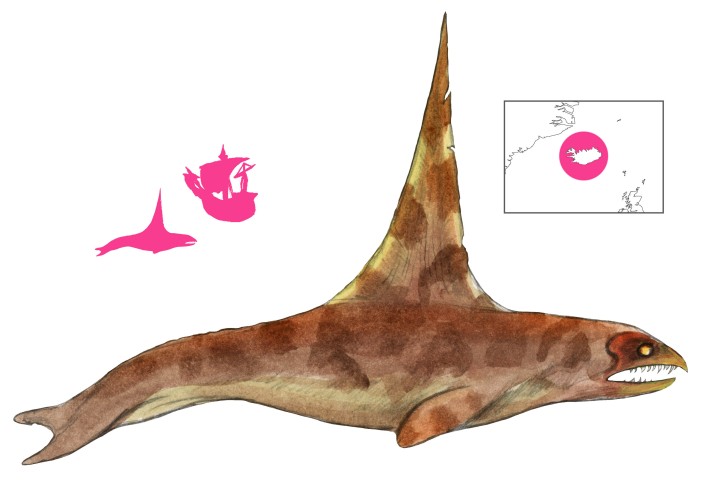
The Sverðhvalur (“Swordwhale”) or Sverðfiskur (“Swordfish”) is one of the illhveli, or “evil whales” that lurk off the coast of Iceland. Like the other evil whales, it is unfit for eating, and the steypireyður or blue whale is its mortal enemy.

The sverðhvalur’s most distinctive feature is the sharp bony fin growing out of its back. This fin is 3-12 cubits (1.5-6 meters) tall. The sverðhvalur is about the size of a sperm whale at the largest, and its spouting is short and heavy. Its face is owlish in appearance, with a pointed snout and a large mouth set with vicious teeth. If the brúnfiskur (“brown-fish”) is one of its many aliases, it can be assumed to be brown in color, but another account describes it as grey.

The sverðhvalur is a fast swimmer, and beats the water on either side of it with its fin when agitated. It is often accompanied by a smaller whale – perhaps its offspring – that swims under its pectoral fin and feeds on its scraps. The bladed dorsal fin is used as a weapon, and a sverðhvalur will swim underneath good whales to cut their bellies open with crisscross slashes. Whales will beach themselves rather than suffer a sverðhvalur’s attack. Sverðhvalurs are also wasteful eaters, choosing to eat only the tongue of cetacean prey and leaving the rest to rot. Boats are treated in the same way as whales are, with the dorsal fin punching holes through hulls or slicing cleanly through smaller boats and sailors alike.

Other encounters, especially with larger vessels, are more harmful for the whale. A trading ship sailing from eastern Iceland to Copenhagen came to a stop in the middle of a large pod of whales, and suddenly felt a strong tug coming from below. When the ship moored in Copenhagen, a large fish’s tusk was found sticking out of the hull.

Another sverðfiskur followed a boat off Eyjafjörður, and gave up the chase only after a gun was fired into its gaping mouth.

The term sverðfiskur or sverðfiskr (“sword-fish”) has been used to refer to the swordfish, the sawfish, and the killer whale. The basking shark and the killer whale have also been accused of slicing through ships and eviscerating whales with their fins, and it is the killer whale or “swordwhale” that appears to be the sverðhvalur’s ancestor.

References

Anderson, P. (1955) Bibliography of Scandinavian Philology XXIV. Acta Philologica Scandinavica, Ejnar Munksgaard, Copenhagen.

Árnason, J.; Powell, G. E. J. and Magnússon, E. trans. (1866) Icelandic Legends, Second Series. Longmans, Green, and Co., London.

Davidsson, O. (1900) The Folk-lore of Icelandic Fishes. The Scottish Review, October, pp. 312-332.

Hermansson, H. (1924) Jon Gudmundsson and his Natural History of Iceland. Islandica, Cornell University Library, Ithaca.

Hlidberg, J. B. and Aegisson, S.; McQueen, F. J. M. and Kjartansson, R., trans. (2011) Meeting with Monsters. JPV utgafa, Reykjavik.
Stella

Variations: Sea Star

Stella

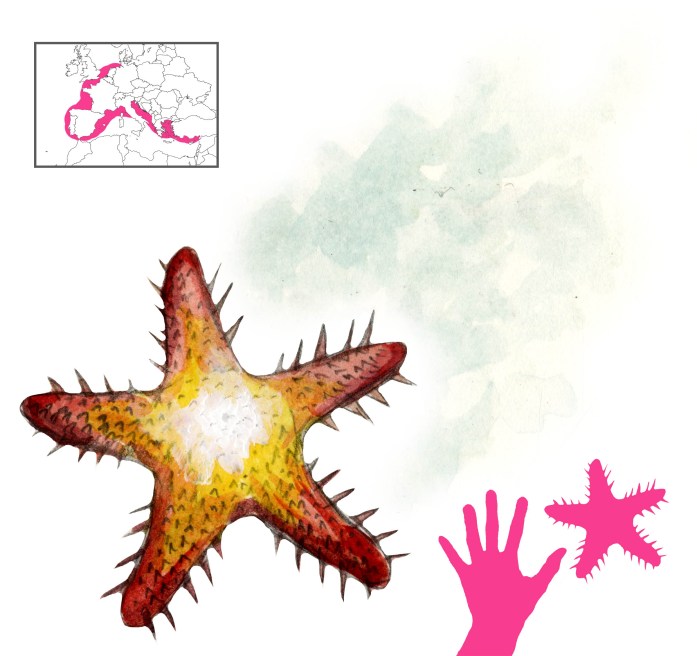
Stella, or the sea star, derives its name from its unusual appearance that resembles a painted star.

Much like its namesake, a stella is so hot that it burns, liquefies, and effectively cooks anything it comes in contact with. It will intentionally touch fish in order to kill them. Evidence for this incandescent nature was found in a large stella washed up on the shores of Maguelonne. Almost a foot in diameter, it was found to have five mollusk shells inside it, two of which were half-liquefied.

References

Boaistuau, P. (1564) Histoires Prodigieuses. Vincent Norment et Iehanne Bruneau, Paris.

Stray Sod

Variations: Ar Iotan, Egaire, Fairy Grass, Faud Shaughran, Fair-Gortha (potentially), Herb of Distraction, Herbe à Adirer, Herbe d’Egarement, Herbe d’Engaire, Herbe de Fourvoiement, Herbe Maudite, Herbe d’Oubli, Herbe à la Recule, Herbe Royale, Herbe des Tournes, Lezeuen Eur, Lezuenn er Seudann, Tourmentine

Tourmentine

“Stray sod” is a general term used here to refer to any plant that, if trodden upon, causes travelers to lose their way. Stray sods have been reported primarily from France and Ireland, and come about in a number of ways. Usually they are specific herbs with magical properties that grow along footpaths. At other times they form over the graves of unbaptised children, or are patches of grass enchanted by fairies. They themselves may be fairies or inhabited by fairies.

No matter the origin, the result is always the same. A solitary traveler at night will inadvertently step on a stray sod, and no matter how good their sense of direction, they immediately lose their path. All landmarks seem to vanish, all roads are dead ends. The unfortunate victim is compelled to wander aimlessly through the night, trudging through hedges and thorns, crossing rivers, slogging through marshes, and feeling their way through thickets. The spell is broken at daybreak, when they find themselves with their clothes torn and stained, their hands and feet bleeding, and miles away from home.

When this happens it is advised to turn one’s coat inside out to counteract the spell. Other remedies include the usage of metal as abhorrent to fairies, or finding certain plants or benevolent spirits to regain one’s bearings.

The stray sod is known as the herbe à adirer (“herb of misplacement”) in Anjou, the herbe à la recule (“herb of turning back”) in Besançon, the herbe d’oubli (“herb of forgetfulness”) in Brittany and Lorraine, the egaire in Normandy, and the herbe maudite (“damned herb”) or herbe des tournes (“herb of turning”) in Saintonge. The ar iotan (“golden herb”) of Brittany is inhabited by a spirit that shines like a glowworm; touching a piece of wood or metal breaks its spell, as does changing horseshoes on one side. The lezeuen eur (“golden herb”) and the lezuenn er seudann (“herb of dizziness”) of the Morbihan cause their victims to walk in circles until daybreak. The herbe royale (“royal herb”) of Saint-Mayeux causes even horses to lose their way. The herbe d’engaire of the Berry grows in vast plains, and causes those who step on it to lose sight of the path entirely. The tourmentine (Potentilla erecta, formerly Potentilla tormentilla) of Forez, which causes disorientation for 12 hours, can be countered by the parisette (Paris quadrifolia), a plant whose fallen seeds guide travelers by pointing in the right direction.

The faud shaughran of Ireland induces a sensation of flying, of being incapable of stopping until one is over twenty or thirty miles from home. There is a herb that counteracts its effects, but it is known only to the initiated. The similar fair-gortha causes unnatural hunger and craving for food if stepped on. One man in County Leitrim turned his coat and hat inside out but was unable to find his way home, ending up miles away from his destination.

References

Barton, B. H. and Castle, T. (1845) The British Flora Medica. Henry G. Bohn, London.

Dubois, P.; Sabatier, C.; and Sabatier, R. (1992) La Grande Encyclopédie des Lutins. Hoëbeke, Paris.

Duncan, L. L. (1893) Folk-Lore Gleanings from County Leitrim. Folklore, vol. 4, no. 2, pp. 176-194.

Rolland, E. (1904) Flore populaire, Tome V. Librairie Rolland, Paris.

Sébillot, P. (1894) Les travaux publics et les mines dans les traditions et les superstitions de tous les pays. J. Rothschild, Paris.

Sébillot, P. (1898) Les Forêts. Revue des Traditions Populaires, t. XIII, no. 12, pp. 641-661.

Sébillot, P. (1904) Le Folk-Lore de France, Tome Premier: Le Ciel et la Terre. Librairie Orientale et Américaine, Paris.

Sébillot, P. (1906) Le Folk-lore de France, Tome Troisième: La Faune et la Flore. Librairie Orientale et Américaine, Paris.

Wilde, F. S. (1887) Ancient Legends, Mystic Charms, and Superstitions of Ireland, v. II. Ward and Downey, London.

Skeljúngur

Variations: Skieliungur; Svarfhvalur, Suarfhualur (Iron Whale); Skútuhvalur (Schooner Whale); Tigrishvalur (Tiger Whale); Hnúfubakur, Humpback Whale

Skeljungur

The Skeljúngur, or “shell whale” is one of the many illhveli, or “evil whales” of Iceland. Unlike its brethren, the skeljúngur is edible and safe to eat, making it the most dangerous of the edible whales. It has even helped humans on occasion; one young skeljúngur aided Hjalmper and Olvir in battle against a vicious hrosshvalur.

It is described as ranging from 20 to 45 meters long. It is very fat and short-flippered, lacks dorsal fins, and its entire body is covered with shells that rattle as it swims. The shells tend to make it itchy, and it will rub its head against rocks in deep coastal waters. Despite its portly appearance, it is a fast swimmer, earning it the nickname of “tiger whale”. It dives vertically, and sleeps vertically with its head sticking out of the sea. Whether it has teeth or baleen is unclear.

A shell-whale will position itself in the path of an oncoming ship, and will continue to obstruct the vessel’s course if the captain tries to avoid it. Skilled sailors should change their course fast enough to evade it, as sailing right onto it causes the whale to throw the ship and kill all on board. When destroying boats, it likes to strike them with its fins and tails. Skeljúngur armor makes them impervious to most attacks and quite fearless, and the whales will play dead to entice prey within range. The whaling ship Minerva off Grimsey thought they had killed a skeljúngur, but the seemingly dead whale immediately recovered and destroyed the boat sent to finish it off.

Skeljúngurs hate the sound of iron being ground and filed. If one of these whales hears that loathed sound, it will go frantic and beach itself to get away from it. The alternate name of svarfhvalur (“iron whale”) is derived from this aversion.

Skeljúngur is also another name of the humpback whale or hnúfubakur.

References

Davidsson, O. (1900) The Folk-lore of Icelandic Fishes. The Scottish Review, October, pp. 312-332.

Hermansson, H. (1924) Jon Gudmundsson and his Natural History of Iceland. Islandica, Cornell University Library, Ithaca.

Hlidberg, J. B. and Aegisson, S.; McQueen, F. J. M. and Kjartansson, R., trans. (2011) Meeting with Monsters. JPV utgafa, Reykjavik.

Larson, L. M. (1917) The King’s Mirror. Twayne Publishers Inc., New York.

Skoffín

Variations: Skoffin; Skuggabaldur, Finngalkn, Fingal; Urdarköttur, Naköttur; Modyrmi

Skoffin

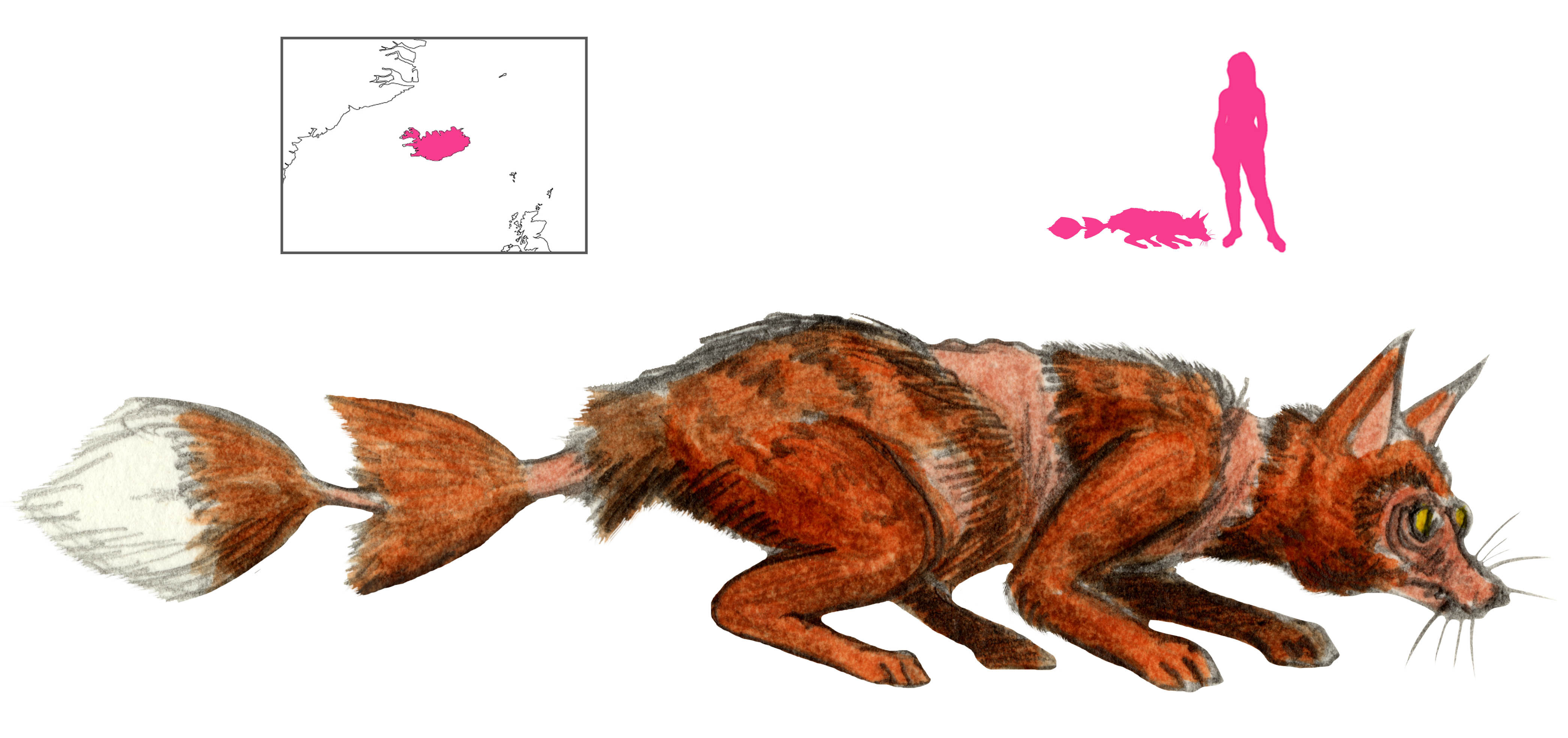
The Skoffín is one of a complex of Icelandic fox-cat hybrids with a lethal gaze, combining the cunning of the fox with the cruelty of the cat. This group also includes the Skuggabaldur, Urdarköttur, and Modyrmi, all of which are variations on the same theme; they are also linked to the “demon harriers”, foxes sent by sorcerers to maul livestock.

A skoffín is born from the union of a male Arctic fox and a female tabby cat, and resembles both of them. Its gaze is so deadly that everything it looks at dies immediately, without needing to see it. Its exact appearance varies; it may even change color with the seasons like the Arctic fox does. Reports suggest that skoffíns are short-haired, with bald patches of skin throughout.

Skoffín kittens are born with their eyes wide open. If not destroyed immediately, they sink into the ground and emerge after 3 years of maturation. It is therefore imperative to kill sighted kittens before they can disappear into the ground. When a litter of three sighted kittens was born at a farm in Súluholt, they were placed in a tub of urine to prevent their descent into the earth, and were drowned by placing turf on top of them. The entire tub was then tossed onto a pile of manure and hay and set on fire. The mother cat was also killed.

Skoffíns are irredeemably vile and malicious, and satisfy their appetite for destruction by killing humans and livestock alike. They are best shot from a safe distance, ideally with a silver bullet and after having made the sign of the cross in front of the barrel, or having a human knucklebone on the barrel. Hardened sheep dung makes equally effective bullets.

Thankfully, skoffíns are not immune to their own gaze. An encounter between two skoffíns will lead to the death of both of them. As with basilisks, mirrors are their bane. Once a skoffín stationed itself on the roof of a church, and the parishioners started dropping dead as they left the building. The deacon understood what was going on, and had the rest of the congregation wait inside while he tied a mirror to a long pole and extended it outside to the roof. After a few minutes he gave the all-clear, and they were able to leave the church safely, as the skoffín had perished immediately upon seeing its reflection.

Eventually, confusion with the basilisk of the mainland muddled the skoffín’s image, leading to some accounts claiming it was hatched from a rooster’s egg.

The skuggabaldur (“shadow baldur”) or finngalkn has the same parentage as the skoffín, but is born of a tomcat and a vixen. It has very dark fur shading to black, sometimes has a deadly gaze, and preys on livestock. It may be killed in the same way as the skoffín. One particularly destructive skuggabaldur in Húnavatnssýslur was tracked down and killed in a canyon; with its last breath, it exhorted its killers to inform the cat at Bollastadir of its death. When a man repeated that incident at a Bollastadir farm, a tomcat – no doubt the skuggabaldur’s father – jumped at him and sank its teeth and claws into his throat. It had to be decapitated to release its hold, but by then the man was dead.

The urdarköttur (“ghoul cat”) or naköttur (“corpse cat”) is of less certain parentage. It may be a hybrid, but other accounts state that any cat that goes feral in Iceland eventually becomes an urdarköttur, and all-white kittens born with their eyes open will sink into the ground and re-emerge after three years in this form. Shaggy, white or black furred, growing up to the size of an ox, these felines kill indiscriminately and dig up corpses in graveyards. It may be killed in the same way, and is attached to the same story as the Bollastadir cat. Gryla’s pet, the Yule Cat, is most likely an urdarköttur.

The modyrmi (“hay wormling”) is a canine variant, created when puppies born with their eyes open sink into the ground and reappear after three years as wretched, virulent monsters. The specifics are the same as with the skoffín.

References

Boucher, A. (1994) Elves and Stories of Trolls and Elemental Beings. Iceland Review, Reykjavik.

Hermansson, H. (1924) Jon Gudmundsson and his Natural History of Iceland. Islandica, Cornell University Library, Ithaca.

Hlidberg, J. B. and Aegisson, S.; McQueen, F. J. M. and Kjartansson, R., trans. (2011) Meeting with Monsters. JPV utgafa, Reykjavik.
Stefánsson, V. (1906) Icelandic Beast and Bird Lore. The Journal of American Folklore, vol. 19, no. 75, pp. 300-308.

Sirānis

Variations: Sirānas, Suryānās, Sirinā, Siwānis

Siranis

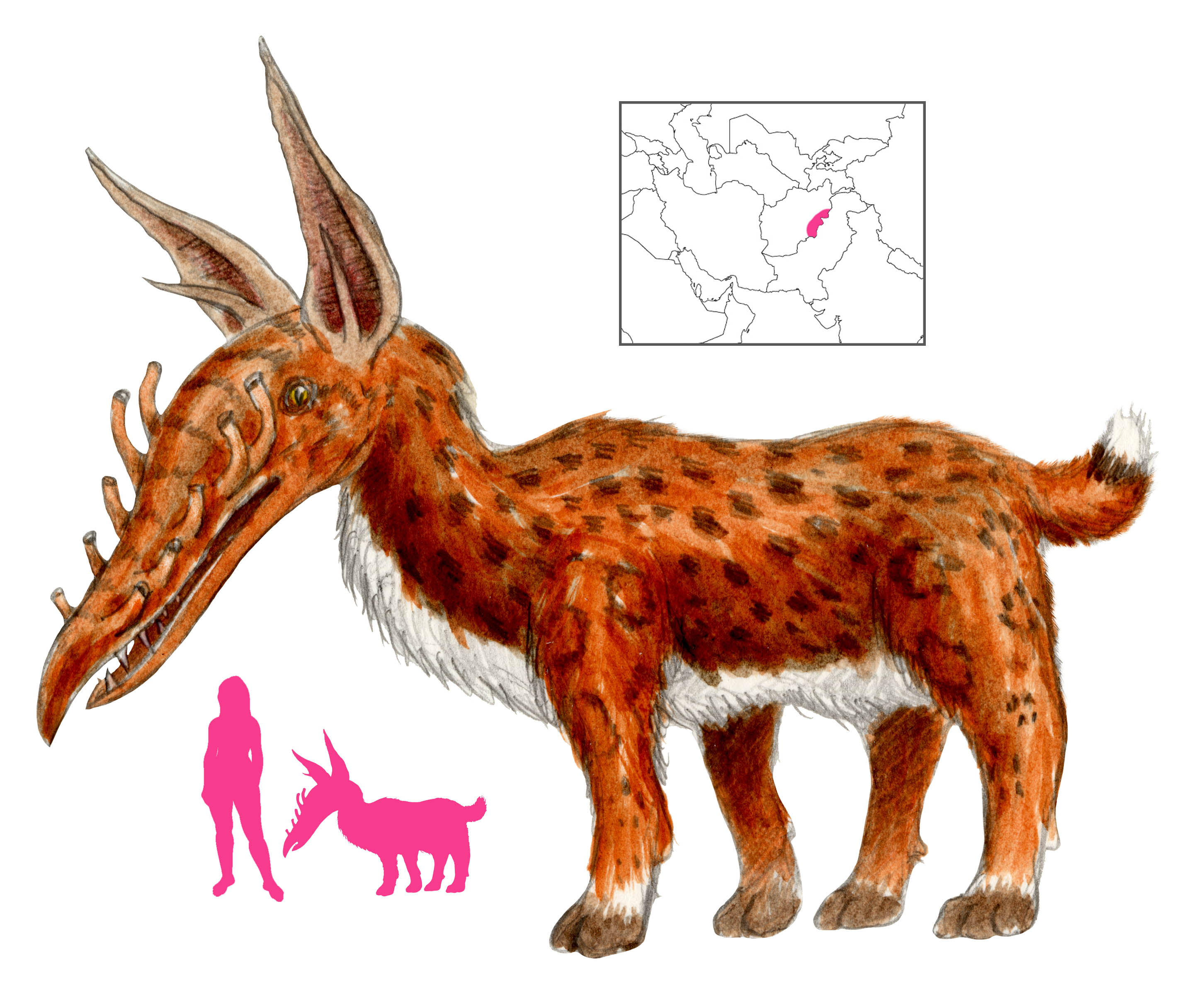
According to al-Qazwini, the Sirānis can be found in the undergrowth of Kabul and Zabulistan. Its name is derived from the Greek siren, from which the sirānis evolved beyond recognition.

Originally the sirānis was believed to be a marine animal with seven openings in its mouth, and which used its seven toes to play its snout like a musical instrument. This description, in turn, came to be that of the Qaqnus or Arghun, which was known by the same name as well. Sirinā was also the name of a system of walls with holes in them that replicated the call of the sirānis, and which was used by the Byzantines to attract and capture that animal.

Al-Qazwini, however, places the sirānis firmly on land as a carnivorous mammal with 12 openings in its snout. When it breathes, those orifices produce a pleasant sound like that of the mizmar or flute; indeed, it is said that it was the inspiration for the musical instruments.

A sirānis uses its musical prowess to capture prey. It produces a melody so entrancing that animals gather around it and swoon in wonder, giving the sirānis an open buffet to choose from. If none of the animals present are satisfactory, it lets out an earsplitting screech that scares its audience away.

In time, the proximity of the sirānis to the shādawār in al-Qazwini’s text led later authors to combine them, granting the more iconographically defined shādawār the predatory nature of the sirānis.

References

Contadini, A. Musical Beasts: The Swan-Phoenix in the Ibn Bakhtishu’ Bestiaries. In O, Kane, B. (2005) The Iconography of Islamic Art. Edinburgh University Press.

Contadini, A. (2012) A World of Beasts: A Thirteenth-Century Illustrated Arabic Book on Animals (the Kitab Na’t al-Hayawan) in the Ibn Bakhtishu’ Tradition. Brill, Leiden.

Ettinghausen, R. (1950) The Unicorn. Studies in Muslim Iconography, Freer Gallery of Art Occasional Papers Vol. 1, No. 3, Washington.

al-Qazwini, Z. (1849) Zakariya ben Muhammed ben Mahmud el-Cazwini’s Kosmographie. Erster Theil: Die Wunder der Schöpfung. Ed. F. Wüstenfeld. Dieterichsche Buchhandlung, Göttingen.

Sarmatian Sea Snail

Variations: Sarmatian Snail, Limaçon de la Mer Sarmatique, Philosmon (Greek, potentially), Aknib (Turkish, potentially), Albakr (Tartar, potentially), Lucrab (Arabic, potentially), Cochlea Sarmatica

Sarmatian Sea Snail

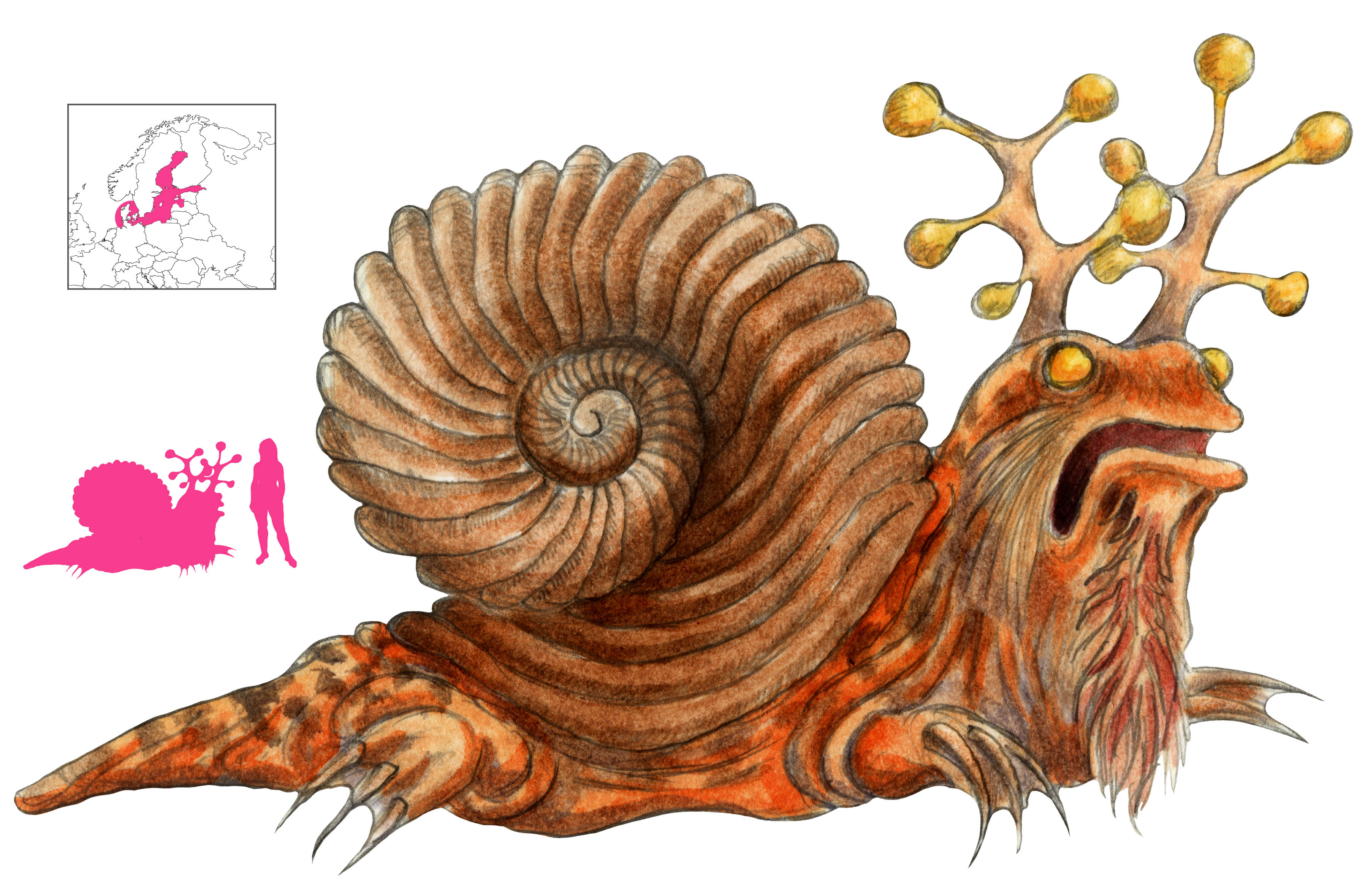
Anyone wishing to make a book on monstrous fishes should head to the Sarmatian Sea, exhorts Thevet. There, in what is now known as the Baltic Sea, may be found enough nightmares to satisfy the most avid teratologist.

One of these is an enormous snail, the size of a barrel. It has antlers like those of a stag, equipped with gleaming, pearl-like tips. It has a rounded cat-like snout with whiskers, and glowing eyes that light its path like candles. Its mouth is deeply slit, and a hideous fleshy excrescence dangles below it. Its neck is thick, and its tail is long, multicolored, and mottled like a tiger’s. Unlike most other snails, it has four feet armed with hooked claws.

While amphibious, the giant snail is usually out in the open sea, and is rarely seen on the coast due to its wariness.  During good weather it will crawl up onto the beach to graze. Its flesh is tasty and good to eat, and helps against liver and lung problems, much like the meat of large Madagascan turtles cures leprosy.

Thevet reports the Sarmatian Sea snail from Denmark, and mentions having seen similar creatures in the Black Sea, where they are known as Philosmon by the Greeks, Aknib by the Turks, Albakr by the Tartars, and Lucrab by the Arabs. These may well be the same animal.

Linnaeus cautiously included the Sarmatian Sea snail as Cochlea Sarmatica in a footnote, admitting that “fabulosa est“.

It is most likely that this giant snail was born of confusion between the shells of turtles and the shells of snails. Thevet was also working with a number of notes taken at different times, and it does not seem implausible that he muddled them together to create chimeras. Turtles were long seen as bizarre creatures, and the Ortus Sanitatis represents them as snails with legs, making them the basis for the giant snail. Further confusion with seals led to the whiskers and large eyes, and the antlers were provided by branching fungi. For all we know, none of these were from the Baltic Sea.

References

Linnaeus, C. (1759) Animalium Specierum. Theodor Haak, Leiden.

Paré, A. (1614) Les Oeuvres d’Ambroise Paré. Nicolas Buon, Paris.

Thevet, A. (1575) La Cosmographie Universelle. Guillaume Chaudiere, Paris.

Unknown. (1538) Ortus Sanitatis. Joannes de Cereto de Tridino.

Vallot, M. (1834) Mémoire sur le Limacon de la Mer Sarmatique. Mémoires de L’Académie des Sciences, Arts, et Belles-Lettres de Dijon, Partie des Sciences, Frantin, Dijon.

Shahmat al-Ard

Variations: Kharȃti

Shahmat-al-ard

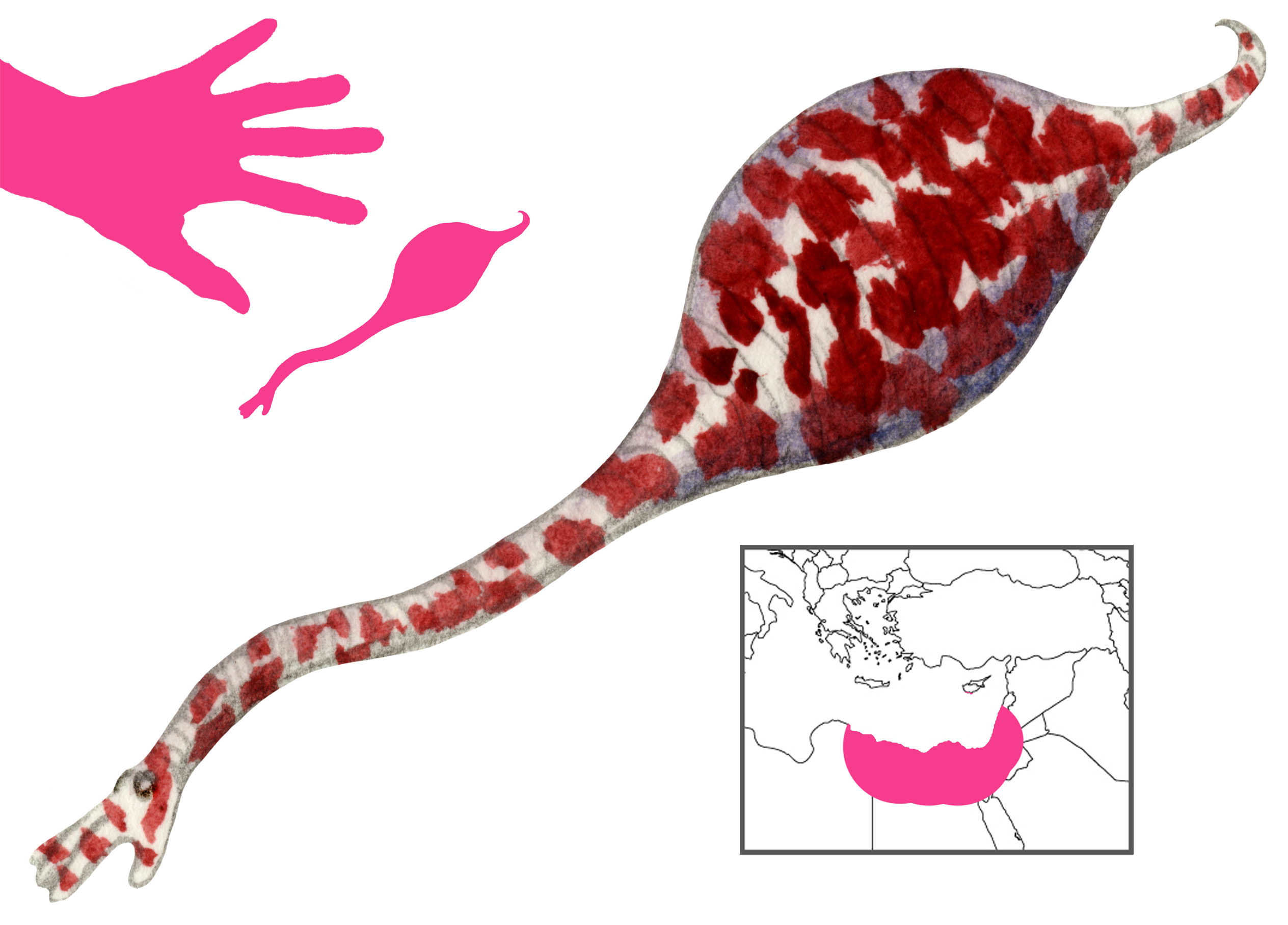
Shahmat al-Ard, the “fat of the earth” or “grease of the earth”, is a worm that contracts into a bead if touched. Al-Qazwini, who called it the Kharȃti, said that it was long, red, and lived in damp areas. On the other hand, al-Zamakshari believed it to be small, white, speckled with red spots, and resembling both a white fish and the hand of a woman. Hurmus said that it smelled good, and was immune to fire, being capable of crawling through a bonfire unharmed.

Its primary value is in the variety of medicinal benefits it provides. Its fat, if painted onto one’s skin, will protect from fire. The entire worm, dried and eaten, cures jaundice and scrofula; dried and taken with water, causes immediate delivery in the case of a difficult birth. Roasted and eaten with bread, it dissolves bladder-stones. A shahmat al-ard reduced to ashes, mixed with oil, and applied to the head will cure alopecia and restore hair growth.

Nonetheless it is not generally eaten, since as a filthy worm it is unclean and unfit for human consumption.

References

al-Damiri, K. (1891) Hayat al-hayawan al-kubra. Al-Matba’ah al-Khayriyah, Cairo.

Jayakar, A. S. G. (1908) Ad-Damiri’s Hayat al-Hayawan (A Zoological Lexicon), vol. II, part I. Luzac and Co., London.

Shādawār

Variations: Shadhahvar, Shadhahwar, Shādhahvār, Shad-hawar, Shād-hawār, Shad-havar, Shadhawar, Shadahvar, Shadahwar, Shadawar, Sadahvar, Sadahwar, Sadhavvar, Sadhazar, Sadhazag, Sadhuzag, Aras, ‘rs, ‘rsh

Shad-hawar

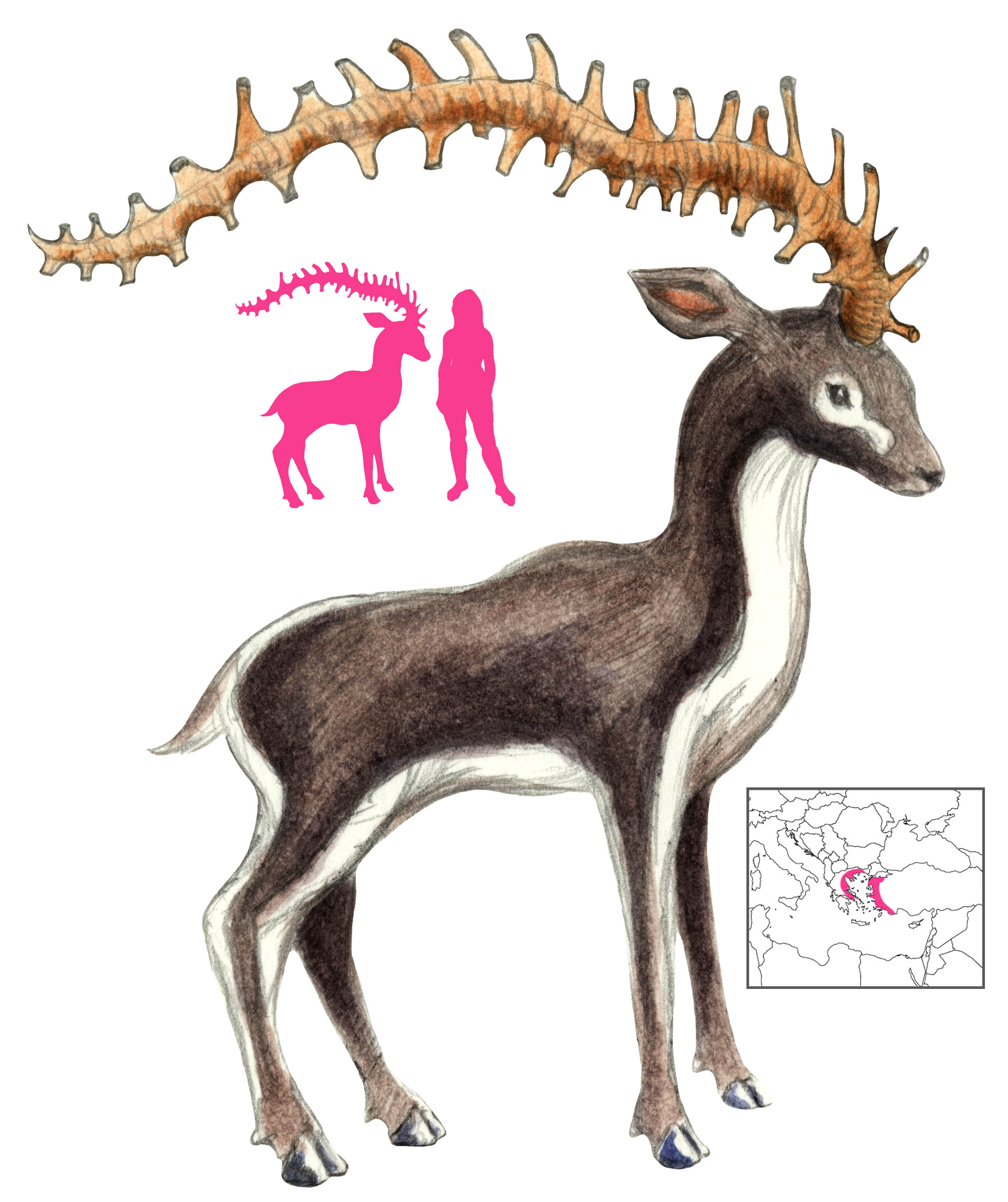
The earliest references to the musical-horned unicorn are given by Jabir Ibn Hayyan, around 900 A.D., where it is referred to as the Aras. It was given its most popular incarnation as the Shādawār by Al-Qazwini, which was subsequently copied with modifications by Al-Damiri and Al-Mustawfi. It was found in the farthest reaches of Bilad al-Rum, the Byzantine Empire, a vague location which to Al-Qazwini must have sounded remote.

Exactly how the shādawār’s name should be written and pronounced is unclear. Its writing has varied from author to author and manuscript to manuscript, sometimes starting with a Sā instead of a Shā, with the middle consonant being either a d or a dh (pronounced “the”), and ending in wār (Arabic) or vār (Persian). The spelling chosen here is ultimately arbitrary and based on Ettinghausen and Jayakar’s recommendations, and the most prevalent transliterations. The name is of unknown origin, but Hayyan’s aras is probably derived from “oryx”.

Unlike the more rhinocerine karkadann, the shādawār is an antelope-like ungulate with a single horn, but in this case it is long and hollow. There are forty-two hollow branches in the horn, and wind whistling through these flute-like holes results in beautiful, stirring melodies, so lovely that other animals will gather around to listen. Shādawār horns were offered to kings, who would hang them up as musical intruments. Depending on the angle they were held at, they would produce an enthralling tune or a sad dirge that moved all listeners to tears.

The shādawār has been incorrectly described as a flesh-eater, using its music to attract potential prey. In fact, Al-Qazwini makes no mention of any carnivorous tendencies. Al-Mustawfi, however, combines Al-Qazwini’s account of the shādawār with that of the carnivorous Sirānis immediately preceding it. It is the sirānis that lures prey to it with its music, and not the herbivorous shādawār.

Al-Damiri and Bochart give it seventy-two branches on its horn. Flaubert goes further and describes his “sadhuzag” as a black deer with the head of a bull, and a thicket of white horns on its head. It speaks to Anthony, describing its unique powers. “My seventy-four antlers are hollow as flutes. When I turn towards the South wind, sounds come out that attract enraptured beasts. Snakes coil around my legs, wasps cling to my nostrils, and parrots, doves, and ibises roost in my branches. – Listen! … But when I turn to the North wind, my antlers, thicker than a battalion of lances, exhale a howl; forests shudder, rivers retreat, fruit bulbs burst, and grasses stand on end like the hair of a coward. – Listen!”

References

Bochart, S. (1675) Hierozoicon. Johannis Davidis Zunneri, Frankfurt.

el-Cheikh, N. M. Byzantium through the Islamic Prism from the Twelfth to the Thirteenth Century. In Laiou, A. E. and Mottahedeh, R. P. (2001) The Crusades from the Perspective of Byzantium and the Muslim World. Dumbarton Oaks Research Library and Collection, Washington, D. C.

Contadini, A. Musical Beasts: The Swan-Phoenix in the Ibn Bakhtishu’ Bestiaries. In O, Kane, B. (2005) The Iconography of Islamic Art. Edinburgh University Press.

Contadini, A. (2012) A World of Beasts: A Thirteenth-Century Illustrated Arabic Book on Animals (the Kitab Na’t al-Hayawan) in the Ibn Bakhtishu’ Tradition. Brill, Leiden.

al-Damiri, K. (1891) Hayat al-hayawan al-kubra. Al-Matba’ah al-Khayriyah, Cairo.

Ettinghausen, R. (1950) The Unicorn. Studies in Muslim Iconography, Freer Gallery of Art Occasional Papers Vol. 1, No. 3, Washington.

Flaubert, G. (1885) La Tentation de Saint Antoine. Quantin, Paris.

Jayakar, A. S. G. (1908) ad-Damiri’s Hayat al-Hayawan (A Zoological Lexicon). Luzac and Co., London.

Kraus, P. (1986) Jabir Ibn Hayyan : Contribution à l’historie des idées scientifiques dans l’Islam. Société d’Édition Les Belles Lettres, Paris.

al-Qazwini, Z. (1849) Zakariya ben Muhammed ben Mahmud el-Cazwini’s Kosmographie. Erster Theil: Die Wunder der Schöpfung. Ed. F. Wüstenfeld. Dieterichsche Buchhandlung, Göttingen.

Stökkull

Variations: Stokkull, Stöckull; Blödkuhvalur, Blökuhvalur, Blodkuhvalur (Flap-Whale); Bloejuhvalur (Veiled Whale); Springhvalur (Springing Whale); Stökkfiskar (Jumping Fish); Sprettfiskur (Sprinting Fish); Léttir (Agile One); Léttur (Light One); Dettir (Falling One); Hrosshvalur (Horse-Whale, probably erroneously)

Stokkull 2

The Stökkull is probably the most feared of the Icelandic illhveli, or “evil whales”. While not the largest or the most well-armed of whales, it is remarkably powerful for its size, and is easily capable of pile-driving ships into a watery grave. In fact, its name is used rather indiscriminately for a number of other monstrous whales with similar behavior; Jon Gudmundsson combined it with the hrosshvalur.

Stökkull means “jumper”, or “leaper”, and this is an apt description of this whale’s habits. A stökkull has a rounded body, black above and white below, and is about 8 to 20 meters long. It has a reinforced battering-ram snout and an underslung lower jaw full of sharp teeth. Most notably, it has blinder-like flaps of skin covering its eyes.

These fleshy flaps earn the stökkull its alternate name of blödkuhvalur (“flap whale”). They prevent the stökkull from seeing ahead of it, and so in order to see it has to leap out of the water and look underneath the flaps. Some accounts instead specify that the stökkull can see underwater and is blinded when it breaches, but this is less likely. It is said that the stökkull’s depredations were once even worse than they are today, until Saint Brendan implored the Lord to intervene. God responded by causing the flaps of skin to grow over the stökkull’s eyes, hindering its capacity to do evil.

Blinded or not, stökkulls are still formidable foes. They leap out of the water, breaching so high that the land and mountains can be seen below them, and cover a distance of four waves with every leap. When in pursuit of a ship, a stökkull can leap a mile in pursuit. It will sink anything it sees floating by jumping onto it nose-first, pulverizing boats and breaking the backs of large whales.

To avoid attracting the attention of a stökkull, it must not be referred to by name, otherwise it is likely to notice your presence. Any of a number of euphemisms must be used when talking about the jumper, and that is the reason for its profusion of names.

If a stökkull is sighted in the distance, it must be distracted before it smashes its way into the boat. The easiest way to do this is to throw a buoy or empty barrel overboard; the stökkull will exhaust itself trying to sink the object. Even a hat thrown overboard will distract a stökkull, as fishermen on Eyjafirth discovered. Another method is to make for the direction of the sun. If the stökkull tries to see where the boat is going, the sun’s glare will interfere. Finally, if all else fails, suitably strong firepower is advised. One stökkull was shot before it could leap, and that so startled it that it swam away at full speed, trailing blood behind it.

The legend of the stökkull probably dates back to tall tales of flying fishes. It may be inspired by sperm whales, Risso’s dolphins, and killer whales to various extents. Today stökkull is used in Iceland to refer to a number of harmless dolphins and porpoises.

References

Davidsson, O. (1900) The Folk-lore of Icelandic Fishes. The Scottish Review, October, pp. 312-332.

Hermansson, H. (1924) Jon Gudmundsson and his Natural History of Iceland. Islandica, Cornell University Library, Ithaca.

Hlidberg, J. B. and Aegisson, S.; McQueen, F. J. M. and Kjartansson, R., trans. (2011) Meeting with Monsters. JPV utgafa, Reykjavik.