Sapo Fuerzo

Variations: Strong Toad

Strong toad

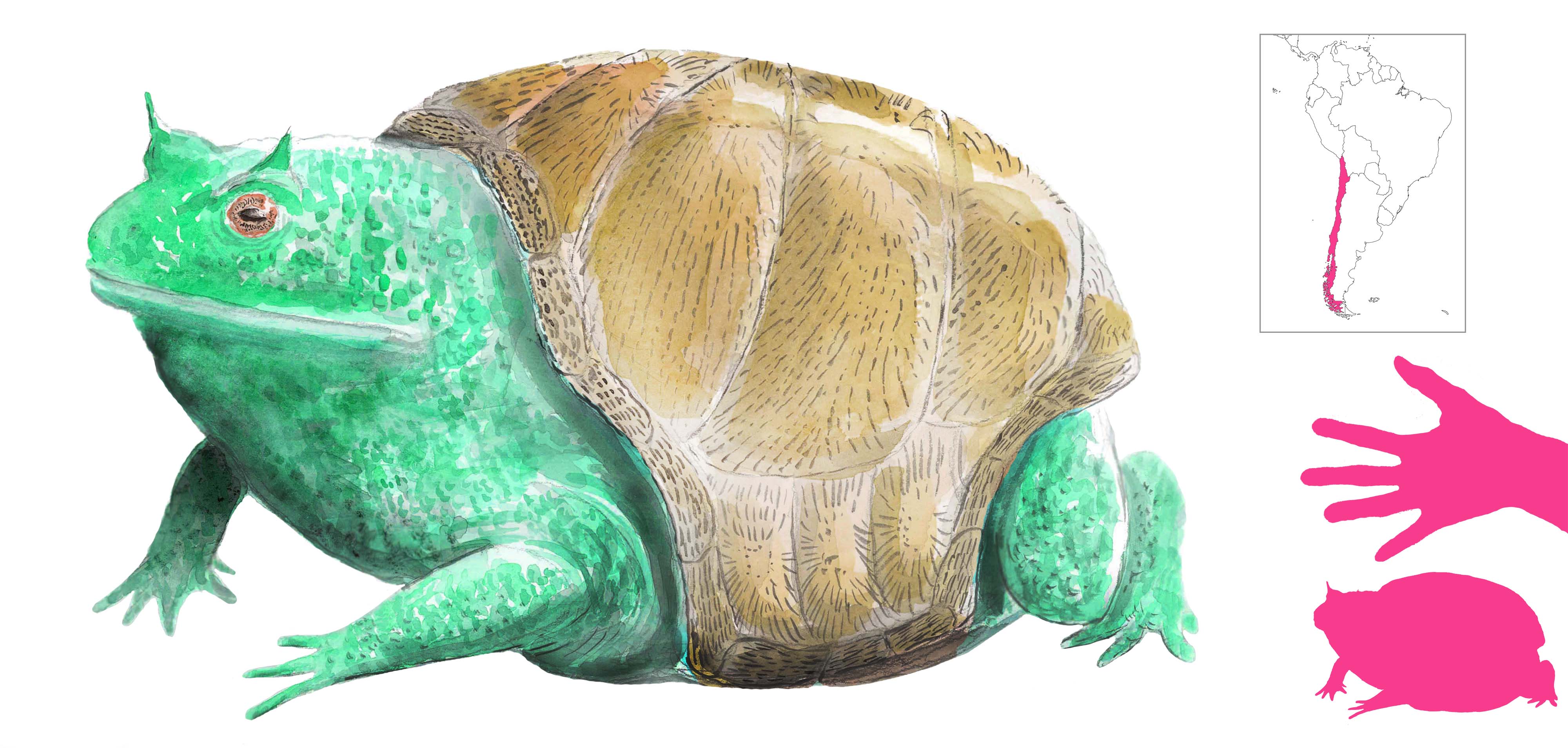
The sapo fuerzo, or “strong toad”, is a remarkable amphibian from the Andes of Chile. It can be easily distinguished from regular toads by its hard, turtle-like shell. It is phosphorescent, and glows in the dark like a firefly.

It earns its name from its supernatural powers and its incredible resilience. A sapo fuerzo is capable of attracting or repelling anything within its reach by the sheer power of its gaze. It can also regenerate and recover from virtually any injury, and the only way to kill one is burn it and reduce it completely to ashes.

References

Aguirre, S. M. (2003) Mitos de Chile. Random House, Editorial Sudamericana Chilena.

Cifuentes, J. V. (1947) Mitos y supersticiones (3rd Ed.). Editorial Nascimento, Santiago, Chile.

Boongurunguru

Variations: Bonguru

Boongurunguru

According to the mythology of the Solomon Islands, there was once a time when the waters flooded the Earth. This great flood, the Ruarua, engulfed all of the islands, even the 4,000 feet high San Cristoval hills; those drowned in it turned into stone pillars, which can still be seen at Mwata. It was Umaroa, leader of the Muara clan, who saved his people by taking them, a sacred stone, and pairs of all the animals on board a great canoe. When the waters receded, Umaroa made landfall at Waimarai in the Arosi district, and offered a sacrifice in thanks. From there an adaro descended from a rainbow and guided them to their new home.

Umaroa is now buried there, and his sacred stone was laid on top of him. The area is now rich with magic, and visitors have to observe certain rules to avoid bad luck. Any trees cut down and left there will cause the lumberjacks to wander in circles, always returning to the cut tree. If there is a rainbow above the river, it cannot be crossed without making an offering to the adaro first. Names have particular strength there; ropes cannot be called ari but instead must be referred to as kunikuni (“to let down”), otherwise snakes will be summoned immediately.

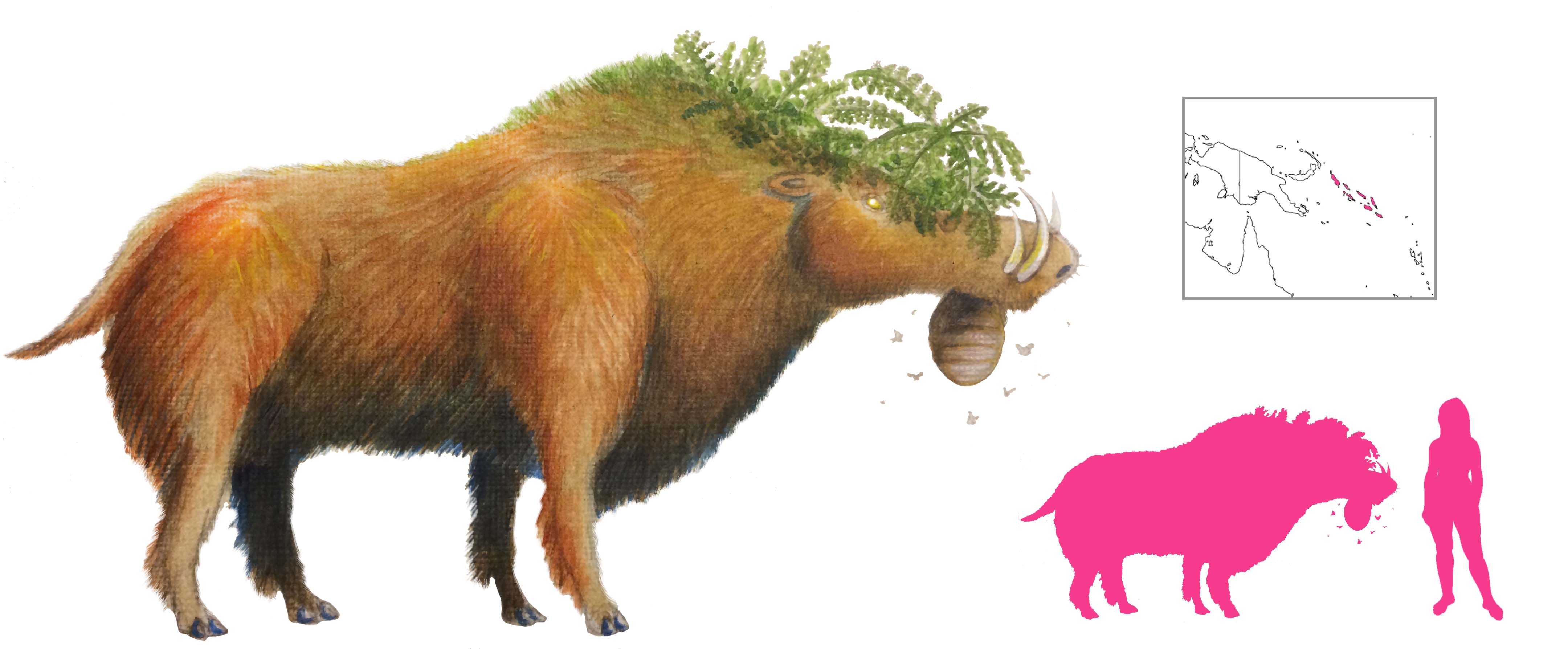
Of the spirits there, the most terrifying is Boongurunguru, the “pig-who-grunts”, the demon pig of Umaroa. He takes the form of a huge boar with ‘ama’ama ferns growing on his flattened head, and a buzzing nest of hornets located under his chin. He leads a herd of boars, all of them Boongurunguru, through the forest, goring and trampling anyone in their path. The appearance of a Boongurunguru foretells death; if the entire herd enters a village, everyone there will die. The boars get smaller and smaller as they approach a village, finally sneaking in at the size of mice, but they are no less deadly at that size.

If one hears Boongurunguru grunting and mentions that there must be pigs nearby, they are immediately surrounded by hundreds of venomous snakes – in front, behind, on either side, and falling out of the air.

This is because Boongurunguru has standards, and objects to being called a pig.

References

Fox, C. E. (1924) The Threshold of the Pacific. Kegan Paul, Trench, Trubner and Co., Ltd., London; Alfred A. Knopf, New York

Mackenzie, D. A. (1930) Myths from Melanesia and Indonesia. Gresham Publishing Company, Ltd., London

Ragache, C. C. and Laverdet, M. (1991) Les animaux fantastiques. Hachette.

Alp-luachra

Variations: Art-luachra, Arc-luachra, Airc-luachra, Dochi-luachair, Just-halver, Joint-eater, Mankeeper, Darklooker, Art-pluachra (mispronunciation)
Alp-luachra

Fairies are far removed from the sanitized Victorian ideal we are accustomed to. There are beautiful fairies; there are also ugly fairies, cruel fairies, and vile, parasitic fairies. The alp-luachra belongs to the last group.

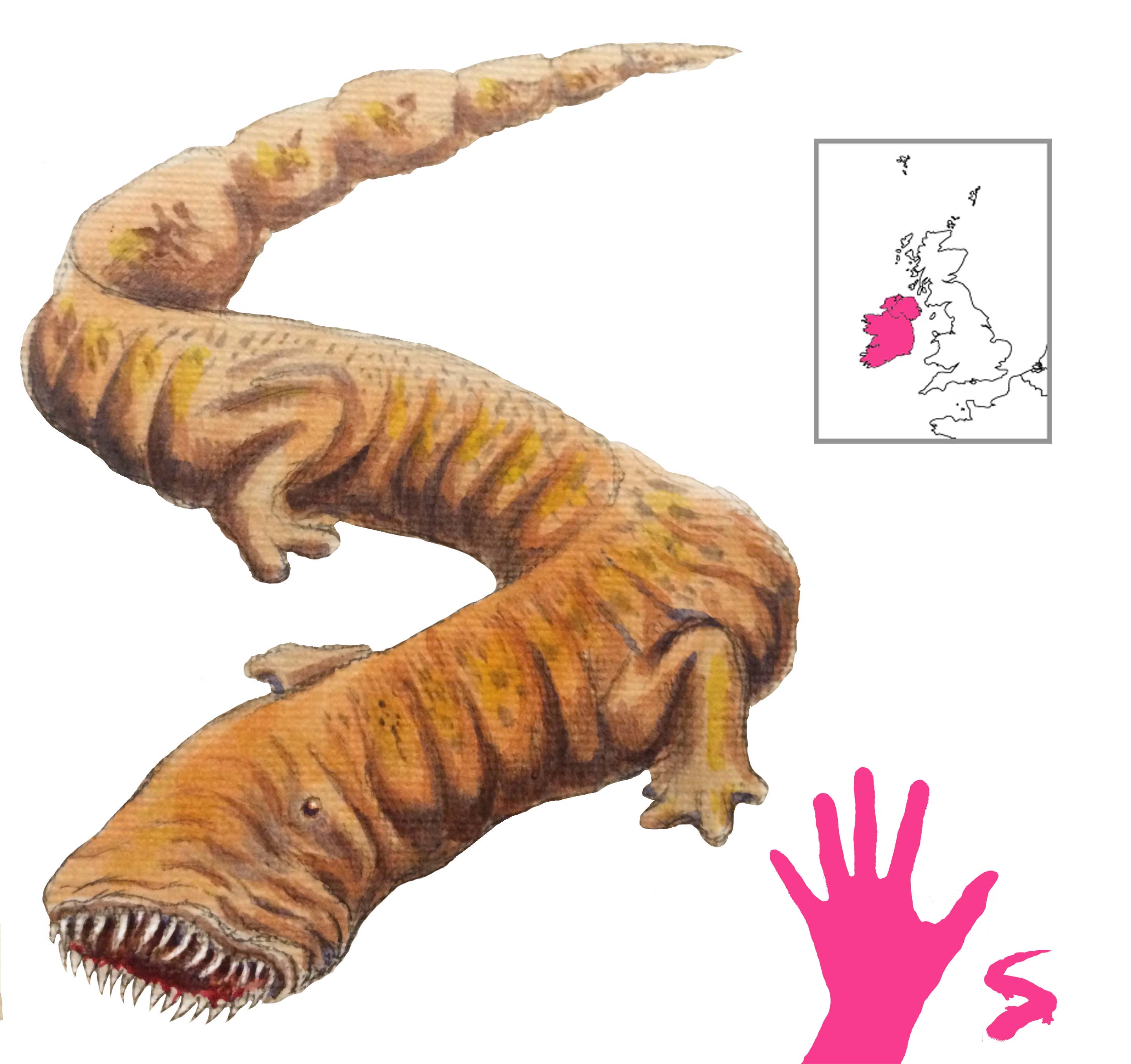
Native to Ireland, where it can be found across the island, the alp-luachra is a small, newt-like creature not unlike Ireland’s native smooth newt (Lissotriton vulgaris). It was born of ignorance and fear of the unknown – in this case, the habits of the newt. Any similarities end there, however. The smooth newt is a harmless denizen of ponds, while the alp-luachra lives off “the Pith or Quintessence of what the Man eats”, as Robert Kirk put it.

Infestation is simple enough. Anyone asleep outdoors is at risk. Alp-luachras slip into the open mouths of sleepers, and from there work their way into the stomach. The entire process is painless, and hosts are never aware of their slimy new occupants. That is, until the symptoms manifest themselves: pain in their sides as the alp-luachras make themselves comfortable, and increasing, insatiable hunger. The alp-luachras eat the food ingested by their hosts, growing larger, reproducing inside them until their wriggling becomes unbearable; meanwhile, their hosts waste away, becoming gaunt and emaciated. In the span of a few years, the unfortunate victim eventually dies of starvation, and the alp-luachras move out to find new victims.

As the alp-luachra’s glamour prevents it from being seen by physicians, it must be tricked into leaving the body by other means. Inhaling the strong fragrance of savory food can coax them to come out, as can eating very salty food. Once outside the body, the alp-luachra can be licked to cure burns.

Douglas Hyde recounts the story of one farmer from Connacht who suffered from alp-luachra infestation for half a year, until an itinerant beggar and the Prince of Coolavin told him how to get rid of them. He started by eating a large quantity of salted beef. While this made him thirsty (and no less hungry), it made the alp-luachras thirstier. He then lay down with his mouth open above a stream; the alp-luachras, sensing water, crawled out of his mouth and into the stream, one by one. All in all, he had been host to a dozen alp-luachras and their mother, seven times their size.

He never slept on the grass again.

References

Dubois, P.; Sabatier, C.; and Sabatier, R. (2005) The Complete Encyclopedia of Elves, Goblins, and Other Little Creatures. Abbeville Press.

Hyde, D. (1890) Beside the Fire. David Nutt, London.

Kirk, R. (1893) The Secret Commonwealth of Elves, Fauns, & Fairies. David Nutt, London.
Caspilly

Variations: Caspilli, Neemora (Persian)

Caspilly

The Caspilly is a “marvelously large, and strong” fish from the Indian Ocean, described by Ambroise Paré on the basis of two separate accounts by André Thevet.

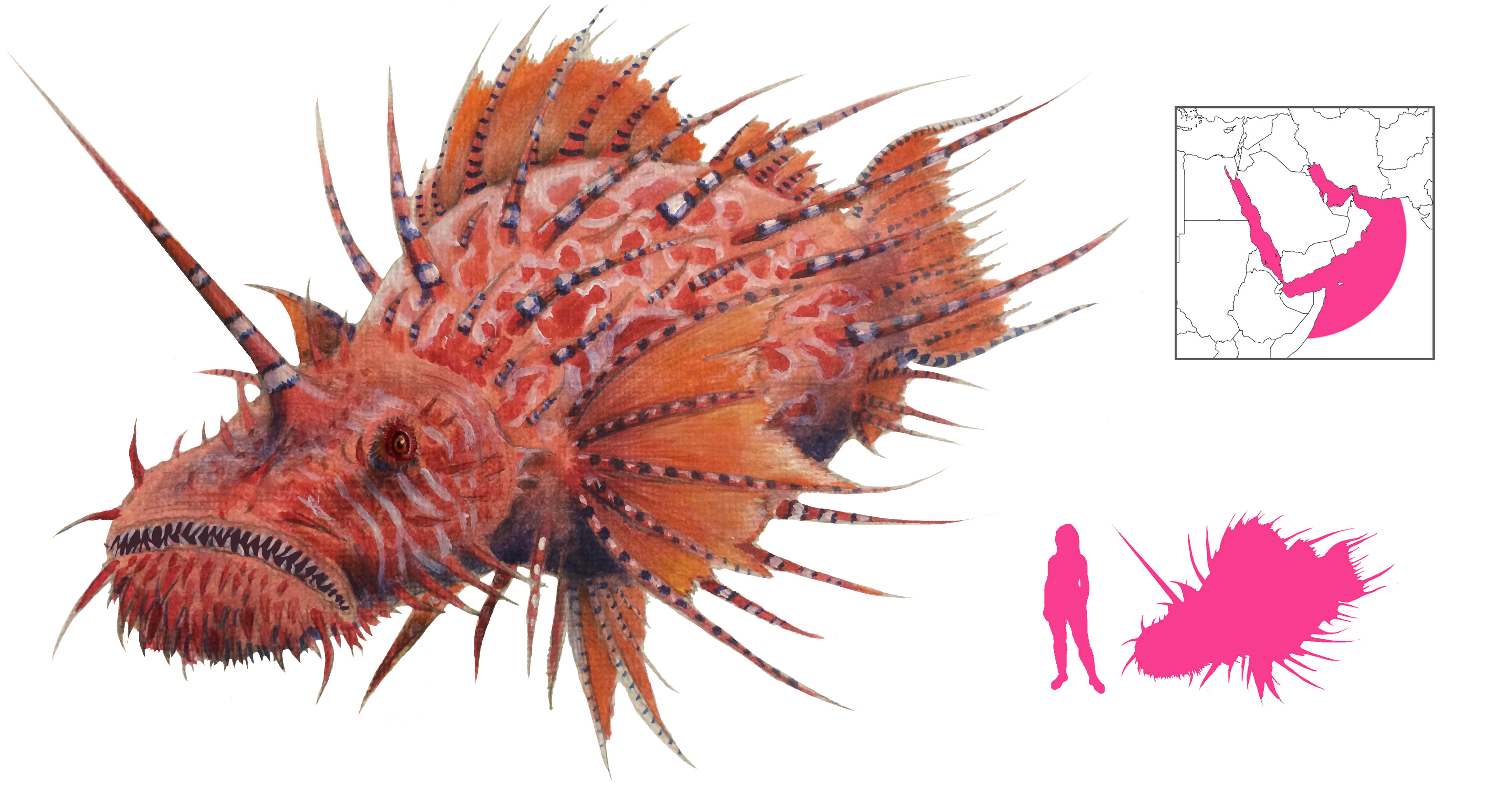
Thevet placed it in the Arabian Gulf, saying that it is known to the Arabs as caspilly, and to the Persians as neemora. The caspilly is almost as wide as it is long, but no more than two feet long. It has no scales, and its skin is spiky and barbed like that of a shark. On its forehead is a lancet-like spine, a foot and a half in length, that it keeps tucked along its nape. When it is hungry, it goes for the first fish it sees, stabbing it in the belly with its horn until its prey bleeds to death. Its teeth are venomous and bites are deadly. Applying a dead caspilly to a bite, on the other hand, will cure it. The horn is of great medicinal value, and caspilly are shot with arrows from a safe distance to retrieve such a prize.

Thevet also reports a nameless fish from the Peruvian sea, with a swordlike horn three feet long. This fish is a specialized whale killer. Upon seeing a whale, the fish will hide underneath before stabbing it in the navel with its horn, leaving the whale to writhe in its death throes and capsize nearby ships. Once the whale is dead, it can be eaten at leisure.

Paré economically combines both accounts, giving the caspilly a four-foot-long horn and making it the terror of the Arabian sea. He adds that the Arabs of the region hunt caspillys with giant hooks baited with camel meat. Any caspilly who greedily takes the bait will tire itself out on the line, eventually slowing down enough to be shot with arrows, brought onto ship, and bludgeoned to death. Caspilly flesh is edible, and caspilly alicorn is just as potent against venom as that of the unicorn.

In all likelihood the Caspilly was born from accounts of swordfish and killer whales, contaminated by lionfish and porcupinefish. The venomous bite may have been derived from the famed toxicity of pufferfish. Aldrovandi cautiously included it with his Herinaceus marinus, the porcupinefish, as Herinaceus arabus, the Arab hedgehog.

References

Aldrovandi, U. (1642) Monstrorum historia cum Paralipomenis historiae omnium animalium. Bononiae.

Paré, A. (1582) Discours d’Ambroise Paré – De la Licorne. Gabriel Buon, Paris.

Paré, A. (1614) Les Oeuvres d’Ambroise Paré. Nicolas Buon, Paris.

Thevet, A. (1575) La Cosmographie Universelle. Guillaume Chaudiere, Paris.

In the face of a natural world of infinite wonder, humanity found it necessary to create beings of their own. These are the creatures of the imagination, invented to explain phenomena, provide cautionary tales, or simply amuse the listeners. Some are garbled accounts of animals too bizarre to comprehend, others are divine attendants, lurking mischief-makers, or even helpful servants.

Our desire for order is almost as strong. Everything has to be described, classified, labeled, and pigeon-holed; there had to be a reason for everything. Thus the medieval bestiary was born, providing both moral guidance and a catalogue of what was known and unknown.

Since then, our interest in catalogues of the bizarre and unusual has never truly waned. J. L. Borges, in writing his Book of Imaginary Beings, set the foundations for the modern bestiary, and others have followed suit.

We will never truly be able to catalogue every last folkloric and mythical entity. It is an exercise in futility, the interest of the scholar and the artist degenerating into obsessive collection of the smallest details. While acknowledging this fact, it still doesn’t hurt to try. This work, which will be updated gradually, is the culmination of a deep interest in the unnatural world combined with years of research. I hope you enjoy it as much as I did putting it together.