Alicanto

Alicanto

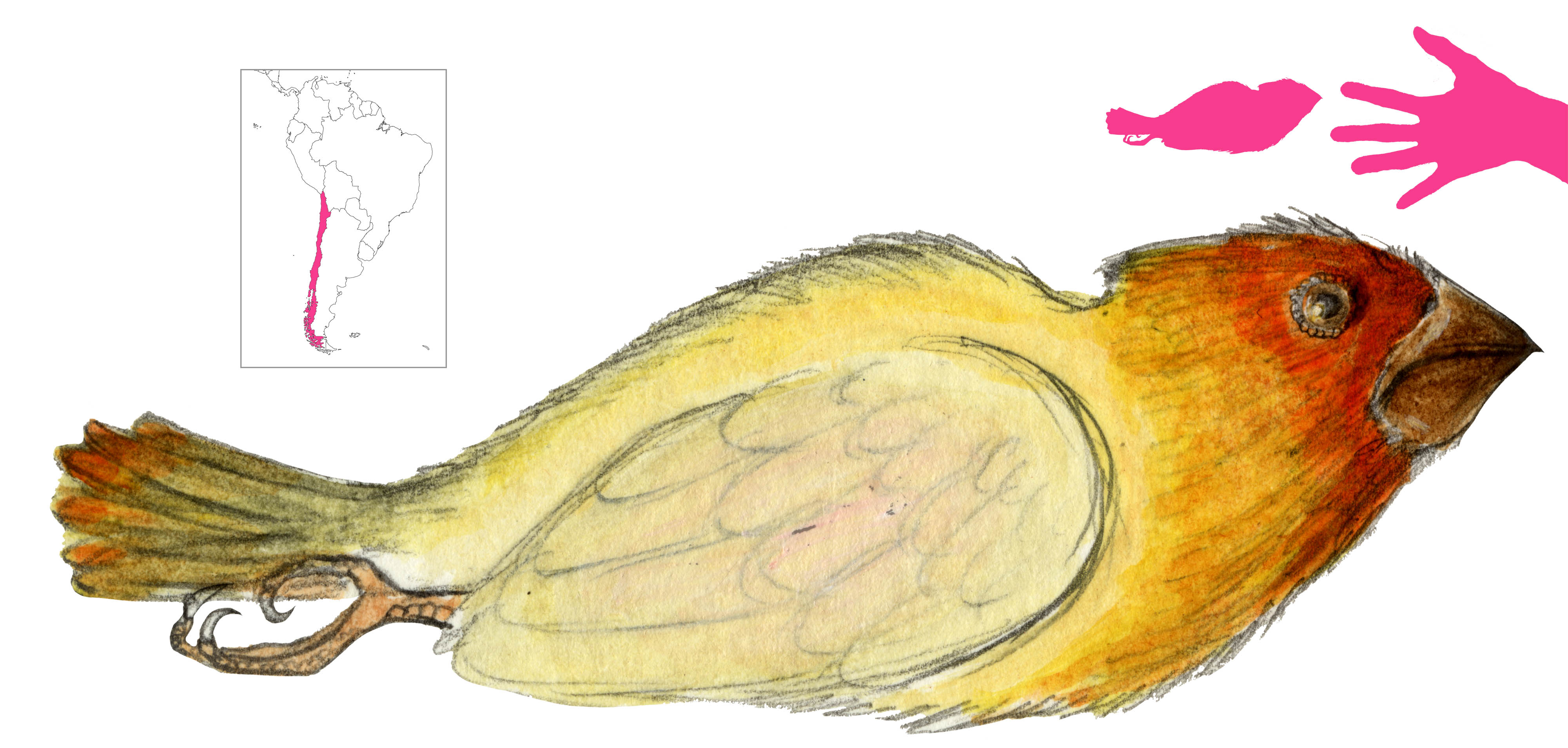
The Alicanto is a glowing nocturnal bird comparable to the Carbuncle, perhaps sharing the same folkloric origin. It is  known to inhabit Chile, and has been reported from Atacama, San Bernardo, Santiago, Talagante, and Tarapacá.

Alicantos feed exclusively on metal ores, and take on the color of the metal they ingest – a gold-eating alicanto emits a golden light, while the silver-eating variety glows a cold metallic gray. The rare copper-eating alicanto is greenish, with large wings, a hooked beak, long legs, and sharp claws. Due to its phosphorescence, an alicanto does not cast a shadow. The eyes are bright and gleam silver.

These birds are flightless, but their wings are perfectly functional. They will often gorge themselves on metal, filling their crop so much that they cannot fly. At best they run fast with their wings held open; a full alicanto can barely drag itself along the ground.

Alicantos live around mines and hidden treasure, and nest in small caves. The female always lays two eggs, the shells of which are made of the metal she eats.

As an alicanto indicates the presence of precious metal, finding one can be highly lucrative. For that reason they are sought out by prospectors, engineers, miners, and unscrupulous looters hoping that the birds will lead them to rich veins. However, an alicanto is highly protective of its food sources, and if it knows it’s being followed, it will stop glowing and disappear into the darkness – or worse, lead its pursuers to a cliff.

References

Aguirre, S. M. (2003) Mitos de Chile. Random House, Editorial Sudamericana Chilena.

Cifuentes, J. V. (1947) Mitos y supersticiones (3rd Ed.). Editorial Nascimento, Santiago, Chile.

Kayeri

Variations: Kayéri, Cayeri

Kayeri

When it rains, the Kayeri are sure to appear. These creatures from the folklore of the Cuiva of Colombia and Venezuela are seasonal beings, seen in the rainy season and especially after a recent rainfall. In drier seasons they remain underground or underneath the roots of a tree, and use the holes made by ants to reach the surface. The presence of anthills in the rainy season is a sure sign of kayeri presence.

The appearance of a kayeri is nebulous at best. He is clearly humanoid in shape, and acts as such; he also has a yellow or blue-green hat. All the mushrooms of the forest are kayeri. The agouti, the broad-leaved unkuaju plant, and the Ficus vine are also kayeri, and dragonflies can become Kayeri. The coyoweri fruit is their invention. The only word in their vocabulary is “mu” or “mü“.

Kayeri are strong and run fast. They feed exclusively on cows, and they can easily pick up a cow and run away with it. When they eat a cow, they devour flesh, entrails, horn, hoof, and bone in one sitting, leaving nothing behind. The virile kayeri are bigamous by nature, and have two wives each, but they are fond of human females as well, whom they entrance and bewitch into coming to them. In addition to decimating herds of cattle, they rob, murder, kidnap, rape, and cause all sorts of evil.

The best way to kill a kayeri is to shoot it in the kidneys with a bone-tipped arrow, as they are quite invulnerable elsewhere. Once dead, the kayeri turns into a harmless stone.

One story is told of a hunter whose two daughters were abducted by a kayeri. The father managed to catch up with him and shoot him with a bone-tipped arrow before he could harm the daughters, and the kayeri fell into the river and became a pebble. As the family made for safety they could hear the ominous “mu, mu, mu” of kayeri beating trees with sticks, as they do when they are upset. “He fell out of his hammock and broke his back!” yelled the father, and they reached home without further trouble.

References

Arcand, B.; Coppens, W.; Kerr, I.; and Gómez, F. O.; Wilbert, J. and Simoneau, K. eds. (1991) Folk Literature of the Cuiva Indians. UCLA Latin American Center Publications, University of California, Los Angeles.

Munuanë

Variations: Munuane, Munuani

Munuane

Munuanë is either a single entity or an entire species of ogres native to the Guahibo people of Colombia and Venezuela. Many stories end with him being outsmarted and killed, which would be slightly inconvenient if he was one person.

Munuanë plies the waterways of the jungle on a makeshift raft. He is tall and powerful, with long grey hair, but his mouth is as toothless as a turtle’s. He loves eating human flesh, but his lack of teeth forces him to prepare his meals before eating them. Munuanë lacks eyes in his head, instead having them in his knees. Those eyes are his weak spot, as he is invulnerable everywhere but his knees. His wife is called Matasoropapénayo, or “Little-bone-of-the-crown”, and they live together in a hut in the deepest part of the jungle.

He is the “grandfather of fish”, and claims ownership over all the fish in the river. Fishermen are advised to bring in their catch as quickly as possible and not fish more than they need, as Munuanë hates greed, and mesmerizes overfishers into walking off ravines. Other times he shoots offenders with his arrow – Munuanë always carries around only one arrow, as he never misses his target. He is also an insatiable sexual predator, and his victims turn into termites.

It is said that a man once met Munuanë while out fishing, and did not manage to escape in time. Fortunately, Munuanë is not particularly bright, and accidentally shot the man’s reflection in the water instead of the man himself. By the time Munuanë had retrieved the arrow, his quarry had managed to swim away. Munuanë chased after the man and followed him to his village, where he ran rampant. But the man realized what Munuanë’s weakness was, shot him in the eye, and killed him instantly.

Such are the tales of Munuanë. Sometimes he is outsmarted by a powerful shaman. At other times a friendly spirit – Banajuli or Banaxuruni – is there to reveal his weak spot. Sometimes he is transformed into a rotten tree stump when he dies, with the arrow that killed him still embedded in the trunk. The entire forest cries out upon his death; he may be an ogre, but he also cares for the jungle and the fish of the river.

References

Kondo, R. L. W.; Kondo, V. F.; Maltoni, R.; Gómez, F. O.; Queixalós, F.; and Vargas, E.; Wilbert, J. and Simoneau, K. eds. (1992) Folk Literature of the Sikuani Indians. UCLA Latin American Center Publications, University of California, Los Angeles.

Sapo Fuerzo

Variations: Strong Toad

Strong toad

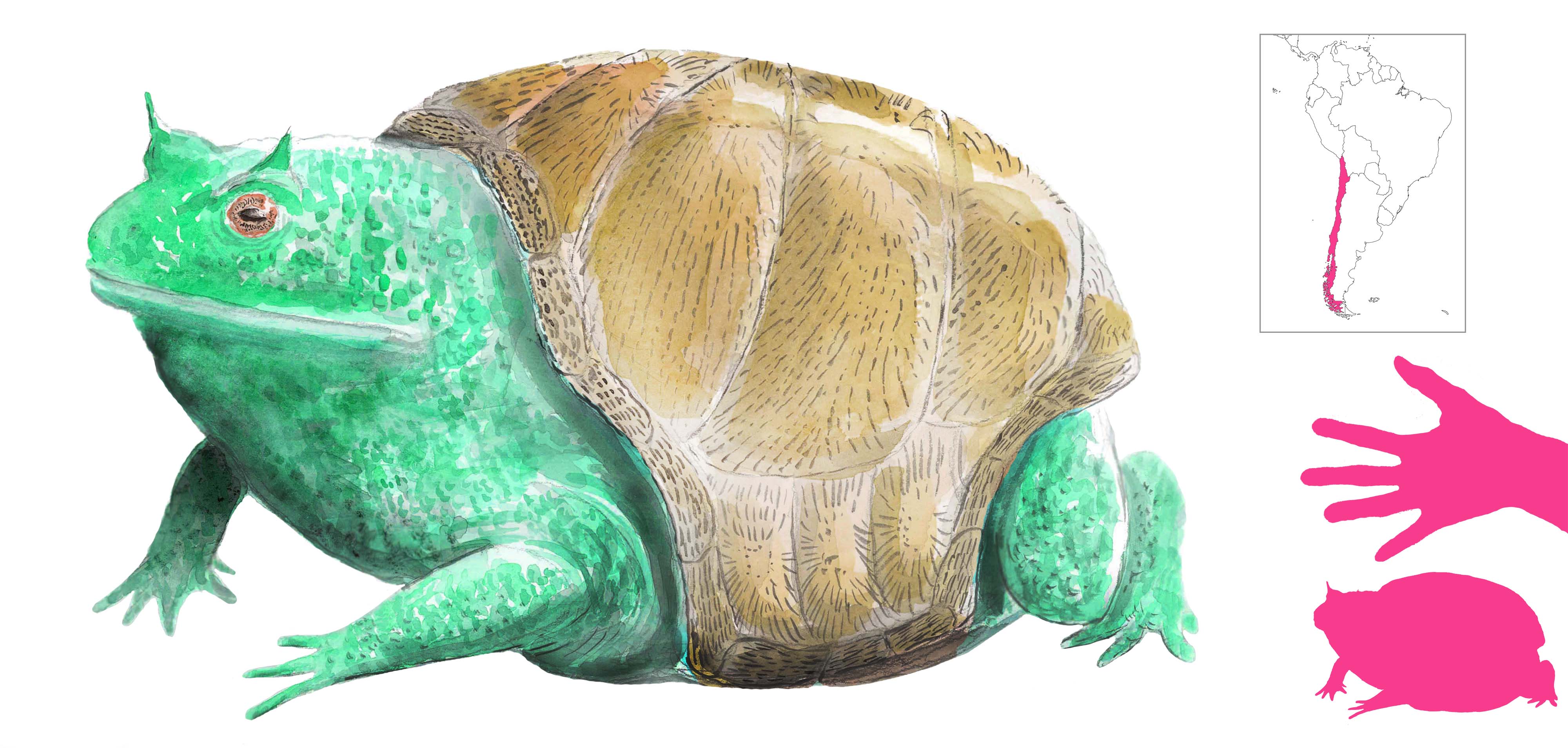
The sapo fuerzo, or “strong toad”, is a remarkable amphibian from the Andes of Chile. It can be easily distinguished from regular toads by its hard, turtle-like shell. It is phosphorescent, and glows in the dark like a firefly.

It earns its name from its supernatural powers and its incredible resilience. A sapo fuerzo is capable of attracting or repelling anything within its reach by the sheer power of its gaze. It can also regenerate and recover from virtually any injury, and the only way to kill one is burn it and reduce it completely to ashes.

References

Aguirre, S. M. (2003) Mitos de Chile. Random House, Editorial Sudamericana Chilena.

Cifuentes, J. V. (1947) Mitos y supersticiones (3rd Ed.). Editorial Nascimento, Santiago, Chile.