Variations: Fall Felen
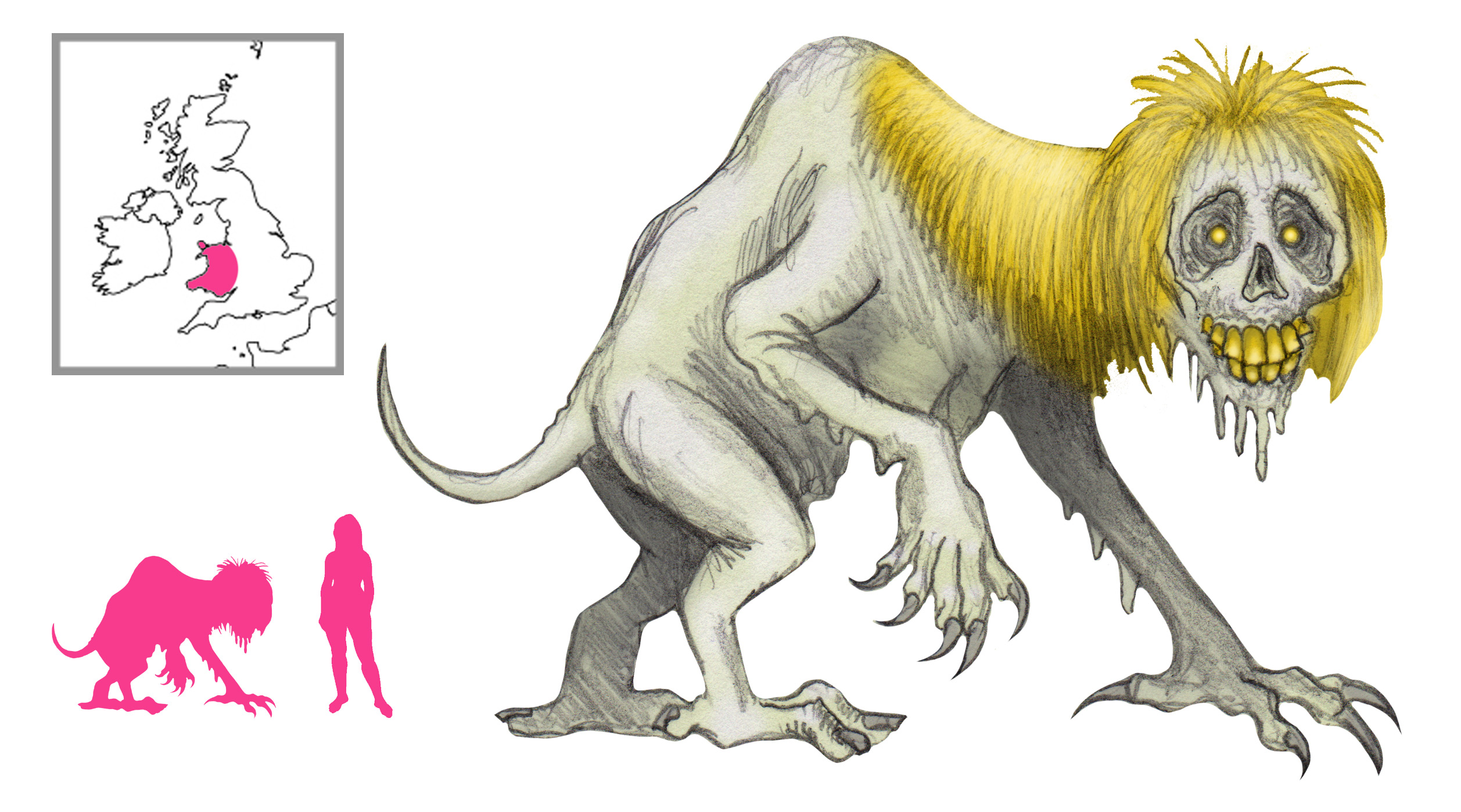
When the Fad Felen, the “Yellow Pestilence”, “Yellow Death”, or “Yellow Plague”, came to Wales in the 540s, it took the form of a column of watery cloud, one end on the ground and the other high in the air. Any living creature caught in the pestiferous pillar died or sickened to death. It was called the Yellow Pestilence because of the livid, bloodless complexion of those stricken by it. Those physicians who tried to cure the afflicted themselves took ill and died.
Taliesin the poet prophesied the death of Maelgwn Gwynedd, King of North Wales. “A strange creature will come from the marsh of Rhianedd”, he said, “to punish the crimes of Maelgwn Gwynedd; its hair, its teeth, and its eyes are yellow, and this will destroy Maelgwn Gwynedd”. This manifestation of the Fad Felen was perhaps a hideous hag with baleful eyes, in the same way as the ague is referred to as the wrach or hen wrach (the “hag” or “old hag” respectively). Other accounts speak of it as a basilisk; the poet Rhys Tenganwy mentions a scaly monster with claws and pestiferous breath.
Maelgwn Gwynedd saw the Fad Felen through the key-hole of Rhos Church, and died as a result – presumably a poetic way of saying that he died of plague in the church.
References
Llwyd, R. (1837) The Poetical Works of Richard Llwyd. Whittaker & Co., London.
Rees, W. J. (1840) The Liber Landavensis, Llyfr Teilo. The Welsh MSS Society, Llandovery.
Rhys, J. (1884) Celtic Britain. Society for Promoting Christian Knowledge, London.
Rhys, J. (1892) Lectures on the Origin and Growth of Religion. Williams and Norgate, London.
Sikes, W. (1880) British Goblins. Sampson Low, Marston, Searle, & Rivington, London.
 A Book of Creatures