Variations: Arragousset, Sarregouset, Sarragouset
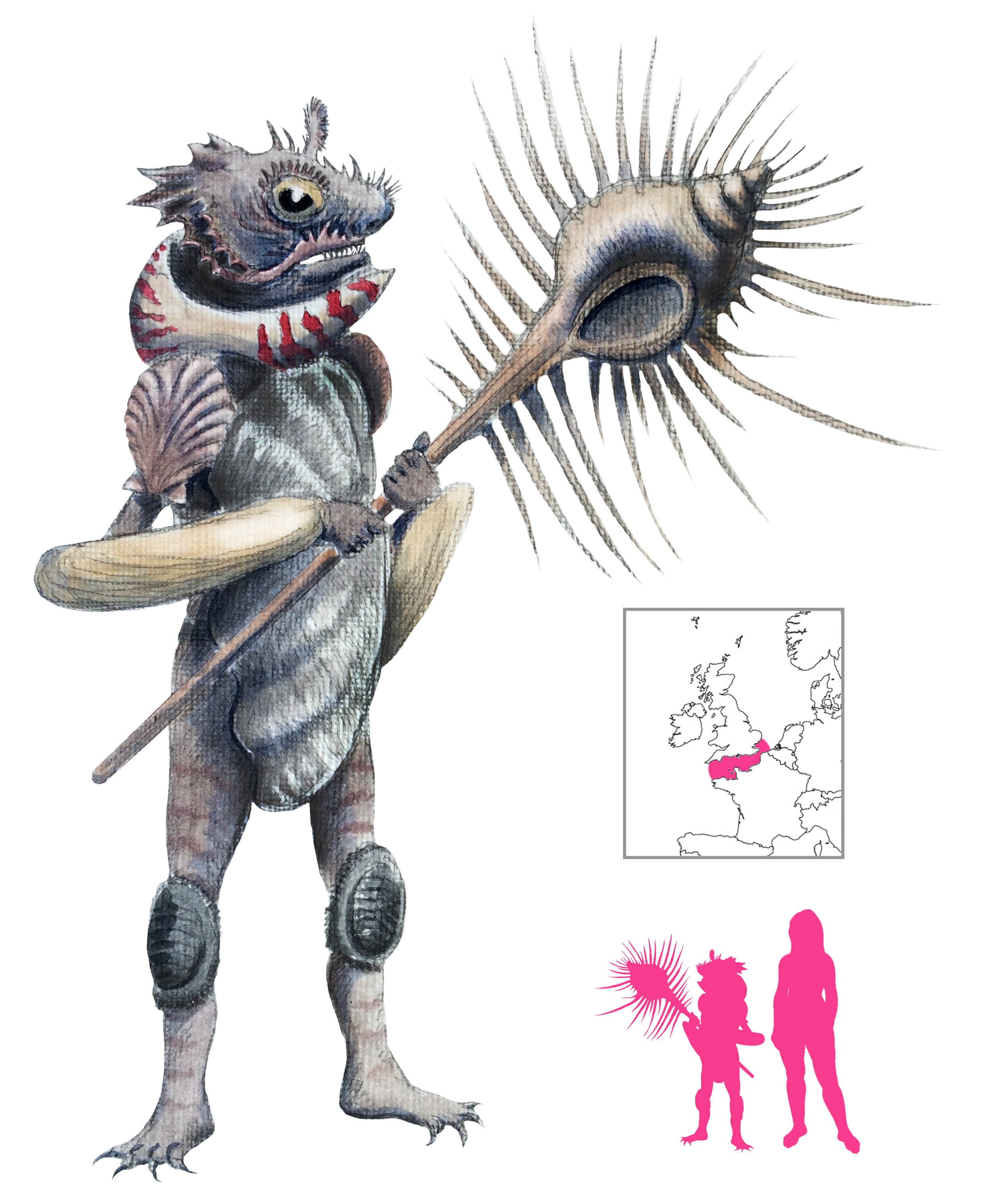
Jean Letocq, a shepherd on the west coast of Guernsey, woke up one morning to see hundreds of little people streaming out of the Creux des Fées (Fairies’ Hollow). They were armed to the teeth, carrying weapons made of sharpened shells. They told the man to bear their message: they wished to take human wives, and would be strongly displeased if women were not turned over to them. This ultimatum was refused, and so the fairies slaughtered every last man they encountered, dying the sea red with blood. The only survivors, a man and a boy of St. Andrew’s parish, hid in an abandoned oven for years.
They were the Arragousets, or Sarregousets as Hugo called them. We know that they were bellicose fairies of the sea, dwelling underwater and in seaside caves, ruling their own marine kingdom. One of their number once took a human woman for his wife, and her beauty and wit so enamored the other fairies that they had to follow suit.
With the men safely massacred, the Arragousets put down the sword and went native. They married the maidens and the newly-widowed, and lived peacefully on land. They made caring husbands and doting fathers, to the extent that the widows warmed to them, and the maidens were delighted with their fairy lovers.
Then, after years of peace, they disappeared as quickly as they had appeared. The circumstances remain mysterious. Sébillot suggests that they were recalled by their king, while MacCulloch states that their time on land was limited. Whatever the reason, all the Arragousets left the island and were never seen again.
Or rather, they went invisible, as their presence remained on Guernsey. They sired a new generation of boys and girls – intelligent, able sailors of small stature – and they returned regularly to watch over them. They did a hundred little favors in the hopes of finishing the work they had started. Arragousets are always ready to help their descendants, but they are pitiless in dealing with offenders.
Hugo said they can still be seen on stormy days, dancing in the clouds and longing to return to the land.
References
Dubois, P.; Sabatier, C.; and Sabatier, R. (1992) La Grande Encyclopédie des Lutins. Hoëbeke, Paris.
Hugo, V. (1866) Les Travailleurs de la Mer. Librairie Internationale, Paris.
MacCulloch, E. (1903) Guernsey Folk Lore. Elliot Stock, London.
Sébillot, P. (1905) Le Folk-lore de France, Tome Deuxième: La Mer et les Eaux Douces. Librairie Orientale et Américaine, Paris.

 A Book of Creatures